
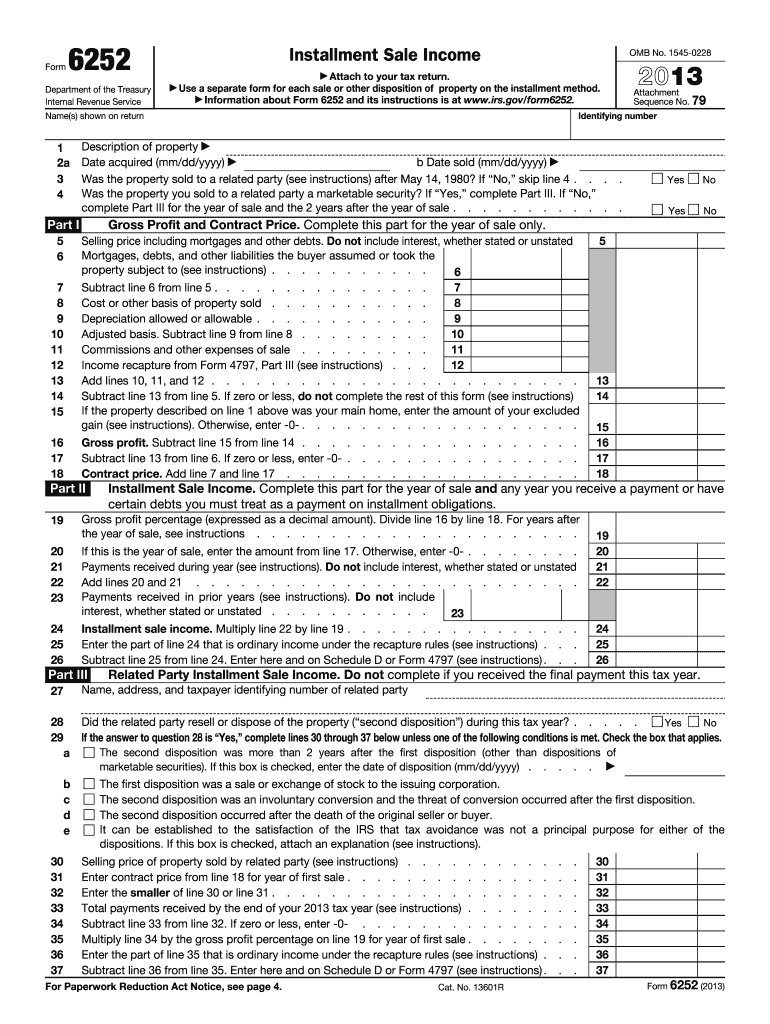







Definition & Meaning of the 2013 Form 6252
Form 6252 is primarily used to report income from installment sales, a type of transaction where the seller receives payments over time rather than in a single lump sum. This approach is commonly employed to defer tax liabilities across several tax years, which can be financially advantageous for sellers. The form succinctly captures details of the sale, such as the description of the property sold, gross profit, and contract price, calculating the installment sale income applicable to each tax year the payment is received.
Key Elements of Form 6252
- Description of Property: Identifies the asset sold, which could be real or personal property.
- Gross Profit Calculation: Computes the difference between the sales price and the seller's cost basis in the property.
- Contract Price: Establishes the total amount agreed upon for the asset, separate from the gross profit.
- Installment Sale Income: Displays the income recognized in the current tax year, following IRS installment sale rules.
How to Use the 2013 Form 6252
Using Form 6252 involves detailing the transaction specifics to ensure accurate tax reporting. This is essential for taxpayers with installment sales agreements initiated in 2013 or still ongoing in subsequent years.
- Complete the Sale Description: Include type, location, and date of sale.
- Calculate Gross Profit and Contract Price: Utilize parts I and II to figure these figures.
- Determine Installment Income: Fill in the applicable section to report income for the current tax year.
Practical Example
- A taxpayer sells a piece of land in 2013 with a 20-year installment plan. The initial form will document the broad details, while annually, the taxpayer will update the form to report received payments.
Important Terms Related to Form 6252
Understanding the language associated with Form 6252 is crucial:
- Installment Sale: A form of sale allowing payment over several years, impacting when income is recognized for tax purposes.
- Basis: The seller's investment in the property, crucial for determining profit.
- Deferred Tax Liability: Taxes that are delayed but still owed on the income spread over future tax periods.
Steps to Complete the 2013 Form 6252
This form requires careful execution due to its reliance on precise financial data. Here is a step-by-step guide:
- Identify Sale Type: Determine if it's real or personal property.
- Input Property Details: Include the buyer's details and total sale price.
- Calculate Adjusted Basis: Detail improvements or depreciation that modify the original cost.
- Determine Gross Profit Percentage: Calculate using your contractual agreement.
- Report Annual Payments: Indicate received funds in the specific tax year's section.
Example Scenario:
- A business owner selling machinery on an installment plan will complete sections related to personal property, detailing depreciation adjustments crucial to accurate installment income reporting.
IRS Guidelines and Regulations
IRS regulations demand specific compliance when using installment sales and Form 6252. This form aligns with IRS Code Section 453, defining installment sale reporting. Taxpayers must adhere to these guidelines:
- Report each year using updated values.
- Be aware of interest on installment obligations that may affect tax calculations.
- Maintain records to substantiate figures entered on the form.
Penalties for Non-Compliance
Failure to use Form 6252 accurately may result in IRS penalties, typically involving fines or interest on underpaid taxes due to incorrect reporting. Consistently updating and submitting the correct information annually helps avoid such pitfalls.
Who Typically Uses the 2013 Form 6252?
Form 6252 is crucial for individuals or businesses engaged in installment sales. Typical users include:
- Homeowners selling property under non-lump sum arrangements.
- Small enterprises offering buyer-friendly, long-term payment options.
- Taxpayers wishing to defer tax burdens across multiple financial periods.


Business Entity Types
- Individual Taxpayers: Mainly those involved in lengthy property deals.
- LLCs/Partnerships: Firms capitalizing on installment sales for flexibility.
- Corporations: With sophisticated asset management needs using delayed payment structures.
Filing Deadlines and Important Dates
Understanding timing is critical when dealing with Form 6252. The form must be completed and submitted annually by the tax filing deadline, typically April 15th each year, unless an extension is filed.
State-Specific Considerations
While federal deadlines remain consistent, some states may have unique requirements regarding installment sales and additional state-specific forms.
How to Obtain the 2013 Form 6252
You can obtain Form 6252 directly from the IRS website as a downloadable PDF or request a physical copy from IRS offices. Software like TurboTax or QuickBooks may also integrate Form 6252 into their platforms, ensuring easy electronic completion and filing.
Additionally, tax professionals and accountants often provide access and completion services for this form as part of their service packages.
Software Compatibility for Form 6252
Many taxpayers might utilize tax preparation software to streamline the completion of Form 6252. Popular options include TurboTax, H&R Block, and QuickBooks, all offering support for installment sales. These platforms guide users through entering necessary information, ensuring compliance with IRS rules by checking for errors before submission.
Using this software often allows for real-time updates and e-filing, making the process less error-prone and more efficient for users unfamiliar with tax forms.




