
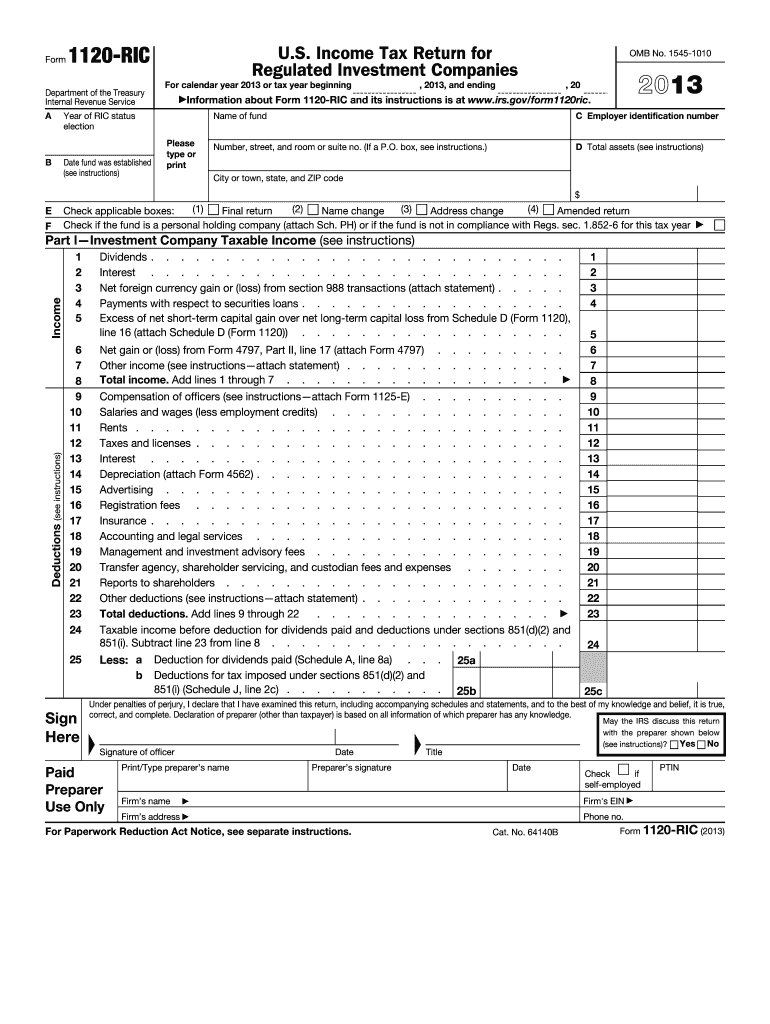







Definition and Purpose of Form 1120-RIC
Form 1120-RIC, known as the U.S. Income Tax Return for Regulated Investment Companies, is utilized by regulated investment companies (RICs) to report income, deductions, and tax liabilities. This document is crucial for maintaining compliance with the Internal Revenue Code, specifically tailored to fund managers and advisors managing mutual funds. The form outlines sections to declare establishment dates, income statements, and shareholder equities, ensuring transparency and adherence to tax regulations.
Utilizing the Instructions for Form 1120-RIC (2018)
The instructions serve as a comprehensive guide, detailing how to fill out each section of the form accurately. Users can follow step-by-step guidelines to ensure complete and correct data entry, covering all necessary aspects such as dividend distribution and capital gains. Key components include guidance on attaching schedules, which is essential to support the figures reported on the form.
How to Obtain the Form 1120-RIC Instructions
Instructions for Form 1120-RIC (2018) can be accessed through the IRS website, offering a downloadable PDF version for convenience. Physical copies may also be requested directly from the IRS or available at local IRS offices. Utilizing these resources ensures that filers have the latest published guidelines, reflecting current tax laws and amendments.
Key Elements in the Instructions
-
Critical Sections:
- Instructions for reporting capital gains.
- Guidelines on handling foreign taxes.
- Specifications for calculating income and deductions.
-
Important Appendices:
- Definitions of key terms, like "Qualified RIC Dividend."
- Detailed explanation of schedule requirements, including Schedule D for Capital Gains and Losses.
Steps to Complete Form 1120-RIC
- Gather Required Documents: Assemble financial statements, dividend distribution records, and previous tax returns.
- Follow the Instruction Guidelines: Carefully read each section's instructions before entry to avoid common errors.
- Prepare Schedules: Attach necessary schedules such as Schedule J for tax computation.
- Review and Validate Information: Double-check entries to ensure accuracy and compliance before submission.
Who Typically Uses the Form and Its Instructions
The primary users are mutual fund managers, compliance officers, and accountants responsible for maintaining a company's tax compliance. Financial institutions with investment portfolios also regularly engage with the form to accurately report earnings and tax computations, enhancing corporate governance and fiscal responsibility.


Filing Deadlines and Important Dates
- Federal Filing Deadline: Generally, RICs must file by the 15th day of the third month after the end of the tax year. For calendar year entities, this typically falls on March 15.
- Extension Options: Requesting an extension involves filing Form 7004, which grants an additional six months to file the return.
Form Submission Methods
- Electronic Filing: The IRS encourages e-filing for quicker processing and confirmation.
- Paper Filing: Traditional mail-in methods are still available, requiring adherence to address specifications provided in the instructions.
Penalties for Non-Compliance
Failure to file timely or inaccurately completing Form 1120-RIC can result in substantial penalties, including fees based on a percentage of unpaid taxes. Additional penalties apply for negligence or willful disregard of IRS rules. Following guidelines accurately significantly mitigates these risks.
Software Compatibility for Filing
Programs such as TurboTax and QuickBooks can facilitate the filing of Form 1120-RIC, providing tools that align with IRS regulations to assist in preparing and submitting returns efficiently. Not all software may have built-in support for RIC forms, so confirming software compatibility beforehand is advised.
Examples and Representation Scenarios
Form 1120-RIC's instructions provide practical examples, such as a mock RIC with diverse income sources, to show how to report complex transactions. These illustrations help users understand nuanced tax situations and verify the accuracy of reporting diversified portfolios.
This structure offers a comprehensive overview of the key elements necessary to complete Form 1120-RIC accurately and efficiently. By adhering to these guidelines, filers can confidently report their financial activities in compliance with IRS requirements.




