
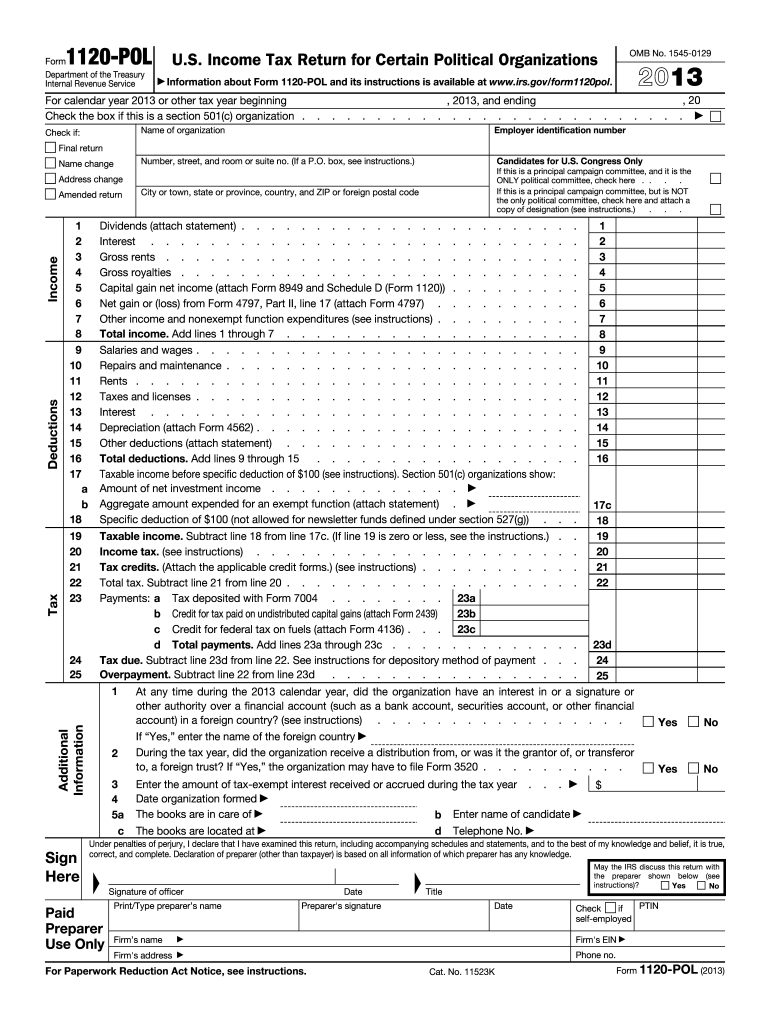







Definition and Purpose of the 2013 Form 1120
The 2013 Form 1120, officially known as the U.S. Corporation Income Tax Return, is a critical document used by corporations in the United States to report their financial information to the Internal Revenue Service (IRS). This form helps corporations calculate their taxable income and determine the amount of taxes owed to the federal government. It includes sections for reporting interest, dividends, rents, royalties, and capital gains. The form also allows for the deduction of business expenses, such as employee salaries, rent, and utilities.
Key Components
- Income Reporting: Corporations are required to list various types of income, such as gross receipts and sales, while accounting for any returns or allowances.
- Deductions: The form allows for deductions on expenses, such as cost of goods sold, employee compensation, and charitable contributions.
- Tax Calculation: Corporations use this form to compute taxable income and calculate the tax liability.
How to Use the 2013 Form 1120
Corporations must carefully fill out the 2013 Form 1120 to ensure accuracy in their tax reporting. Using the form involves several steps:
- Gather Necessary Information: Collect financial statements, including income statements and balance sheets, to compile the required data.
- Complete Income Sections: Fill out parts reporting different streams of income, ensuring all are accurately accounted for.
- Deduct Expenses: List all business-related expenses that qualify for deductions per IRS guidelines.
- Taxable Income Calculation: Subtract allowable deductions from total income to find the taxable income.
- Submit Form: Ensure the form is submitted to the IRS by the specified deadline to avoid penalties.
Examples of Use
- Large Corporations: Multinational companies reporting complex financial transactions.
- Small Businesses: Single-owner corporations declaring straightforward revenue and expenditure lists.
Steps to Complete the 2013 Form 1120
Completing the 2013 Form 1120 requires attention to detail and a methodical approach:
- Identification Information: Start by filling out the corporation's name, address, and Employer Identification Number (EIN).
- Income Section: Enter details on gross receipts, sales, and other income sources.
- Deductions: Itemize expenses like wages, bad debts, and rent.
- Tax Computation: Use the tax tables or tax rate schedules provided by the IRS to compute the corporate tax.
- Payments and Refundable Credits: Record estimated tax payments and any applicable tax credits.
- Signature and Date: Ensure the form is signed and dated by an authorized officer of the corporation.
Special Considerations
- Net Operating Loss (NOL) Deductions: If applicable, corporations can carry forward losses from previous years.
- Foreign Transactions: Include any international income and associated tax details.
Who Typically Uses the 2013 Form 1120
The 2013 Form 1120 is primarily used by domestic corporations that are registered and operate within the United States. This includes:
- C Corporations: As the principal corporate tax form for C corporations, it is essential for fulfilling federal tax obligations.
- Parent Companies: For consolidated returns when filing on behalf of subsidiaries.
- Inactive Companies: Even corporations with no business activity are required to file.


Business Entity Types
- Corporations: All domestic corporations must file, regardless of operations.
- Multinational Entities: Reporting foreign sales and income through this form.
IRS Guidelines for the 2013 Form 1120
Complying with IRS regulations is essential when filing the 2013 Form 1120. The IRS provides extensive guidelines on:
- Submission Deadlines: Typically due on the 15th day of the third month after the end of the corporation's tax year.
- Documentation: Maintain all financial records for supporting data reported in the form.
- Corrections: Use Form 1120X to amend errors on a previously filed form.
Important Considerations
- Form 8879-C: Corporations filing the 1120 electronically must use this form for electronic submission approval.
- Disclosure Requirements: Corporations must disclose transactions with shareholders and officers.
Filing Deadlines and Important Dates
Compliance with filing deadlines is crucial to avoid IRS penalties. For the 2013 tax year:
- Deadline: Generally, March 15th is the due date for calendar-year corporations.
- Extensions: Corporations can file Form 7004 for a six-month extension.




