





Definition & Meaning
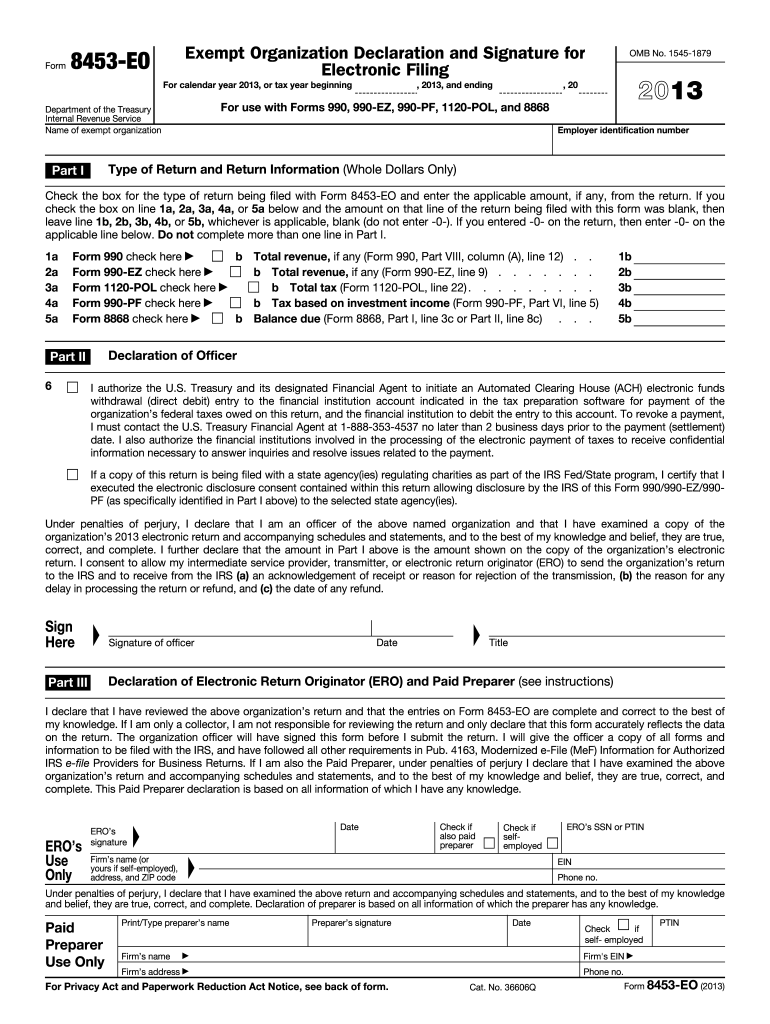
Form 8453, officially known as the "U.S. Individual Income Tax Transmittal for an IRS e-file Return," serves as a cover sheet for various supporting documents that need to be submitted along with an electronically filed tax return. Specifically, the 2013 version of this form was used by e-filing taxpayers to send certain paper documents that could not be submitted electronically, ensuring compliance with IRS requirements. The form aids in authenticating the e-file process and facilitates proper documentation for the IRS.
How to Use the 2013 IRS Form 8453
The 2013 IRS Form 8453 should be used when specific documentation—such as signed tax return statements, supporting legal documents, or attachments—must accompany an e-filed return because they cannot be submitted electronically. Taxpayers had to print a copy of the form, attach the required documents, and send it to the IRS by mail. It is essential to follow the form's instructions carefully, as failure to provide complete or accurate information could result in processing delays.
Key Steps
- Identify Required Documents: Determine which additional documents or statements must accompany your e-filed return.
- Complete the Form: Fill out any necessary details on Form 8453, ensuring all information is accurate.
- Attach Documents: Securely attach the required paper documents to the form.
- Mail to the IRS: Send the completed form and attachments to the address specified in the form’s instructions by the required deadline.
Steps to Complete the 2013 IRS Form 8453
Completing the 2013 IRS Form 8453 is a straightforward process if followed diligently. This form allows taxpayers to submit necessary documentation that supports their e-filed return. These steps can help ensure that the form is filled out correctly:
- Personal Identification: Start by filling out personal details, including name, social security number, and address.
- E-file Identification Number (EFIN): Input your EFIN if required, usually provided if you're using a tax professional or self-preparation software.
- List of Attachments: Clearly list and attach each document that needs to accompany your tax return. Common attachments might include supporting documentation for special tax credits or deductions.
- Signature: Include required signatures, such as the taxpayer’s and preparer’s, if applicable.
- Submission: Once complete, ensure the form is submitted to the appropriate IRS office as directed within the timeline provided.
Who Typically Uses the 2013 IRS Form 8453
This form was typically used by taxpayers who filed their taxes electronically but needed to submit accompanying documents in paper form. Generally, these included individuals who claimed certain tax deductions, credits, or adjustments that required supplementary documentation not transmitted through electronic filing systems. Additionally, tax preparers who assisted clients in e-filing taxes also made use of this form when applicable.


Filing Deadlines / Important Dates
Timeliness is crucial when dealing with tax-related documents. For the 2013 IRS Form 8453, should be submitted promptly following the electronic filing of the tax return. Typically, the deadline aligns with standard tax filing dates; for most taxpayers, this is April 15 of the following year. Extensions can be requested, but those may also affect the submission timeline for Form 8453 and its attachments.
Form Submission Methods (Online / Mail / In-Person)
Form 8453 cannot be submitted electronically; it must be sent by mail to the IRS. This requirement emphasizes the necessity for paper document processing for certain e-filed returns. Here's a breakdown of submission methods:
- Mail: The primary and only method for Form 8453 is by postal service. Ensure the address used is current and corresponds to the block's instructions indicating where to send the form and attachments.
- Filing through a tax professional, though they must ensure the form is mailed as described.
Required Documents
Certain supporting documents must accompany Form 8453. These may include but are not limited to:
- Supplemental tax schedules that were not submitted electronically
- Documentation supporting credits, deductions, and other adjustments
- Legal paperwork relevant to employment, income adjustments, or major life changes
These documents ensure that all necessary information is available for the IRS to accurately process and verify the taxpayer’s return.
Examples of Required Documents
- Amended Tax Returns: When corrections necessitate submission of additional documentation
- Proof of Capital Gains or Losses: Documentation if Schedule D is incomplete
Penalties for Non-Compliance
Failure to submit Form 8453 and its required attachments within the specified timeline can lead to delays in processing, penalties, fines, or audits by the IRS. Ensuring compliance with submission deadlines and accuracy in documentation can help mitigate these risks.


