




01. Edit your form online
Type text, add images, blackout confidential details, add comments, highlights and more.

Type text, add images, blackout confidential details, add comments, highlights and more.

Draw your signature, type it, upload its image, or use your mobile device as a signature pad.

Send it via email, link, or fax. You can also download it, export it or print it out.
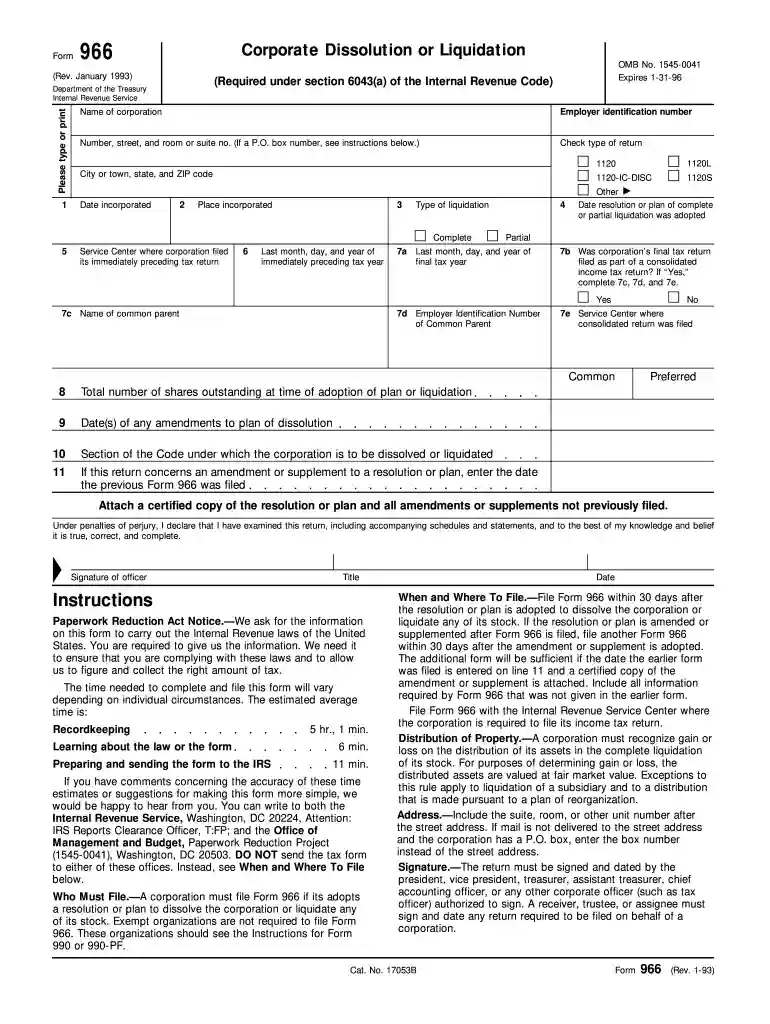
Form 966, a document mandated by the IRS, is required for corporations that decide to dissolve or liquidate. Corporations must file this form when they adopt a resolution or plan to wind up their business operations. The form outlines crucial information like the corporation's name, employer identification number (EIN), the form of liquidation being pursued, and specifics regarding the concluding tax year. This legal declaration helps the IRS keep track of corporate entities that are ceasing operations, ensuring compliance with tax regulations.
These steps ensure all required information is accurately captured and communicated to the IRS.
Corporations must file Form 966 with the IRS within 30 days after adopting the resolution or plan to liquidate. Failing to adhere to the deadline can lead to complications or potential penalties. Being aware of this timeframe is critical for maintaining compliance and ensuring the dissolution process is legally sound.
Corporations need several key documents to support their Form 966 filing:
Having these documents on hand will facilitate a smooth submission process.
Corporations can submit Form 966 through several methods:
Although online filing isn't available for Form 966, ensuring timely mailing or in-person submission is essential for compliance.
The IRS provides specific guidelines for Form 966 to ensure corporations comprehend the filing process. These include definitions of terms, criteria for authorized signatures, and instructions on how to report distributions of assets and any recognized gains or losses. By following these guidelines, corporations can avoid errors that might lead to compliance issues.
Failing to timely file Form 966 or inaccurately reporting information can result in penalties. The IRS may impose fines or additional scrutiny on the final tax returns of the dissolved corporation. It is vital for corporations to adhere strictly to the filing requirements to avoid potential legal or financial repercussions.
Several elements form the core of Form 966:
These components are critical for the form to be complete and valid, prompting the IRS to proceed with the processing of the corporation's dissolution.
We've got more versions of the where to mail form 966 1993 form. Select the right where to mail form 966 1993 version from the list and start editing it straight away!
At DocHub, your data security is our priority. We follow HIPAA, SOC2, GDPR, and other standards, so you can work on your documents with confidence.
File Form 966 with the Internal Revenue Service Center where the corporation is required to file its income tax return. Learning about the law or the form. 6Read more
Apr 15, 1976 Mail Form 4506-T or Form 4506T-EZ (both available on IRS.gov). Using online tools to help prepare your return. Go to. IRS.gov/Tools for theRead more


