







Definition & Meaning
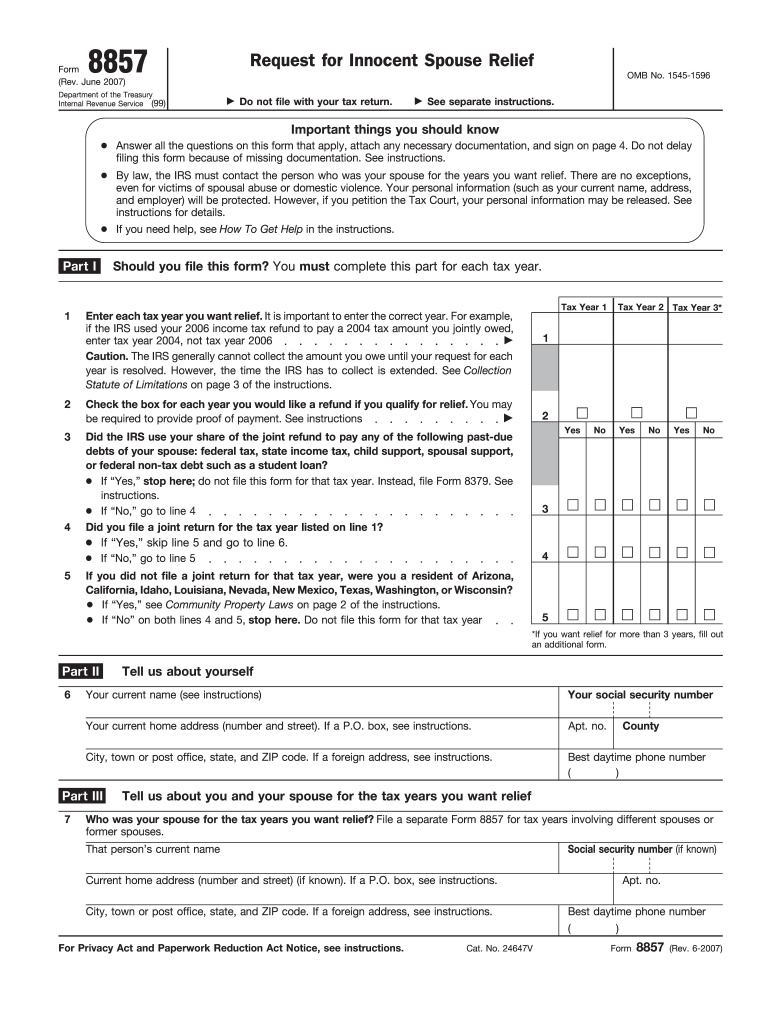
Form 8857, or Request for Innocent Spouse Relief, is a document issued by the IRS that allows a taxpayer to seek relief from joint tax liabilities incurred during their marriage. This form is particularly relevant for individuals who file jointly with a spouse and later become responsible for tax obligations they were unaware of or had no part in generating. The request can offer a reprieve from such liabilities if certain conditions are met, underscoring its importance in protecting individuals from unjust financial burdens stemming from a partner's tax mishandling.
How to Use Form 8857 from IRS 2007
When using Form 8857, you should begin by gathering all pertinent tax documents and evidence demonstrating your financial situation and the lack of knowledge about the tax undersigned. The taxpayer must complete the form by providing detailed information about their marital status, financial situation, and any circumstances that might affect their liability, such as spousal abuse. Attach all supportive documentation to validate your claims. Once completed, the form can be sent to the IRS for consideration.
Steps to Complete the Form 8857 from IRS 2007
- Obtain the Form: Start by downloading Form 8857 from the IRS website or other reliable sources.
- Read the Instructions: Carefully review the guidelines provided by the IRS to ensure accurate completion.
- Fill in Personal Information: Enter your name, social security number, and address.
- Provide Marital Details: Include information about your marital history, including the duration of marriage and filing status during the tax years in question.
- Explain the Situation: An essential part of the form is a detailed explanation of why you believe you qualify for relief.
- Attach Supporting Documents: Gather and attach all necessary documents that support your claim.
- Submission: Submit the completed form and documents to the IRS by mail following the provided instructions.
Who Typically Uses the Form 8857 from IRS 2007
Typically, individuals who use Form 8857 are those who have filed joint tax returns with their spouses and face tax liabilities they believe are not their responsibility. This includes divorced or separated individuals who discover outstanding tax debts arising from their ex-spouse’s mismanagement of finances. Additionally, victims of spousal abuse may utilize this form as part of their strategy to dissociate from financial obligations incurred without their consent or knowledge.

Eligibility Criteria
To be eligible for relief using Form 8857, the applicant must meet several conditions:
- The tax obligation must be derived from a jointly filed return.
- The applicant is seeking to be relieved of responsibility for tax, interest, and penalties.
- The applicant must submit evidence showing they were unaware of the incorrect reporting.
- Circumstances such as divorce or legal separation play a role in the approval process.

IRS Guidelines
The IRS has specific guidelines outlining what constitutes eligibility for innocent spouse relief. These remedies include Innocent Spouse Relief, Separation of Liability Relief, and Equitable Relief. The IRS evaluates each application based on individual situations and documentation accuracy, indicating all supporting circumstances, such as abuse or deception, are thoroughly considered. It is crucial to follow these guidelines and submit a comprehensive application to be successful in obtaining relief.
Filing Deadlines / Important Dates
While there is no specific filing deadline for Form 8857, it is critical to file within two years after the IRS begins collection efforts. Being aware of this timeline is crucial to ensure eligibility and maximize the chances of obtaining relief. The IRS's collection window typically starts with a written notice or a levy, and this notice marks the beginning of the two-year period to request relief.
Required Documents
Completing Form 8857 requires various documents to substantiate your claims. Essential documents include:
- Copies of the jointly filed returns in question.
- Proof of separation or divorce.
- Any correspondence from the IRS regarding the liability.
- Documentation of income, assets, and expenses for both parties.
- Evidence of abuse, if applicable, such as police reports or affidavits.
Form Submission Methods
Form 8857 can be submitted to the IRS through the following methods:
- Mail: The primary method, with the form being sent to the IRS office specified in the instructions.
- Online Submission: Through the IRS's website if they provide that functionality.
- In-Person: At an IRS office, but only if pre-arranged.
Ensuring the correct submission method is used helps avoid delays and ensures the form reaches the relevant IRS department.
Penalties for Non-Compliance
Failure to accurately submit Form 8857 or provide complete accompanying documentation may result in significant penalties. If the IRS determines omissions were intentional, the taxpayer could face fines or increased scrutiny. Additionally, failing to apply within the specified time frame negates any chance of relieving the financial obligation, leading to continued liability for the tax debt.
Key Takeaways
- Form 8857 is crucial for taxpayers seeking relief from unwanted tax liabilities due to a spouse’s improper actions.
- Complete and accurate information, coupled with supportive documents, are essential for a successful application.
- Understanding and adhering to IRS guidelines and timelines increase the chances of receiving favorable notice.
These elements are essential for assembling a comprehensive and enforceable request for relief from an IRS tax burden, helping eligible taxpayers avoid unwarranted financial decisions made during a marriage.




