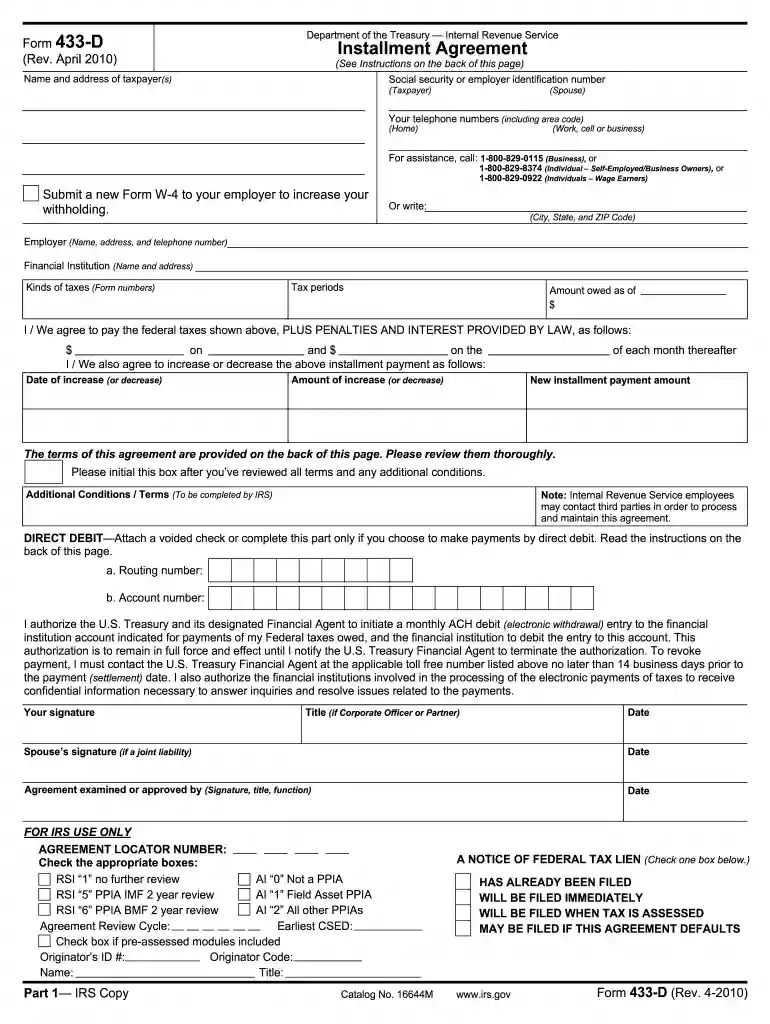
Definition and Purpose of Form 433-D
Form 433-D is an Installment Agreement application from the IRS designed for taxpayers who owe federal taxes. This form allows individuals or businesses to formalize a payment plan for taxes owed, including any penalties and interest that may apply. By submitting this form, taxpayers can arrange a manageable payment schedule with the IRS, helping them address their tax liabilities without financial distress. The form requires key personal and financial information, such as tax identification numbers, amounts owed, and proposed monthly payment amounts.
It is essential to understand that Form 433-D must be completed accurately to avoid delays in processing the application. The form outlines the responsibilities of both the taxpayer and the IRS, including the potential for additional fees if payment terms are not met. Understanding its definition and requirements is critical prior to completing and submitting the form.
Steps to Complete Form 433-D
Completing Form 433-D involves multiple steps to ensure accuracy and compliance with IRS requirements. Below are the key steps to follow when filling out this form:
-
Download the Form: Obtain the latest version of IRS Form 433-D from the IRS website or authorized providers.
-
Personal Information: Fill in your personal details, including your name, address, Social Security number, and any related tax identification numbers if applicable.
-
Details of the Tax Debt: Clearly state the total amount of tax owed, detailing any penalties or interest. This section must reflect the full balance to ensure the IRS has accurate information.
-
Proposed Payment Terms: Indicate the proposed monthly payment amount. Ensure that it is realistic based on your current financial situation, as this will directly affect the approval of the installment agreement.
-
Signature and Date: Review the form for accuracy, add your signature, and date the document. Failing to sign or date the form can result in rejection.
-
Documentation: Attach any required proof, such as financial statements that support your proposed payment plan, income details, or other documentation the IRS may request.
-
Mailing the Form: Send the completed form to the address specified by the IRS, along with any payment for the first installment if required.
Following these steps carefully will enhance the likelihood of a smooth approval process for your installment agreement.
Where to Mail Form 433-D
The mailing address for Form 433-D can vary based on your location and the specifics of your case. Typically, individuals should mail the completed form to the IRS office where they file their tax returns. Below are the general guidelines for where to mail Form 433-D:
-
Individuals: If you are an individual taxpayer, send your form to the address listed on the bottom of the IRS Form 433-D itself, typically directed to the appropriate service center handling installment agreements for your area.
-
Businesses: If Form 433-D is being submitted on behalf of a business entity, the mailing address may differ. Ensure to refer to the instructions specific to your business type and the IRS business tax return you filed.
-
For Specific Situations: In some cases, you may be instructed to send the form to a particular address based on your previous communications with the IRS. It is important to double-check this information to avoid sending it to the wrong location.
Confirming the correct mailing address is crucial to ensure prompt processing of your form, thereby allowing you to begin your payment plan without unnecessary delays.
Important Terms Related to Form 433-D
Familiarity with certain key terms associated with Form 433-D can assist taxpayers in navigating the complexities of the installment agreement process. Here are important terms to understand:
-
Installment Agreement: A formal arrangement allowing taxpayers to pay their tax debts in installments over time, rather than in a lump sum.
-
Tax Levy: A legal seizure of assets to satisfy a tax debt, which may be avoided through establishing an installment agreement.
-
Default: Failure to adhere to the payment plan terms outlined in the Form 433-D, which may lead to the IRS issuing a levy or other collection actions.
-
Penalties and Interest: Additional charges that may accrue on the outstanding tax balance when payments are late or not adhered to as agreed.
-
Financial Disclosure: The process of providing financial information to the IRS, which is often required for tax relief agreements, including Form 433-D.
Understanding these terms can aid in clarifying expectations and responsibilities outlined in the installment agreement with the IRS.
IRS Guidelines for Form Submission
The IRS has established specific guidelines and requirements for submitting Form 433-D that taxpayers must follow to ensure successful processing:
-
Complete and Accurate Information: It is vital that all sections of Form 433-D are completed accurately. Incomplete forms may be returned without processing.
-
Timely Submission: Submit the form promptly after determining the need for an installment agreement. Delays in submission can result in additional penalties or interest accruing.
-
Record Keeping: Keep copies of all documents submitted, along with any correspondence from the IRS regarding your application and agreement.
-
Payment Considerations: If a payment is required with your application, ensure it is included to prevent rejection or delays.
These guidelines contribute to a smoother interaction with the IRS and can help ensure that taxpayers achieve their payment resolution goals efficiently.
Legal Implications of Form 433-D
Understanding the legal implications of submitting Form 433-D is crucial for taxpayers considering an installment agreement. Here are some key points regarding the legal context:
-
Legally Binding Agreement: Once the form is approved by the IRS, it becomes a legally binding contract between the taxpayer and the IRS. Adherence to the agreement terms is mandatory.
-
Consequences of Defaulting: If a taxpayer fails to meet the payment obligations outlined in the agreement, it may result in severe penalties, including immediate collection actions by the IRS.
-
Tax Liabilities and Extensions: Even with an installment agreement, taxpayers remain liable for the full amount of taxes owed, including penalties and interest. The agreement does not absolve any part of the debt.
-
Impact on Credit Reports: While the existence of a payment plan may not directly affect credit scores, failure to comply with the terms of the agreement can lead to collections that may be reported to credit agencies.
Awareness of these legal aspects informs taxpayers of their rights and responsibilities while navigating the payment plan established through Form 433-D.