
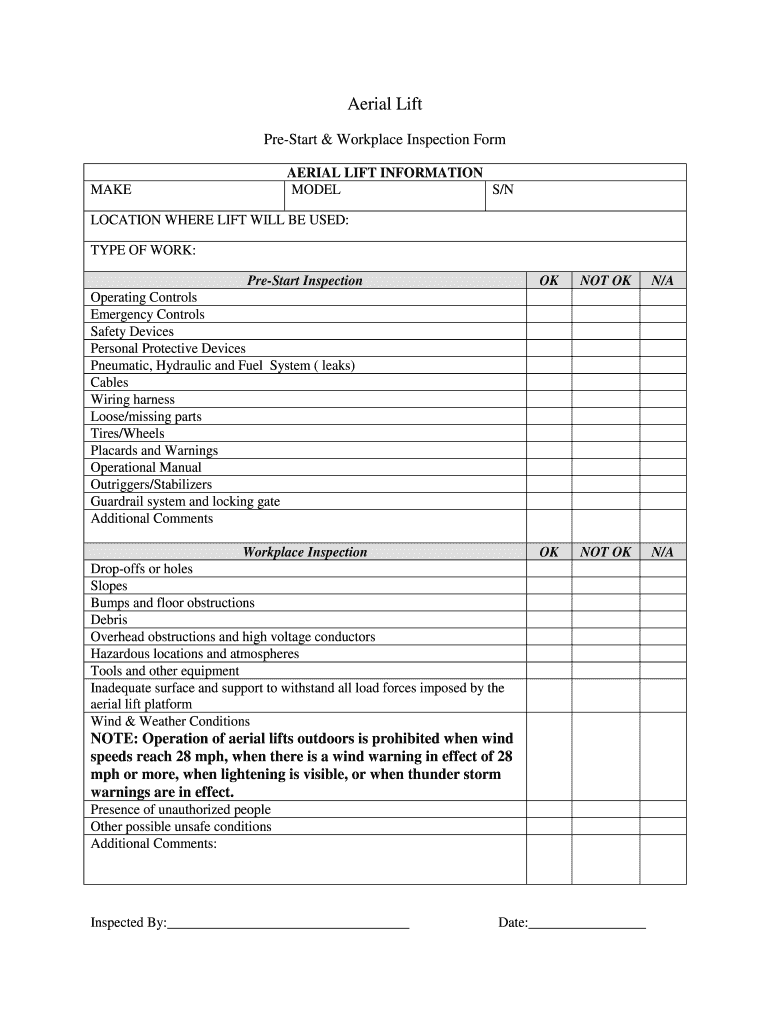







Definition and Purpose of the Aerial Lift Inspection Form
The printable aerial lift inspection form is a crucial tool designed to facilitate the systematic inspection of aerial lifts, ensuring they meet safety and operational standards before use. This form serves multiple purposes, including:
- Safety Compliance: It helps operators comply with Occupational Safety and Health Administration (OSHA) regulations by documenting checks of safety mechanisms, operational features, and environmental conditions.
- Operational Readiness: The form ensures that all critical components of the aerial lift, such as controls and safety devices, have been inspected and are functioning correctly, reducing the risk of accidents.
- Record Keeping: It provides a standardized method for documenting inspections, crucial for audits and compliance verification.
Typically, this form includes sections covering pre-operation checks, operator responsibilities, and detailed inspection criteria specific to various types of lifts, including boom lifts and scissor lifts.
How to Use the Aerial Lift Inspection Form
Using the printable aerial lift inspection form requires a thorough understanding of its sections and the inspection process. Here’s how to effectively utilize this form:
- Preparation: Before starting the inspection, ensure that you have the latest version of the aerial lift inspection form and the necessary tools for inspection checks.
- Conducting Inspections: Each section of the form addresses specific areas that need verification:
- Operational Checks: Ensure that all controls are functioning properly.
- Safety Features: Confirm that safety devices are in place and operable.
- Environmental Assessment: Evaluate surrounding conditions, such as weather or ground stability.
- Documentation: As you complete inspections, fill in the form accurately, noting any issues discovered during the checks.
By following these steps, you can ensure all aspects of the aerial lift are reviewed systematically, promoting safety and compliance.
How to Obtain the Printable Aerial Lift Inspection Form
To obtain the printable aerial lift inspection form in PDF format, users can follow these steps:
- Download from Reputable Sources: Look for the form on trustworthy sites that focus on workplace safety or equipment regulations, such as OSHA’s official site and other industry-standard publications.
- Use Document Creation Tools: Platforms like DocHub allow users to create or customize inspection forms. You can download a template or start from scratch and export it as a PDF.
- Verify Compliance Versions: It is essential to choose the correct version of the form that complies with the latest safety regulations and fits the aerial lift type being inspected.
By acquiring the most recent and relevant version of the form, operators can ensure effective documentation of their safety inspections.
Steps to Complete the Aerial Lift Inspection Form
Completing the aerial lift inspection form involves several detailed steps. Here is a structured process:
- Identify the Inspection Date and Lift Type: Fill in the date of inspection and specify the type of aerial lift being assessed, whether it's a boom lift or scissor lift.
- Conduct a Visual Inspection: Inspect structural components and physical conditions. This includes checking for wear, leaks, and any potential safety hazards.
- Test Operational Functionality:
- Verify all lift controls are accessible and functioning correctly.
- Check emergency controls and alarm systems.
- Evaluate Safety Mechanisms: Ensure that safety equipment like harnesses, guards, and emergency stop features are present and functional.
- Document Findings: Record the findings accurately, noting all checks completed, any deficiencies, and corrective actions needed.
Following these steps comprehensively helps ensure that aerial lifts are safe for use, aligning with regulatory requirements.
Key Elements of the Aerial Lift Inspection Form
Understanding the key elements of the aerial lift inspection form is vital for effective implementation. The primary components include:
- General Information: This section includes details such as the lift model, serial number, and inspection date.
- Operational Control Checks: Lists specific controls that must be tested, such as power functions and emergency responses.
- Safety Device Verification: This involves checking features like emergency brakes and tilt sensors.
- Environmental Considerations: Notes any hazards that might affect lift operation, including surface stability and overhead obstructions.
- Comments Section: Allow space for additional notes or recommendations based on the inspection findings.
Each element of the form plays a crucial role in ensuring comprehensive inspection and documentation, fostering a culture of safety in the workplace.
Legal Use and Compliance of the Aerial Lift Inspection Form
The legal use of the aerial lift inspection form is tied to compliance with OSHA regulations regarding workplace safety. Adhering to legal guidelines includes:
- Maintaining Accurate Records: Employers must keep detailed, accurate records of inspections to demonstrate compliance during safety audits.
- Training and Certification: Operators conducting inspections must be trained and certified to ensure they understand the requirements and implications of the inspection process.
- Regular Updates: As regulations change, it is necessary to review and update the form to remain compliant with the latest OSHA standards.
Understanding these legal frameworks helps organizations mitigate risk and establish accountability in the operation of aerial lifts.
Examples of Using the Aerial Lift Inspection Form in Practice
Implementing the printable aerial lift inspection form can take multiple forms across industries. Here are practical scenarios:
- Construction Sites: On a construction site, daily pre-operation inspections are essential. Workers can complete the form to ensure that lifts are safe to use for tasks like elevating materials or personnel.
- Maintenance and Repair Facilities: Technicians can utilize the form to conduct routine checks on aerial lifts in maintenance shops, ensuring all equipment remains in safe, working order.
- Event Setup: At large event venues, aerial lifts may be needed to set up lighting or structures. Completing the inspection form ahead of lifting operations can help assess safety in crowded environments.
These examples illustrate the form's versatility and importance across varied sectors, contributing to an overall culture of safety and diligence in operations involving aerial lifts.




