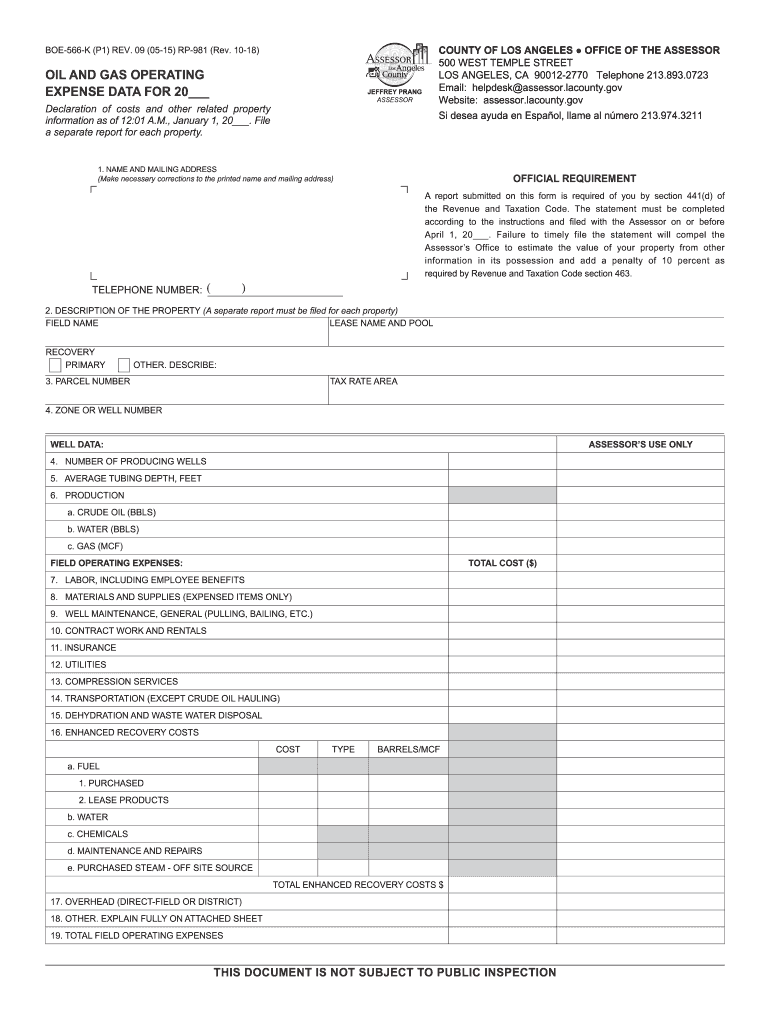
Oil and Gas Operating Expense Data. Oil and Gas Operating Expense Data 2026

Get Form
model sarindar Preview on Page 1

Here's how it works

01. Edit your model sarindar online
Type text, add images, blackout confidential details, add comments, highlights and more.
02. Sign it in a few clicks
Draw your signature, type it, upload its image, or use your mobile device as a signature pad.
03. Share your form with others
Send sarindar model via email, link, or fax. You can also download it, export it or print it out.

How to use or fill out Oil and Gas Operating Expense Data with our platform

Form edit decoration
9.5
Ease of Setup
DocHub User Ratings on G2
9.0
Ease of Use
DocHub User Ratings on G2
  1. Click ‘Get Form’ to open the Oil and Gas Operating Expense Data in the editor.
  2. Begin by filling in the year of the lien date at the top of the form. Ensure that your name and mailing address are correct, making any necessary corrections.
  3. In Section 2, provide a detailed description of each property, including field name, lease name, and recovery type. If applicable, describe any other recovery methods used.
  4. Complete Section 3 by entering the parcel number and tax rate area number if known.
  5. For production data in Section 6, report crude oil, water, and gas production figures accurately for the specified period.
  6. Fill out Sections 7 through 19 with direct field operating expenses only. Avoid including capitalized items or royalty payments.
  7. In Sections 20 to 26, report on capital expenditures such as new wells, remedial work, abandonments, surface investments, and work in progress.
  8. Finally, ensure you complete the declaration section by signing and dating it to validate your submission.

Start using our platform today to streamline your Oil and Gas Operating Expense Data reporting for free!

See more Oil and Gas Operating Expense Data. Oil and Gas Operating Expense Data versions

We've got more versions of the Oil and Gas Operating Expense Data. Oil and Gas Operating Expense Data form. Select the right Oil and Gas Operating Expense Data. Oil and Gas Operating Expense Data version from the list and start editing it straight away!
Versions Form popularity Fillable & printable
2018 4.8 Satisfied (113 Votes)
2014 4.8 Satisfied (61 Votes)
be ready to get more

Complete this form in 5 minutes or less

Get form

Got questions?

We have answers to the most popular questions from our customers. If you can't find an answer to your question, please contact us.
Contact us
Like most businesses, oil and gas firms have to sustain upfront expenses, also known as oil and gas operating expenses, before they can begin making profits. Also referred to as OPEX, operating expenses are expenses that are unavoidable and necessary.
Operating Expenses (OpEx) refer to the day-to-day costs of drilling, completing, extracting, producing, and processing oil and gas. These include equipment maintenance, rent, utilities, insurance, payroll, marketing, administrative expenses, and research and development.
Oil and gas operational excellence is composed of several critical factors that must be managed in an integrated way to sustain a high level of operating performance. The main factors are safety, reliability, well productivity, operational efficiency, and cost optimization.
The difference between them lies in their names: the physical capital your business uses, i.e., the wells, pipes, drills, etc. OPEX the operational costs of your capital, i.e., the people, services, technology, etc.
OPEX, which stands for operating expenses or expenditure, refers to the costs incurred by your business via the production of goods and services. It can include a broad range of expenses, including materials, labor, machinery, packaging, shipping materials, and so on.

Security and compliance

At DocHub, your data security is our priority. We follow HIPAA, SOC2, GDPR, and other standards, so you can work on your documents with confidence.

Learn more
ccpa2
pci-dss
gdpr-compliance
hipaa
soc-compliance

People also ask

Operating expenses include rent, equipment, inventory costs, marketing, payroll, insurance, and funds allocated for research and development. By contrast, a non-operating expense is an expense incurred by a business that is unrelated to the businesss core operations.

Related links