




01. Edit your form online
Type text, add images, blackout confidential details, add comments, highlights and more.

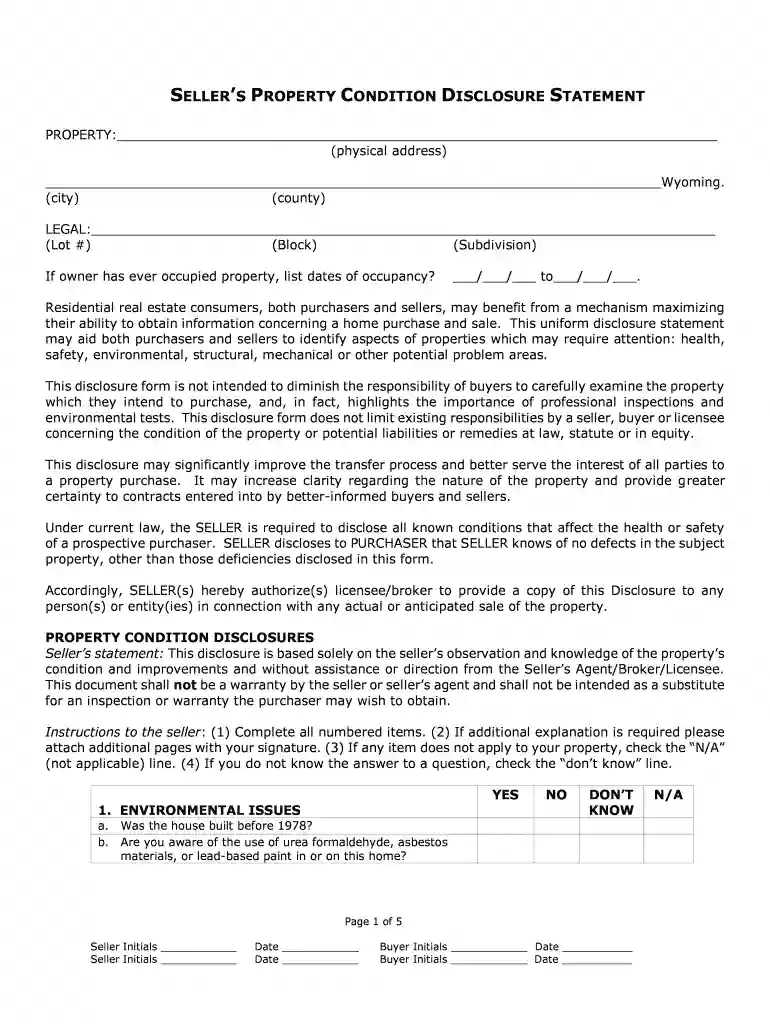
Type text, add images, blackout confidential details, add comments, highlights and more.

Draw your signature, type it, upload its image, or use your mobile device as a signature pad.

Send it via email, link, or fax. You can also download it, export it or print it out.
The Wyoming Seller's Property Disclosure Statement is a critical document used in real estate transactions to outline a seller's obligation to disclose known issues about the property's condition. This legal form provides buyers with a transparent overview of environmental, structural, and mechanical features. It acts as a protective tool for both parties, identifying potential issues and promoting informed decision-making before finalizing the sale. Such disclosures can encompass everything from roof conditions and plumbing systems to potential environmental hazards or past repairs.
Providing the Disclosure Statement is not merely a customary practice but a legal obligation for sellers in Wyoming. It protects sellers from future liability concerning undisclosed property defects. For buyers, this statement is essential because it provides clarity and assurance about the property they are purchasing. It is particularly vital in helping buyers decide whether to proceed with professional inspections or further negotiation steps before closing the deal.
To effectively use the Wyoming Seller's Property Disclosure Statement, sellers must carefully complete each section of the form, ensuring all known issues about the property are fully disclosed.
In practice, real estate agents often assist sellers in understanding and completing the Disclosure Statement. This collaboration ensures all areas are filled out comprehensively, reducing the risk of errors or oversights that could impact the transaction.
Understanding the key elements of this disclosure statement is crucial for ensuring compliance and avoiding legal pitfalls.
The Disclosure Statement must be used in accordance with state laws, ensuring both the buyer and seller fulfill their legal obligations.
In Wyoming, real estate law mandates that sellers provide this disclosure form to potential buyers before entering into a purchase contract. Failure to comply can result in severe penalties, including rescission of the sale or compensation claims for undisclosed damages.
This form serves to shield the seller from future claims about undisclosed defects, while also protecting buyers by allowing them due diligence time to assess the property's condition comprehensively.
Wyoming has particular regulations surrounding the use of its Seller's Property Disclosure Statement, differing from other states.
To ensure compliance with state laws, sellers should work closely with a licensed real estate agent familiar with Wyoming's requirements. This collaboration can help navigate the delicate intricacies involved in real estate transactions within the state.
Examining specific scenarios can provide sellers and buyers alike with a deeper understanding of the implications of the disclosure statement.
For properties located in rural Wyoming areas, disclosure regarding water rights, well conditions, and septic systems is crucial. These can significantly impact a buyer's decision due to potential additional costs or maintenance responsibilities.
In cases involving older houses, sellers often need to disclose issues such as outdated wiring, historical renovations, or non-compliance with current building codes. Such transparency is essential for buyers considering investing in renovations or embarking on significant modernization efforts.
Correctly completing the Disclosure Statement requires attention to detail and adherence to a structured approach.
Managing your paperwork with DocHub this way is extremely straightforward after you have downloaded its extension for Google Chrome. Navigate to the Chrome Web Store and install DocHub - Sign PDF from Gmail to get it. Give our tool access to your Google account, and then open an email with the Wyoming Seller's Property Disclosure Statement attached and point to the file with your cursor - the DocHub extension key will automatically show up there. Click on it to open your file in our editor. Make any required edits, complete the blanks, and click Sign to create your legally-binding electronic signature.
You can easily edit fill out your Wyoming Seller's Property Disclosure Statement on any iOS gadget. Open an internet browser of your liking, visit the DocHub site, authorize or create a new account, upload your file for editing, and make your desired alterations. Our service is mobile-friendly, so utilizing its functions on your phone will be a no-brainer, even on the first try.
At DocHub, your data security is our priority. We follow HIPAA, SOC2, GDPR, and other standards, so you can work on your documents with confidence.
Instructions to Seller: Answer all questions based upon your actual knowledge. Attach additional pages with your signature if additional space is required.Read more
by G Miller 2026 Law 462 (McKinney 2002) (amended 2024) ([E]very seller of residential real property shall . . . sign a property condition disclosure statement . . . toRead more


