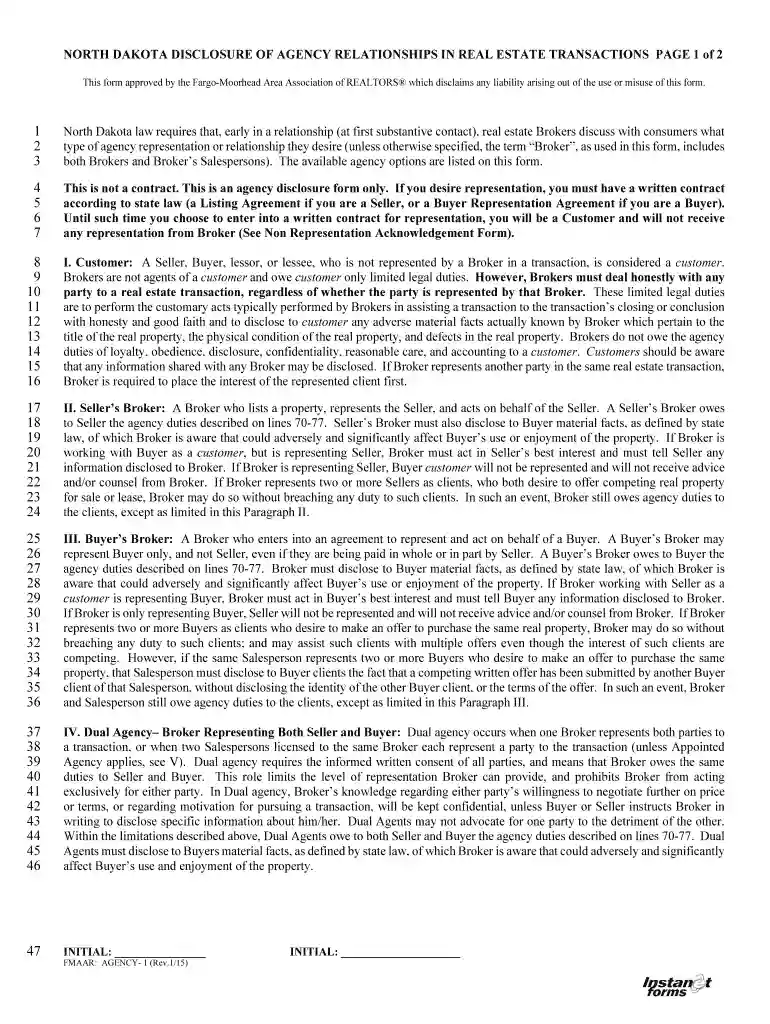
Definition and Meaning
The "Agency Disclosure in the Real Estate Transaction and the..." form is a critical document in real estate transactions in the United States. It serves as a means for real estate brokers and agents to formally disclose their agency relationships with clients. This disclosure helps clarify the roles and responsibilities of brokers when dealing with buyers or sellers, ensuring each party is aware of their rights and obligations. Agency relationships can vary, including seller's agency, buyer's agency, dual agency, or designated agency. Understanding these distinctions is essential for consumers to make informed decisions during real estate transactions.
Key Elements of the Agency Disclosure Form
The Agency Disclosure form includes several vital components that outline the scope of the broker's representation. Key elements include:
- Agency Type Declaration: Identifies whether the broker acts on behalf of the seller, the buyer, or both in a dual agency scenario.
- Consent for Dual Agency: Informs clients about the implications of dual agency and seeks written consent where applicable.
- Broker and Client Responsibilities: Clearly outlines what each party can expect from the agency relationship in terms of duties owed.
- Limited Customer Duties: Describes obligations owed to customers who choose not to engage a broker, ensuring transparency in service levels.
Steps to Complete the Agency Disclosure Form
Completing the Agency Disclosure form involves several precise steps to ensure legal compliance:
- Select Agency Type: Indicate whether you are working with the seller, the buyer, or in a dual agency role.
- Declaration of Responsibilities: Explicitly state the duties and limitations of the agency under the chosen representation.
- Client Acknowledgment Section: Allow the client to review the terms fully, providing space for their signature to acknowledge understanding.
- Consent for Dual Agencies: If applicable, obtain a client's signature to consent to dual agency after explaining potential conflicts of interest.
- Final Review and Submission: Conduct a final check for accuracy and completeness before submitting or storing the form securely.
Why the Agency Disclosure is Important
The Agency Disclosure form plays a pivotal role in ensuring ethical and transparent real estate practices:
- Informed Decision-Making: Provides buyers and sellers with crucial information to decide the level of representation they desire.
- Prevention of Misunderstandings: Clarifying agency roles reduces potential conflicts and legal disputes.
- Legal Compliance: Aligns with state laws requiring real estate agents to disclose agency relationships, thereby protecting all parties involved.
Who Typically Uses the Agency Disclosure Form
Real estate professionals and their clients are the primary users of this form:

- Real Estate Agents and Brokers: Responsible for providing the disclosure to clients to outline the scope of their representation.
- Home Buyers and Sellers: Utilize the form to understand the nature of their relationship with the broker and make informed decisions.
- Real Estate Attorneys: May review the form to ensure their clients' interests are protected and all legal obligations are met.
Legal Use of the Agency Disclosure Form
The legal framework surrounding the Agency Disclosure form varies by state but generally adheres to specific regulations:
- Mandatory Disclosure Laws: Most states require brokers to provide agency disclosures to ensure informed consent is received from clients.
- State-Specific Protocols: Certain states may have unique requirements regarding the timing and manner in which disclosures are provided.
- Enforcement of Ethical Conduct: Real estate boards monitor compliance, ensuring that brokers adhere to disclosure obligations.
State-Specific Rules and Variations
While the essence of the Agency Disclosure form remains consistent, several state-specific regulations exist:
- California Requirements: Mandates the use of a specific form and details exact languages that must be included in disclosures.
- New York Regulations: Requires the form's delivery to buyers and sellers at the first substantive contact.
- Variations in Dual Agency Practices: States like Texas strictly regulate dual agency, necessitating explicit consumer understanding and consent.
Examples of Using the Agency Disclosure Form
Real-world scenarios illustrate the necessity and application of the Agency Disclosure form:
- Buying a New Home: A buyer receives an agency disclosure from their broker, clarifying whether the agent represents only their interests or also the seller's.
- Seller Representation: Understands potential conflicts of interest by recognizing if their listing agent also represents potential buyers.
- Prospective Dual Agency: Clients consent to dual agency after being informed of the potential risks and benefits, ensuring both party agreement.
Important Terms Related to the Agency Disclosure Form
Understanding vital terminology related to the form aids in navigating real estate transactions:
- Brokerage Agreement: A formal agreement defining the relationship between the client and the broker.
- Exclusive Agency: The client works exclusively with a specific agent who holds rights for commission.
- Material Facts: Key information influencing client decisions, required to be disclosed by law in some states.