







Definition and Purpose of the 8879 101 Form
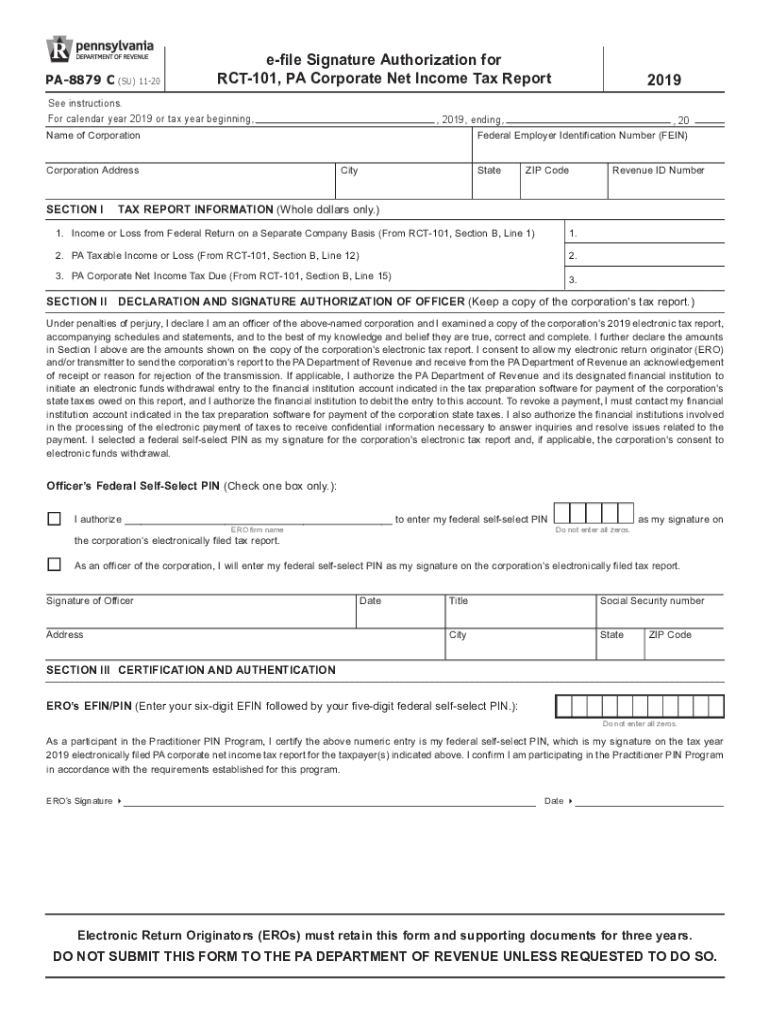
The 8879 101 form functions as an e-file signature authorization used primarily for electronically filing RCT-101, the Pennsylvania Corporate Net Income Tax Report. This form is essential for corporate officers and Electronic Return Originators (EROs), allowing them to provide an electronic signature and finalize the submission of the corporation’s tax report through a federal self-select PIN. The form details the necessary components for proper submission, including tax report information, signature authorization, and the responsibilities of the officer and the ERO.
Key Components of the Form
- Tax Report Information: Includes critical data such as taxpayer identification and filing year.
- Declaration and Signature Authorization: Official endorsement by corporate officers, permitting EROs to file taxes electronically.
- Responsibilities of Officers and EROs: Outlines accountability for ensuring accuracy and proper filing procedures.
Steps to Complete the 8879 101 Form
Filling out the 8879 101 form requires careful attention to detail. Here are the steps to ensure correct completion:
- Gather Required Information: Collect details like taxpayer identity, tax year, and corporate tax figures.
- Input Tax Report Details: Accurately fill out sections pertaining to the corporation’s net income.
- Corporate Officer Declaration: The officer must review and sign the declaration section for authorization.
- Electronic Signature Setup: Utilize a self-select PIN for digital signature purposes, if required.
- EROs Role Confirmation: Verify that the ERO has completed their part, ensuring all data are correctly inputted.
Common Errors to Avoid
- Incorrect Data Entry: Double-check all numerical and identifying information.
- Missing Signatures: Ensure all required signatures and authorizations are secured.
- Inadequate Authorization: Confirm the officer has comprehended and agreed to their declaration responsibilities.
Obtaining the 8879 101 Form
Acquiring the 8879 101 form can be achieved through several methods:
- Online Access: Download the form directly from tax portals or official state websites.
- Tax Software Inclusion: Software packages like TurboTax often include this form as part of their filing process.
- Physical Request: Obtainable through mail by requesting from the Pennsylvania Department of Revenue.
Digital vs. Paper Format
- Digital Availability: Provides ease of access and typically comes with built-in error-checking tools.
- Paper Format: Suitable for those preferring traditional methods or with limited digital access.
Legal Use and Compliance
To ensure legal compliance when using the 8879 101 form, it's important to adhere to specific guidelines:
- ESIGN Act Compliance: Electronic signatures on this form are legally binding under the ESIGN Act.
- State Compliance: Only use for filing the RCT-101, as dictated by Pennsylvania state law.
- Retention Requirements: Maintain copies of the completed form for your records, should verification be required by authorities.
Consequences of Non-Compliance
Failing to correctly submit the 8879 101 form or adhere to its requirements can lead to:
- Filing Delays: Potential delays in tax report acceptance and processing.
- Penalties: Financial penalties may be imposed for incorrect or fraudulent submissions.
- Legal Ramifications: Possible audits or investigative actions for non-compliance issues.
Importance and Utility
The 8879 101 form plays a vital role within the corporate tax filing process. Its efficient design facilitates:
- Efficient Tax Filing: Streamlines authorization, making the e-filing process quicker and smoother.
- Security Assurance: Protects sensitive tax information through secure PIN-based authorization.
- Legal Safeguarding: Shields both corporations and EROs by providing clear legal standing for electronic submissions.
Who Benefits Most
Primarily used by corporations operating in Pennsylvania, the form is crucial for:
- Large Corporations: Regularly needing to manage complex tax files.
- Tax Professionals and EROs: Facilitating their ability to manage multiple client submissions efficiently.
State-Specific Rules
The 8879 101 form is subject to state-specific regulations and practices within Pennsylvania:
- Exclusive Use: Designed solely for Pennsylvania's corporate tax purposes and not interchangeable with other tax forms.
- State Regulations: Compliance with local tax laws and state guidelines as mandated by the Pennsylvania Department of Revenue.
- Document Retention: Retain records as per Pennsylvania’s regulatory retention periods for auditing purposes.
Adjustments Over Time
As regulations evolve, stay informed about alterations to the form's usages or requirements that may arise based on changes in state or federal law related to tax filings.
The above sections provide a comprehensive guide to understanding, utilizing, and complying with the 8879 101 form, ensuring a legally compliant and efficient filing process for corporations in Pennsylvania.




