







Definition & Meaning
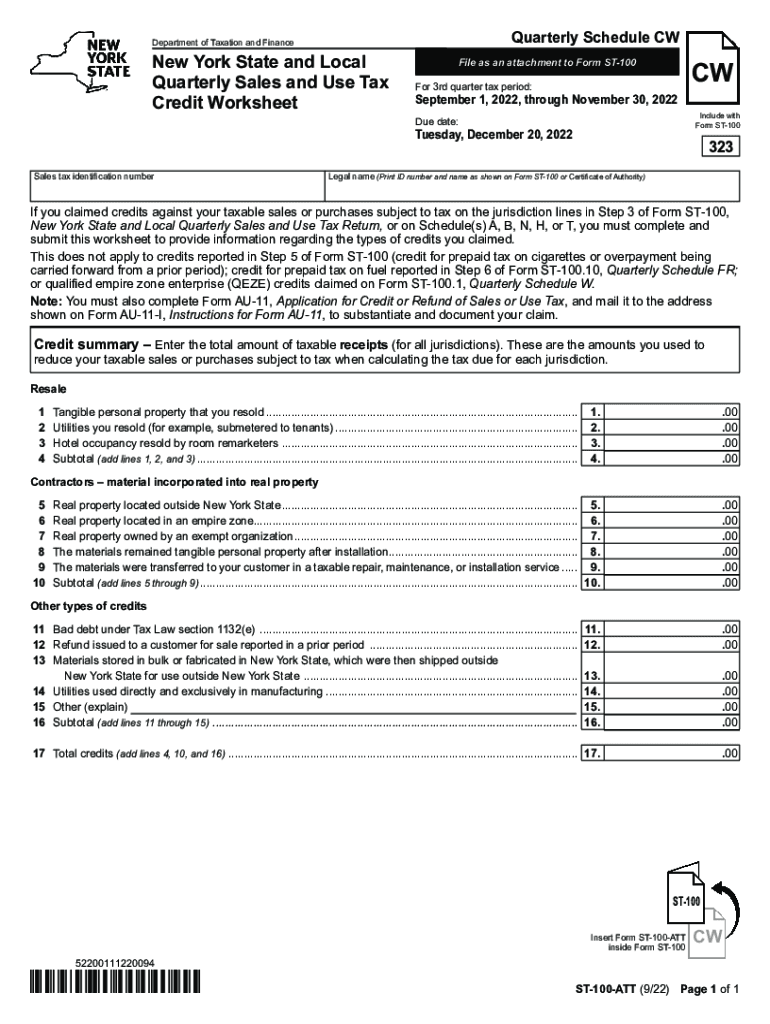
The Form ST-100-ATT, also known as the New York State and Local Quarterly Sales and Use Tax Credit Worksheet, is designed to help taxpayers in New York accurately report and claim credits against sales or purchases that incur state and local taxes. It is a critical tool for businesses looking to reduce their tax liability by documenting eligible credits. Used quarterly, it serves as a supplement to Form ST-100, ensuring that businesses apply any applicable tax credits effectively and conform to legal requirements. This worksheet was revised on September 22 to provide updated guidelines and reporting structures for taxpayers.
How to Use the Form ST-100-ATT
Using Form ST-100-ATT effectively involves several steps, starting with a comprehensive understanding of the credits applicable to your business transactions. Here's a simplified breakdown of the process:
- Identify Eligible Credits: Determine which credits apply to your business based on current tax codes and your financial transactions.
- Accurate Calculation: Precisely calculate the credit amounts. This involves detailed documentation of your sales, purchases, and eligible deductions.
- Completion of the Worksheet: Fill in the worksheet sections with the calculated credits, ensuring each entry aligns with your supporting documentation.
- Integration with Form ST-100: Pair the completed worksheet with your ST-100 form before submission to reflect the credits claimed accurately.
- Review and Submission: Double-check for accuracy and completeness before submitting both documents to the New York State Department of Taxation and Finance by the applicable deadline.
Steps to Complete the Form ST-100-ATT
Completing the ST-100-ATT involves careful documentation and precision. Here are the sequential steps needed:
- Gather Required Information: Assemble all necessary sales and purchase records for the applicable tax period.
- Line-by-Line Entry: Enter the details for each eligible credit in the respective lines of the worksheet. This may include credit types such as vendor collections or prepayments.
- Verify Total Calculations: Ensure that your final calculations correspond to the amounts that will be claimed.
- Cross-Reference ST-100: Verify that the totals calculated on the worksheet tie into the figures reported on the Form ST-100.
- Review for Accuracy: Check for common errors such as numerical mistakes or incorrect credit types before final submission.
Filing Deadlines / Important Dates
The completion and submission of Form ST-100-ATT are time-sensitive. For businesses utilizing this worksheet, keeping track of the following deadlines is essential:
- Quarterly Deadlines: Must correspond with the ST-100 form deadlines on a quarterly basis. For instance, the worksheet for the third quarter covering September 1 to November 30 needs submission by December 20.
- Yearly Academic Calendar Adjustments: Be aware of any state-specific calendar adaptations that could impact filing.
Adhering to these deadlines helps avoid late submission penalties and ensures legal compliance.
Key Elements of the Form ST-100-ATT
The ST-100-ATT comprises several critical sections designed to capture specific details of sales and use tax credit claims. They include:
- Business Identification Information: Identifies taxpayer information including Taxpayer ID.
- Credit Type Designations: Specific lines for different types of credits such as customer refunds or vendor returns.
- Total Credits Summary: A concluding section to validate the total credits being claimed against the sales or use taxes for the period.
Understanding these key components helps in ensuring that all relevant data is accurately reported.
Required Documents
When completing the ST-100-ATT, supporting documents are essential for substantiating credit claims. These include:
- Sales and Purchase Records: Comprehensive records of transactions that underpin your credit calculations.
- Credit Memorandums: Documentation for any tax credit claims related to returned goods or services.
- Reference Documentation: Any additional paperwork or verification materials required by specific credit types.
Maintaining meticulous records aids in the event of an audit and supports the integrity of your tax submissions.
Legal Use of the Form ST-100-ATT
Correct usage of Form ST-100-ATT is grounded in stringent adherence to legal standards. Legal compliance involves:
- Conformance to New York State Tax Law: Ensure practices align with state requirements for claiming sales and use tax credits.
- Honest and Accurate Reporting: Accurate portrayal of your credit situation prevents potential fines or legal issues.
- Segregation of Non-Qualifying Credits: Each entry must represent legitimate credits, with documentation to support each claim.
These legal considerations protect a business from compliance issues and enhance the credibility of its tax filings.
Software Compatibility (TurboTax, QuickBooks, etc.)
Documenting credits efficiently often necessitates software that can integrate with tax forms. Compatibility involves:
- Integration with Accounting Software: Ensure tools like TurboTax and QuickBooks can incorporate figures from the ST-100-ATT.
- Electronic Record-Keeping: Use compatible software to maintain digital copies of your completed worksheets and associated documentation.
- Automation of Calculations: Programs should facilitate the automation of entries and calculations to minimize manual errors.
Employing compatible software streamlines the tax filing process and ensures seamless integration with other financial operations.




