







Definition and Meaning of Reasonable Accommodation
Reasonable accommodation refers to modifications or adjustments provided by an employer to enable individuals with disabilities to perform their job duties effectively. This can include various changes to the work environment or the way tasks are usually performed. Under the Americans with Disabilities Act (ADA), employers are required to offer reasonable accommodations unless doing so imposes an undue hardship on the business.
Common Examples of Reasonable Accommodations
- Flexible Work Hours: Allowing an employee to adjust their schedule for medical appointments or therapy sessions.
- Modified Equipment: Providing specialized computer software or hardware that assists employees in overcoming specific disabilities.
- Physical Changes to Workspace: Adjusting workspaces to make them accessible, such as widening doorways or providing accessible bathrooms.
The definition and examples underscore the importance of understanding reasonable accommodations to promote inclusivity and comply with legal requirements.
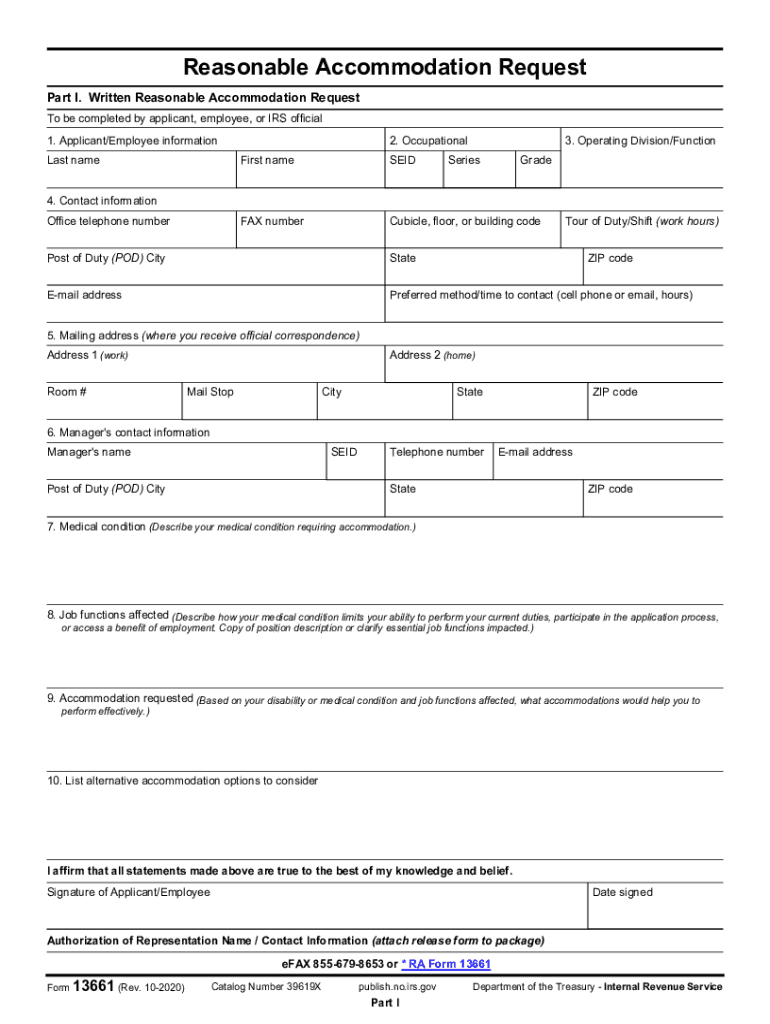
Steps to Complete the Reasonable Accommodation Request Form (Form 13661)
Completing the Form 13661, also known as the Reasonable Accommodation Request form, requires careful attention to detail to ensure compliance with regulations and to facilitate the evaluation process.
- Personal Information: Include full name, contact details, and job title.
- Description of Disability: Clearly state the nature of the disability and how it affects job performance.
- Requested Accommodations: Specify the accommodations requested, being as detailed as possible. Include how these accommodations will assist in effectively performing job duties.
- Medical Documentation: Attach any necessary medical documentation supporting the request, which can validate the need for accommodations.
- Signatures and Dates: Ensure all sections requiring signatures and dates are completed correctly to validate the form.
Completing these steps thoroughly helps facilitate a faster review process by management and can lead to a timely implementation of the requested accommodations.
Eligibility Criteria for Reasonable Accommodation
To qualify for reasonable accommodations under existing laws, employees must meet specific criteria. Understanding these criteria helps both employees and employers navigate the request process.
- Defined Disability: The individual must have a qualified disability that substantially limits one or more major life activities.
- Job Performance: The individual must be able to perform essential job functions with the requested accommodation. Essential functions refer to the fundamental job duties necessary to the position.
- Engagement with Employer: Employees must actively engage with their employer in providing documentation and specifying their needs related to the requested accommodations.
This criteria framework ensures that both parties understand roles and responsibilities during the accommodation process.


Required Documentation for Submitting a Request
Submitting a Reasonable Accommodation Request is often accompanied by specific documentation that supports the request. Understanding what is needed can streamline the evaluation process.
- Medical Verification: A letter from a healthcare professional can substantiate the claim and detail how the disability affects the individual’s work.
- Job Description: Providing a current job description can clarify essential functions and how the disability impacts these tasks.
- Supporting Narrative: A personal statement detailing the request can help explain the reasoning behind the need for specific accommodations.
Having comprehensive documentation readily available aids in a more efficient review process and supports the validity of the request.
Important Dates and Filing Deadlines
Awareness of key dates and deadlines related to the Reasonable Accommodation Request can significantly impact the process. Keeping track of these timelines ensures both employees and employers fulfill their responsibilities timely.
- Request Submission: Employees should submit their requests as soon as a need for accommodation arises, ideally before the deadline of any relevant evaluation periods.
- Employer Response Time: Employers are typically required to respond to accommodation requests within a reasonable timeframe, generally within 30 days, depending on the organization’s policies.
- Follow-up and Review Periods: Should accommodations be granted, regular follow-ups may be required to assess the effectiveness of the modifications or changes.
Adhering to these timelines helps maintain a productive dialogue between employees and employers, fostering a better working environment.
Common Challenges in Obtaining Reasonable Accommodations
Understanding potential challenges faced during the process of obtaining reasonable accommodations can prepare individuals for the journey ahead. Being proactive can help address these issues early on.
- Lack of Awareness: Sometimes, employees may not fully grasp available accommodations or the process to request them. Education is key in these instances.
- Unreasonable Denials: Employers may deny reasonable accommodation requests, citing undue hardship without fairly assessing the request. Employees have the right to appeal these decisions.
- Complex Case Handling: Some cases may involve multiple parties and intricate documentation, leading to delays. Clear communication among all involved can mitigate complications.
Identifying and understanding these challenges serve as preventive measures, empowering employees to navigate the process more effectively.




