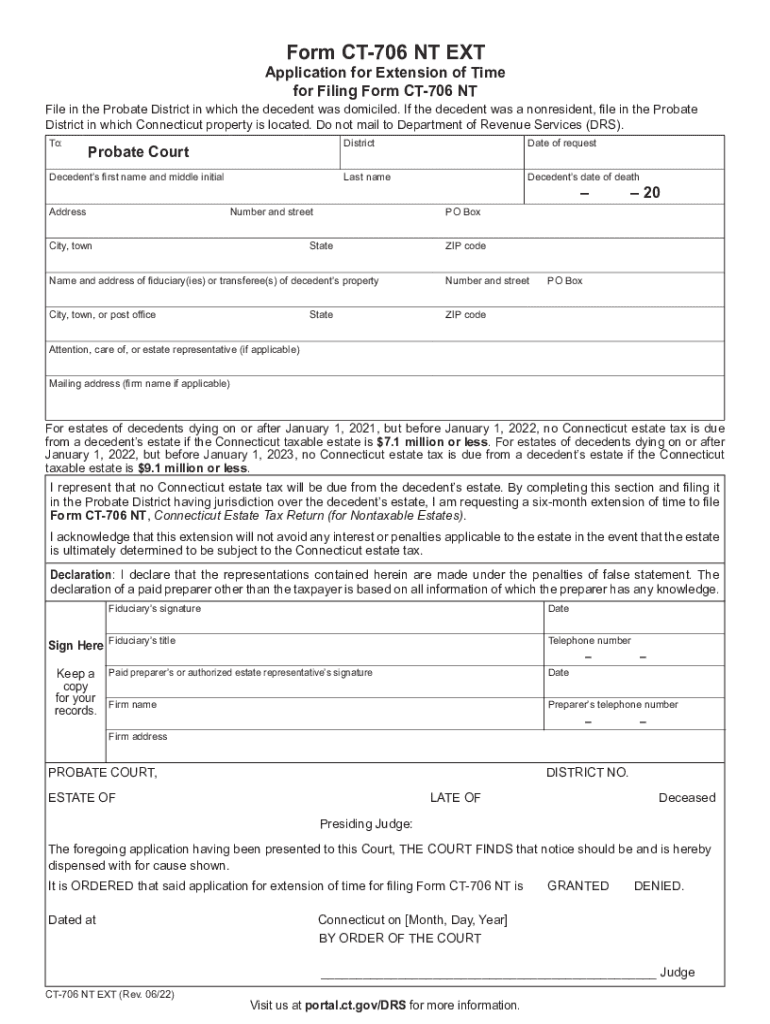







Understanding Form CT-706 NT EXT
Form CT-706 NT EXT is used to apply for a six-month extension to file the Connecticut Estate Tax Return (Form CT-706 NT) for nontaxable estates. This extension provides additional time for estate representatives to organize all necessary documentation, ensuring accurate and complete submission.
Eligibility Criteria for Filing
Eligibility to file Form CT-706 NT EXT focuses on nontaxable estates. The estate must fall below the threshold set by Connecticut law for taxable estates. Estates with values exceeding the threshold must follow different filing procedures. Verifying eligibility early helps avoid filing errors or delays.

How to Obtain Form CT-706 NT EXT
Obtaining Form CT-706 NT EXT is straightforward. The form can be accessed online through the Connecticut Department of Revenue Services official website. Alternatively, physical copies may be available at local probate courts or government offices. Always ensure the version you use is current.
Required Documents for Application
To complete the CT-706 NT EXT application, gather essential documentation, including estate value assessments and previous tax filings. Having all necessary documents on hand before starting the application reduces the possibility of oversight or the need for amendments later.
Steps to Complete Form CT-706 NT EXT
Completing Form CT-706 NT EXT involves several precise steps:
- Download the Form: Access a current version from the Connecticut Department of Revenue Services.
- Fill in Estate Information: Accurately input the estate's details, including its current valuation.
- Specify Extension Reasons: Provide a valid reason for the extension request, typically involving complex estate evaluations.
- Attach Necessary Documentation: Ensure all required documents accompany your form submission.
- Submission: Submit to the appropriate Probate Court by the original due date of Form CT-706 NT.
Submission Options
The form allows for different submission methods:
- Online Filing: Offers a quicker, electronic submission method directly through the state's tax portal.
- Mail: The form can be physically mailed to the address specified in the form's instructions.
- In-Person: Submissions can also be made directly at a probate court office if preferred.
Important Deadlines
Be mindful of critical deadlines when filing Form CT-706 NT EXT:
- Original Due Date: The form must be submitted by the original due date of Form CT-706 NT, even if an extension is being filed.
- Extension Deadline: The extension allows for up to six additional months but does not grant relief from interest or penalties on any taxes owed.
Legal Use and Compliance
Using Form CT-706 NT EXT ensures legality in extending estate tax filing. Missing deadlines or failing to file can result in penalties, making compliance essential. If taxes are owed, paying estimated taxes when filing the extension avoids financial penalties.
Penalties for Non-Compliance
Failing to comply with form submission requirements can result in significant penalties. If the estate's taxes are overdue, interest accrues from the original due date. Ensuring timely filing and payment mitigates financial consequences and preserves the estate's resources.
Variations and Related Forms
Form Variants
Form CT-706/709 is used for estates meeting taxable thresholds. Understanding which form applies ensures proper compliance with Connecticut tax laws, and using incorrect forms leads to processing delays or penalties.
Software Compatibility and Integration
Estate tax software, like TurboTax, might not directly support CT-706 NT EXT, making it crucial to consult software databases or professional advisors for integration methods. Compatibility ensures seamless tax management across platforms.
Taxpayer Scenarios
Different estate representatives, such as executors or trustees, may need tailored guidance when filing. Consulting with tax professionals can address unique situations, ensuring compliance and efficient filing processes.