







Definition & Meaning
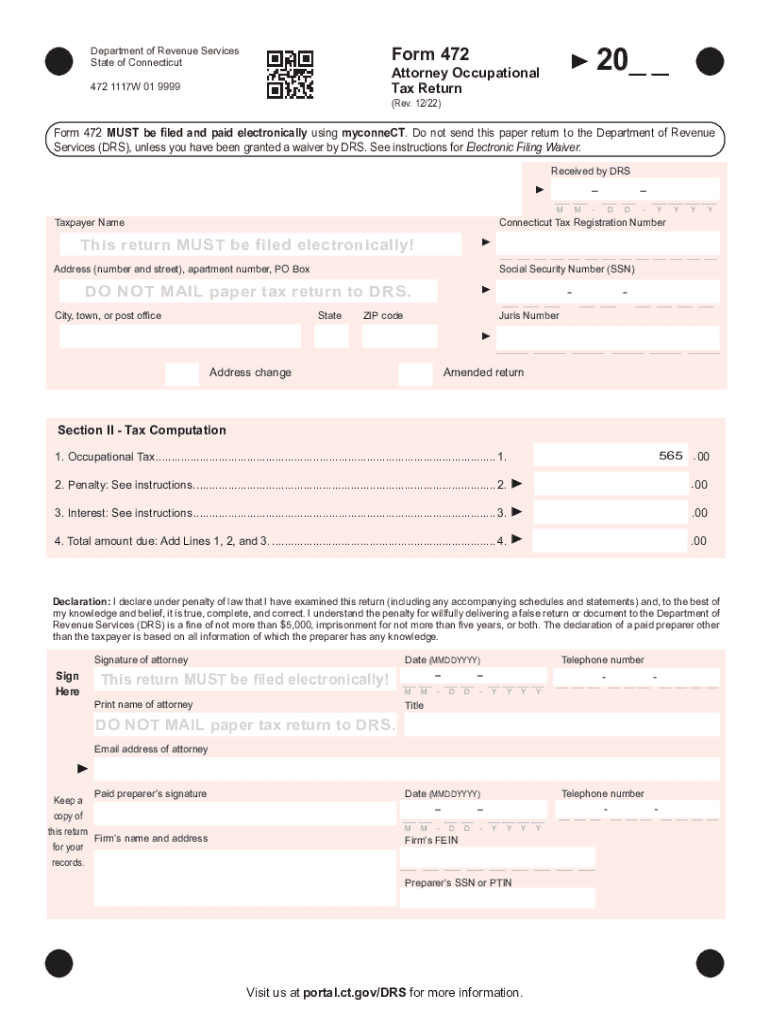
Form 472, also known as the Attorney Occupational Tax Return for Connecticut, is a mandatory electronic filing for attorneys practicing within the state. This document is a declaration of any occupational tax liabilities incurred within a financial year. The form is designed to ensure that legal practitioners contribute the appropriate occupational taxes, thereby maintaining compliance with state taxation laws. Notably, exemptions and qualifications for these exemptions are explicitly outlined, providing attorneys clarity on their liabilities.
How to Obtain Form 472
Form 472 can be accessed via the myconneCT portal, a centralized platform managed by the state of Connecticut for handling various tax-related transactions. The portal provides a secure environment for downloading and submitting the form electronically. You will need to register or log into your myconneCT account to download the form. Importantly, paper versions of this form are generally not available unless a waiver has been approved, requiring most users to engage with the electronic format.
Steps to Complete Form 472
-
Log into myconneCT: Begin by accessing your account on the myconneCT portal using your registered credentials.
-
Navigate to the Form 472 Section: Locate the specific section dedicated to the Attorney Occupational Tax Return.
-
Enter Required Information: Fill in all necessary personal and professional details, including your attorney registration number and relevant income figures.
-
Review Exemptions: Identify and claim any applicable exemptions by attaching necessary documentation for validation.
-
Double-Check Entries: Ensure all fields are correctly filled out to minimize the risk of errors that could lead to penalties.
-
Submit Electronically: Once completed, submit the form through the portal. A confirmation receipt will be provided, which you should download and keep for your records.
Importance of Filing Form 472
Filing Form 472 is essential for compliance with Connecticut's taxation laws for legal professionals. The state mandates that all practicing attorneys who meet the income threshold must declare their occupational taxes to facilitate a fair contribution towards state funds. Non-compliance or delayed submissions could lead to financial penalties, legal repercussions, and a tarnished professional reputation.
Who Typically Uses Form 472
This form is primarily used by licensed attorneys practicing in the state of Connecticut. Both individual practitioners and employers on behalf of their employee attorneys are responsible for submitting Form 472. It caters to those actively engaged in a legal occupation, ensuring their professional tax responsibilities are met in accordance with state law.
Legal Use of Form 472
Using Form 472 legally requires compliance with all outlined instructions and submitting the form within the specified deadlines. It involves accurately reporting income and claiming eligible exemptions. Importantly, the legality of the form rests upon truthfulness and the correct representation of occupational activities and income, with serious consequences for fraudulent claims or misinformation.
Key Elements of Form 472
- Attorney Registration Number: Required for identifying your practice within state systems.
- Income Declaration: Details of all earnings subject to occupational tax.
- Exemption Clauses: Conditions under which exemptions are applicable, including supporting documentation.
- Amendment Instructions: Guidelines for making corrections or changes post-submission.
Filing Deadlines and Important Dates
Form 472 must be filed annually, with specific deadlines set to align with the state's fiscal year. Failure to meet these deadlines may result in late fees or penalties. Stay informed of all critical dates associated with the form submission, typically indicated on the myconneCT portal, to ensure timely compliance.
Penalties for Non-Compliance
Failure to file Form 472 or submitting incorrect information can result in fines or penalties imposed by the state. These penalties are put in place to discourage late submissions and inaccurate declarations. Attorneys are therefore advised to adhere strictly to the form's guidelines and to file within the deadlines to avoid such liabilities.
Required Documents for Form Submission
- Proof of Income: Relevant documents that support your declared earnings, such as invoices or payment slips.
- Exemption Proofs: Any certifications or documents required to justify claimed exemptions.
Ensure all required documents are prepared and verified prior to submission to expedite the process and decrease the likelihood of errors.




