
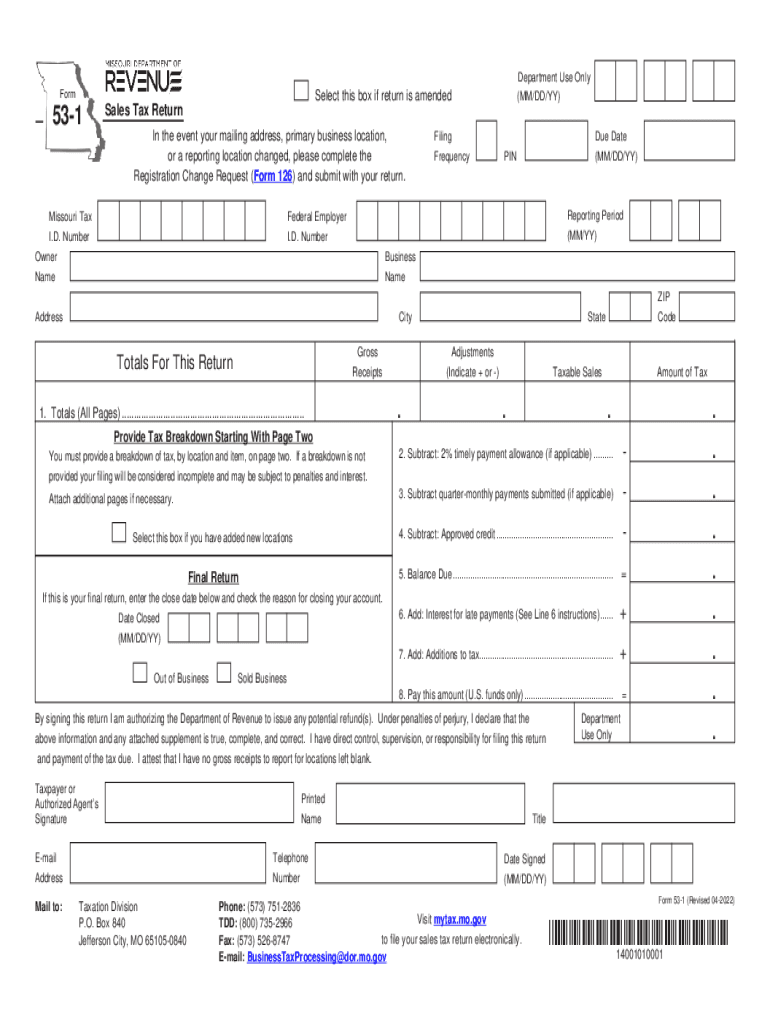







Overview of Missouri Sales Tax Return Form
The Missouri Sales Tax Return Form, commonly referred to as Form 53-1, is crucial for businesses operating within Missouri to report their sales tax liabilities. This document provides a structured framework that includes sections for business identification, gross receipts, adjustments, taxable sales, and total tax amounts due. It's vital for businesses to understand and accurately complete this form to ensure compliance with state tax regulations.
Business Identification and Gross Receipts
Businesses are required to provide detailed identification information at the beginning of the Missouri Sales Tax Return Form. This includes the business name, address, and tax identification number, which helps authorities easily associate the form with the correct entity. Following this, businesses must carefully report their gross receipts, which represent the total amount of sales conducted before any deductions. Accurate reporting of gross receipts is essential, as it forms the base for subsequent tax calculations and assessments.
Adjustments and Taxable Sales
Businesses often need to make adjustments to their gross receipts to account for non-taxable sales, exemptions, or returns. These adjustments are crucial as they ensure only the correct portion of sales is subjected to state tax. Businesses should detail all adjustments to reflect accurate taxable sales figures. Understanding which transactions qualify for adjustments requires familiarity with Missouri tax codes and regulations, as improper adjustments can result in penalties.
Calculating Tax Amounts Due
After determining taxable sales, businesses must calculate the corresponding sales tax due. Missouri has specific tax rates that businesses must apply to their taxable sales figures. Correctly calculating the tax ensures compliance and prevents potential audits or disputes with tax authorities. Businesses might require additional documentation to substantiate their calculations, especially if they have applied any special tax rates or exemptions.
Filing Requirements and Deadlines
Timely submission of the Missouri Sales Tax Return Form is mandatory, with specific guidelines outlining submission deadlines. Generally, businesses must file their sales tax returns by the 20th of each month for the previous month's sales. Adhering to these deadlines is critical to avoid late fees or penalties. Businesses should keep abreast of any changes to filing deadlines, especially during holidays or legislative adjustments.
Methods of Submission
Missouri allows businesses to submit the Sales Tax Return Form through multiple channels, enhancing accessibility and convenience. Options include online filing through state-supported portals, mailing physical documents, or submitting them in person at designated state offices. Choosing the most appropriate method depends on business preferences and the complexity of their filings. Online filing is often recommended for efficiency and confirmation of receipt.
Penalties for Non-Compliance
Failure to comply with filing requirements or deadlines can result in significant penalties for businesses. Missouri imposes financial penalties for late submissions, inaccuracies in reporting, or failure to pay taxes due. These penalties can include a percentage of the tax owed in addition to interest charged on unpaid amounts. Understanding these penalties emphasizes the importance of compliance and accurate, timely submissions.
Legal Use and Significance
The Missouri Sales Tax Return Form serves as an official document acknowledging a business's compliance with state tax obligations. This form not only facilitates tax collection but also ensures fairness and legality in business operations across Missouri. Proper use of the form safeguards businesses from legal repercussions and establishes a transparent record of tax activities. Businesses should always maintain documentation related to their sales tax filings in case of audits or disputes.
Software Compatibility and Integration
Businesses often leverage software solutions like TurboTax or QuickBooks to streamline tax calculations and filings. These tools offer significant integration capabilities, making it easier to manage and submit sales tax returns efficiently. Businesses using compatible software can optimize their tax processes, reduce manual errors, and ensure data accuracy. Understanding software compatibility can lead to more effective tax management and streamlined business operations.
Examples and Practical Scenarios
Real-world scenarios illustrate the practical application and the importance of accurately completing the Missouri Sales Tax Return Form. For instance, a retail business consistently making adjustments for exempt sales to state-registered charities shows how such nuances can affect taxable sales figures. In another case, a restaurant benefiting from reduced tax rates on food sales could significantly impact their tax liabilities. These examples underscore the form's flexibility in accommodating various business types and activities.
Key Elements and Considerations
The Missouri Sales Tax Return Form contains several essential components businesses must understand. Each element, from business identification to taxable sales reporting, plays a critical role in determining the overall tax liability. Clarifying these elements prevent misunderstandings and ensures businesses meet their tax obligations efficiently. Additionally, it is crucial for businesses to stay informed about potential changes in tax codes or form updates to maintain compliance.




