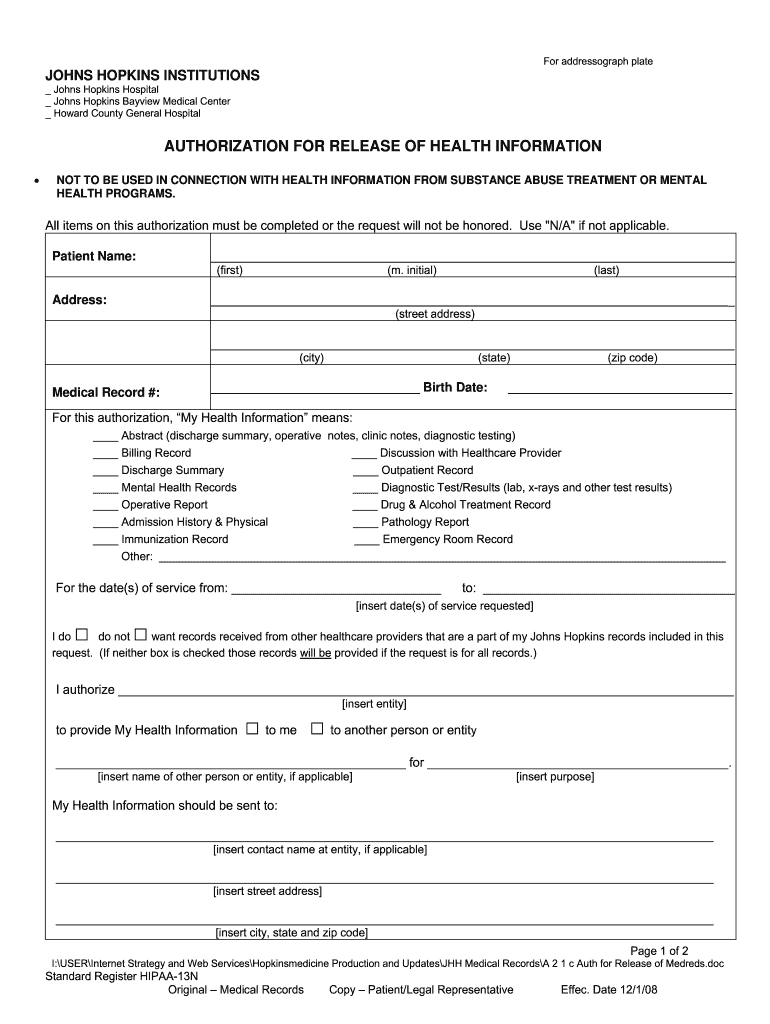







Definition and Meaning of Johns Hopkins Medical Records
Johns Hopkins medical records refer to the comprehensive documentation of a patient's medical history, treatment, and care received at Johns Hopkins Institutions, which includes various hospitals and healthcare facilities. This documentation is vital for both healthcare providers and patients, as it facilitates continuity of care, provides detailed insights into a patient's health status, and serves various administrative and legal purposes.
- Components of Medical Records: Typically, medical records at Johns Hopkins encompass:
- Patient demographic information
- Diagnostic tests and results
- Treatment plans and notes
- Medication history and prescriptions
- Consent forms and advanced directives
- Discharge summaries
Understanding the meaning and breadth of Johns Hopkins medical records is crucial for patients seeking to manage their health information effectively. The records contain highly sensitive information, highlighting the importance of adhering to privacy laws and regulations.
How to Obtain the Johns Hopkins Medical Records
To obtain your Johns Hopkins medical records, follow a structured approach to ensure compliance with institutional policies and legal requirements.
-
Identify the Department: Determine the specific Johns Hopkins facility where you received care, such as Johns Hopkins Hospital or Johns Hopkins Bayview Medical Center. Each location may have distinct processes.
-
Contact Information: Reach out to the medical records department directly for guidance. For instance, you can find the Johns Hopkins medical records phone number or fax number on the institution’s website.
-
Complete Request Forms: You often need to fill out a medical records release form, which may require:
- Personal identification
- The date of service
- Specific records requested
-
Submit Your Request: Depending on the facility, you can submit your request using different methods:
- In-person at the medical records department.
- By mail using the address designated for medical records requests.
- Via email or secure online portal, if available.
Following these steps will help ensure a smooth process in obtaining your medical records from Johns Hopkins.
Steps to Complete the Johns Hopkins Medical Records Request
Completing a request for Johns Hopkins medical records involves several critical steps to guarantee efficiency and accuracy in retrieving your information.
-
Gather Required Information: Collect essential details necessary for the request, including:
- Full name and date of birth
- Dates of treatment
- Any other identifying information requested by the institution
-
Obtain the Medical Records Release Form: This form is often available on the Johns Hopkins website or at the medical records department.
-
Fill Out the Form: Complete the form carefully, ensuring all fields are accurately filled out to prevent delays.
-
Choose Delivery Method: Indicate how you would like to receive your records. Options may include:
- Physical copies sent to your postal address
- Electronic copies delivered through secure email or online access
-
Sign and Date: Ensure you sign the form, acknowledging your understanding of the privacy policies and giving consent for records release.
-
Submit the Request: Send your completed form through the selected submission method. If submitting by mail, use the designated address, ensuring proper postage.
-
Follow Up: After submitting your request, follow up with the medical records department if you do not receive a confirmation or your records within a specified timeframe.
These steps will help streamline the process and ensure that you receive your Johns Hopkins medical records efficiently.
Important Terms Related to Johns Hopkins Medical Records
Familiarizing yourself with key terms associated with Johns Hopkins medical records can enhance understanding and facilitate easier communication with healthcare providers.
- HIPAA: The Health Insurance Portability and Accountability Act protects patient privacy and establishes standards for the handling of medical records.
- Authorization: A formal permission from the patient allowing the release or sharing of their medical records.
- PHI (Protected Health Information): This refers to any information that identifies an individual and relates to their health, healthcare, or payment for healthcare.
- Disclosures: Instances where medical records are shared with third parties, which must comply with established legal and regulatory standards.
Understanding these terms is essential for navigating the medical records process at Johns Hopkins and ensures better compliance with healthcare regulations.
Legal Use of the Johns Hopkins Medical Records
Using Johns Hopkins medical records legally involves understanding various laws and regulations that govern their use and sharing.
- Informed Consent: A patient must give informed consent before their medical records can be disclosed to any third party. This consent should clarify which records can be accessed and for what purpose.
- Legal Standards: Compliance with state and federal laws, such as HIPAA, is mandatory, ensuring that personal health information is handled confidentially.
- Permitted Uses: Medical records may be legally accessed and used for various reasons, including:
- Treatment: Healthcare providers using records for current patient care.
- Billing: Insurance companies require medical records to process claims.
- Research: Certain records may be used in research, provided they are anonymized or authorized.
Understanding these legal frameworks is crucial for patients to ensure their rights are protected while facilitating necessary access to their health information.
Examples of Using the Johns Hopkins Medical Records
There are several practical scenarios where obtaining and utilizing Johns Hopkins medical records can be beneficial for patients.
-
Transitioning Care: If you're moving to a new healthcare provider, having your Johns Hopkins medical records available helps ensure continuity of care. Your new doctor will have immediate access to your history, diagnostic tests, and treatment plans, which can expedite your new treatment.
-
Insurance Claims: In case of a dispute with an insurance company regarding treatment coverage, having detailed medical records can provide evidence of care received and justify claim submissions.
-
Legal Matters: Medical records may be required in legal situations, such as personal injury lawsuits, to document injuries and treatments received.
-
Reviewing Health History: Patients can use their medical records to review past treatments, allergies, medications, and possible hereditary health issues, enabling them to make informed decisions about future healthcare.
Understanding these applications will allow patients to leverage their Johns Hopkins medical records effectively for personal health management and advocacy.