




01. Edit your arizona form 301 online
Type text, add images, blackout confidential details, add comments, highlights and more.

Type text, add images, blackout confidential details, add comments, highlights and more.

Draw your signature, type it, upload its image, or use your mobile device as a signature pad.

Send az form 301 via email, link, or fax. You can also download it, export it or print it out.
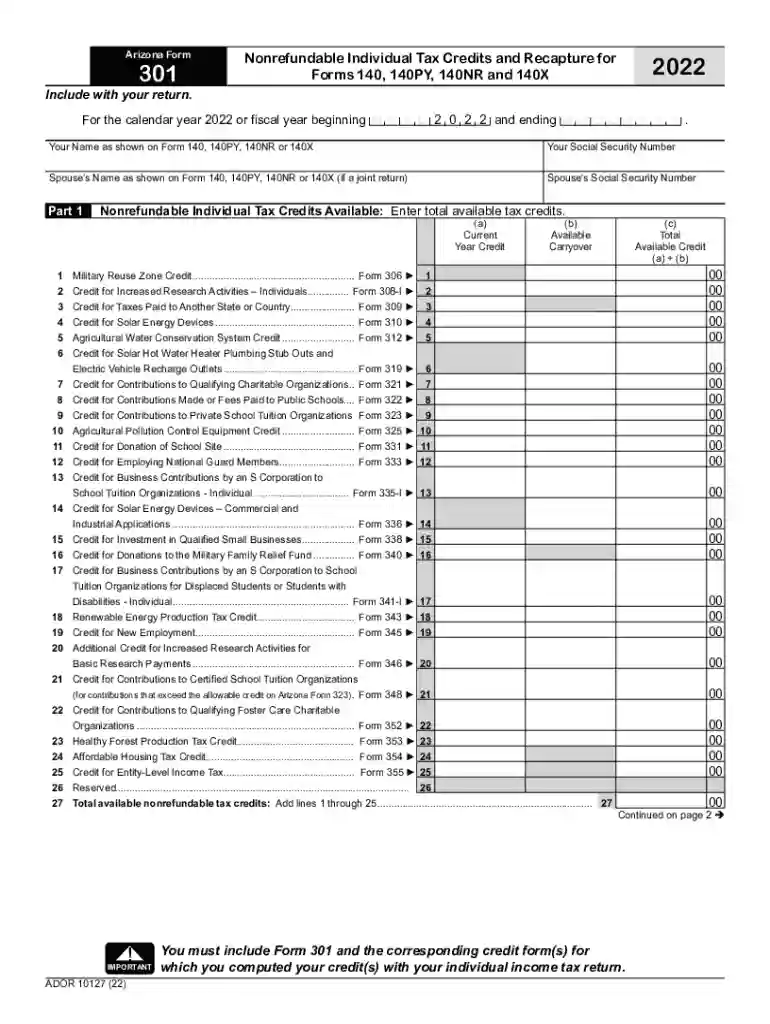
Arizona Form 301 is specifically designed for taxpayers to report nonrefundable individual tax credits. It plays a crucial role in annual state tax filings, enabling individuals to capture available tax credits that can offset tax liabilities. This form encompasses credits for activities such as participating in military reuse zones, engaging in research and development, installing solar energy devices, and making contributions to eligible charitable organizations. By accurately completing this form, taxpayers can potentially reduce their tax burden through these available credits.
Using Arizona Form 301 involves several critical steps to ensure proper application of tax credits. Taxpayers must first gather necessary documents that evidence their eligibility for various credits. They should then follow the form's instructions to detail each credit, ensuring accurate transfer of these credits onto their main income tax return. It's essential to calculate the total available credits and determine how they apply to taxes owed. Adhering to these procedures helps in maximizing the tax credits applicable to a taxpayer's obligations.
Gather Required Documentation: Collect all documentation that supports your tax credits, such as receipts or official statements.
Identify Applicable Credits: Review the form's sections to determine which credits apply to your situation, such as those for solar energy installations or research activities.
Detail Each Credit: Enter the specifics of each credit you qualify for on the form, including amounts and descriptions.
Calculate Total Credits: Add all eligible credits to ascertain your total available reduction against taxes owed.
Transfer to Main Tax Return: Use the total from Form 301 to adjust your overall tax liability on your standard income tax return.
Arizona Form 301 is primarily utilized by residents and individuals within the state who seek to claim nonrefundable tax credits on their personal income tax returns. This includes taxpayers engaging in activities that qualify for specific Arizona state tax credits. Individuals involved in renewable energy initiatives, charitable contributions, and those working within designated economic stimulus zones frequently find this form necessary.
Arizona mandates specific criteria that apply to the various tax credits reported on Form 301. It's essential to note:
The completion of Arizona Form 301 coincides with the annual state tax filing deadline, typically April 15th. Taxpayers should ensure that all credits are appropriately documented and the form is attached to their state return by this due date. Extensions are available but must be applied for ahead of the deadline to avoid late penalties.
Consider a taxpayer who installs a solar energy system at their home. They can utilize Arizona Form 301 to claim a credit reflecting this green investment. Similarly, a business donating to an Arizona school might report this on Form 301 to avail of educational tax credits. These scenarios illustrate how various individuals and businesses engaged in eligible activities can leverage this form to reduce their taxable income effectively.
We've got more versions of the arizona form 301 form. Select the right arizona form 301 version from the list and start editing it straight away!
At DocHub, your data security is our priority. We follow HIPAA, SOC2, GDPR, and other standards, so you can work on your documents with confidence.


