
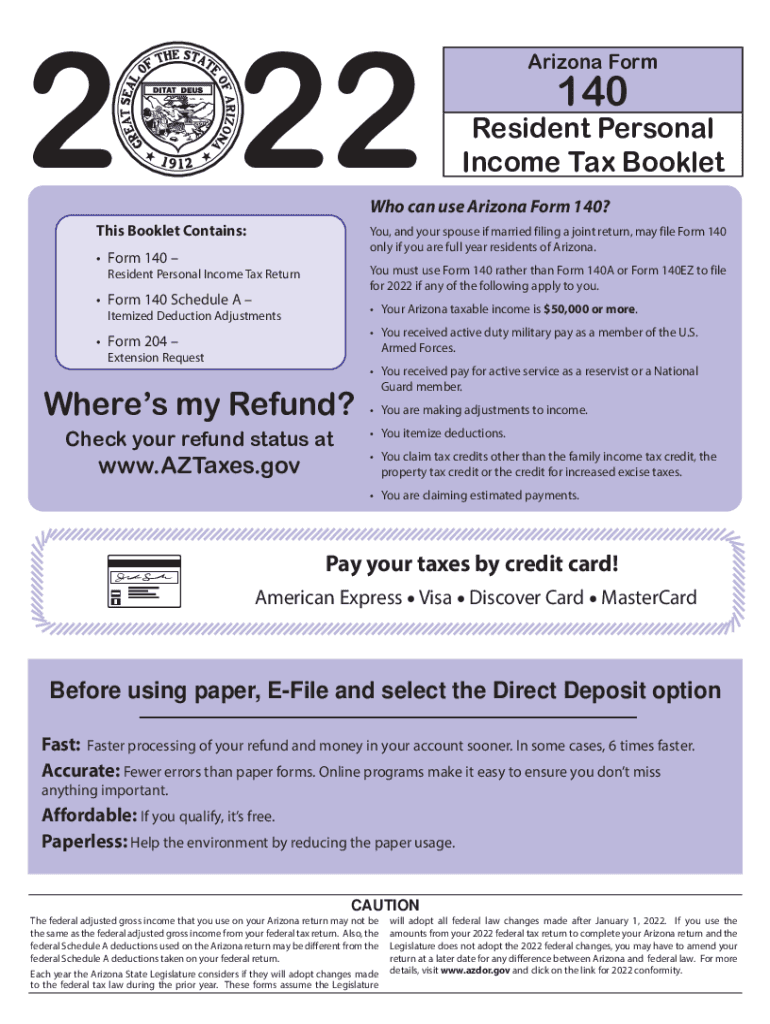







Definition and Meaning
The Arizona Withholding Tax as managed by the Arizona Department of Revenue (AZDOR) is a state tax that requires employers to withhold a portion of an employee's wages to be paid to the state government. Withholding tax is a crucial part of the tax system, facilitating the collection of income taxes in a systematic way. It ensures that taxes are collected gradually from employees' wages, eliminating the need for large payments at the end of the fiscal year. This tax is applicable to various income categories including salaries, bonuses, and specific forms of compensation.
Steps to Complete the Arizona Withholding Tax Arizona Department of Revenue - AZDOR
-
Determine Withholding Amount: Begin by calculating the amount of withholding tax by using the state’s withholding tax rate tables or online calculators provided by AZDOR. This is typically based on the employee’s salary, tax filing status, and any additional declared withholdings.
-
Collect Employee Information: Employees must complete the Arizona Form A-4, which specifies the amount of tax to be withheld. This form should be updated annually or whenever an employee's financial situation changes significantly.
-
Calculate and Deduct Withholding: Employers should regularly calculate the withholding amount from each paycheck according to the A-4 form instructions and Arizona state tax guidelines.
-
Deposit Withheld Taxes: Employers must periodically deposit these funds with the AZDOR. The deposit schedule might be monthly, quarterly, or annually, depending on the employer's total annual payroll.
-
File Withholding Tax Returns: Employers must file withholding tax returns with the AZDOR. This can be completed via Arizona's online e-file system or by mailing paper forms.
-
End-of-year Reconciliation: At the end of each year, complete an annual reconciliation by comparing the total taxes withheld with the total reported and paid. Any discrepancies should be promptly addressed with the AZDOR.
Key Elements of the Arizona Withholding Tax Arizona Department of Revenue - AZDOR
- Employee Withholding Certificate (Form A-4): Essential for determining individual withholding amounts.
- Withholding Tax Rate Tables: Guides employers in calculating the correct withholding amount.
- Employer Identification Number (EIN): Required for employers to report and remit taxes.
- Annual Reconciliation Reports: Necessary for cross-verifying withheld taxes against what was reported.
Who Typically Uses the Arizona Withholding Tax Arizona Department of Revenue - AZDOR
The Arizona Withholding Tax is predominantly utilized by employers who need to calculate and remit employee tax withholdings to the state. This includes corporate entities, small businesses, and any organization with employees receiving wages in Arizona. Additionally, tax professionals and payroll departments are heavily involved in managing these taxes to ensure compliance and accuracy.


State-Specific Rules for the Arizona Withholding Tax Arizona Department of Revenue - AZDOR
- Withholding Rate Adjustments: Arizona allows changes in withholding rates annually, which requires employers to update their systems and procedures accordingly.
- Minimum Withholding Requirement: Employers must withhold a minimum percentage of the employee's wages, even if the employee requests otherwise.
- Local Tax Regulations: Employers should be aware that additional city or county taxes may apply, which can affect overall withholding responsibilities.
Filing Deadlines and Important Dates
- Monthly Depositors: Taxes must be deposited by the 15th of the following month.
- Quarterly Depositors: Due dates are April 30, July 31, October 31, and January 31 for the respective quarters.
- Annual Filers: Annual reports and reconciliations are typically due on January 31.
Form Submission Methods (Online, Mail, In-Person)
Arizona offers flexibility in how withholding tax forms and payments are submitted:
- Online Submission: The preferred and most efficient method, using the Arizona e-file system for both payments and form submissions.
- Mail: Paper forms and checks can be mailed to the Arizona Department of Revenue. It's crucial to ensure delivery before the due date to avoid penalties.
- In-Person: Though less common, submissions can be made directly at AZDOR offices.
Penalties for Non-Compliance
- Late Payment Penalties: Failure to remit withholding taxes on time could result in penalties which are typically a percentage of the unpaid tax and increase over time.
- Interest on Unpaid Taxes: In addition to penalties, interest accrues on any unpaid taxes from the due date until paid in full.
- Filing Penalties: Non-compliance with filing requirements results in additional financial penalties, and repeated non-compliance may trigger audits or more severe repercussions from AZDOR.
Software Compatibility (TurboTax, QuickBooks, etc.)
Many accounting and payroll software solutions are compatible with Arizona's withholding tax requirements:
-
TurboTax and QuickBooks: Both allow for the calculation and remittance of state withholding taxes, integrating directly with Arizona’s electronic filing and payment system.
-
Automatic Updates: These platforms frequently update their tax tables and forms in accordance with changes to state tax laws.
-
Customization Options: Users can customize settings to accommodate unique payroll scenarios, such as multi-location businesses with varying withholding requirements.




