







Definition & Meaning
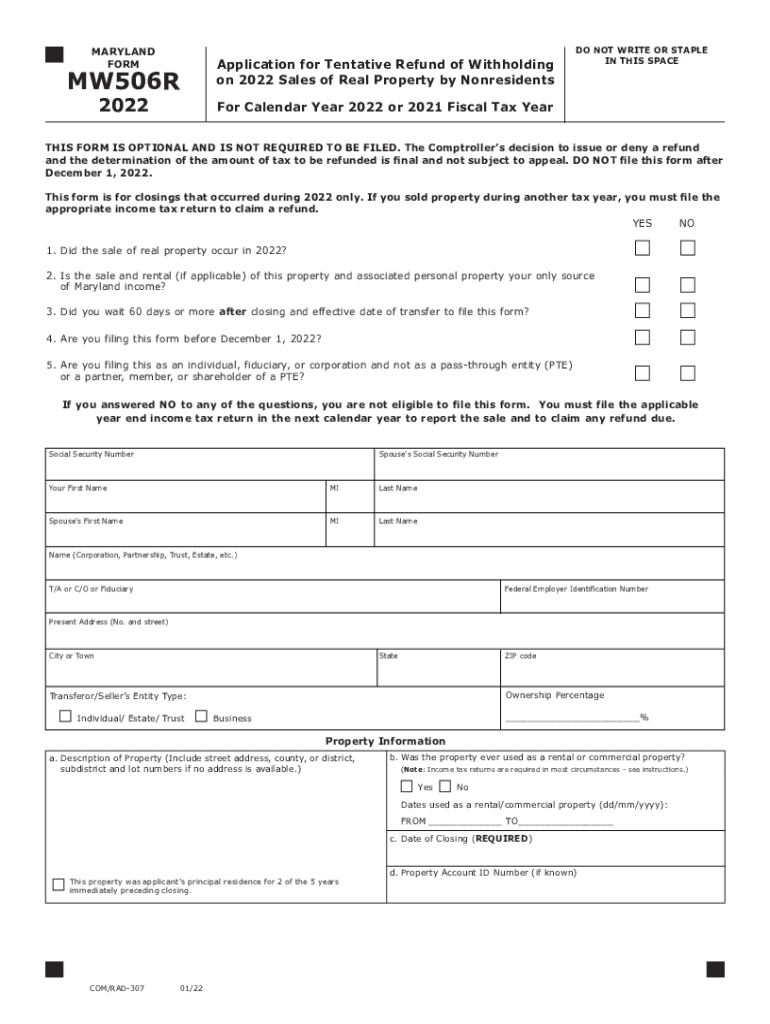
The "Maryland Withholding Forms Real Estate" refers to tax forms used in Maryland for handling withholding taxes on the sale of real estate by nonresident property owners. These forms are intended to facilitate the proper calculation and payment of withholding taxes that apply to these transactions. Typically, these tax forms ensure that the appropriate amount of tax is withheld at the time of sale, preventing underpayment of state taxes on gains made from real property sales by nonresidents.
How to Use the Form
To use the Maryland Withholding Forms correctly, sellers and buyers should follow a structured process. Firstly, sellers should be aware of their nonresident status, as this influences the withholding tax requirements. Secondly, during the real estate transaction, the forms are completed to calculate the expected tax withholding based on the sale price and other factors like deductions for capital improvements or settlement expenses. Finally, submit the completed form and any associated payment to the Maryland revenue department to ensure compliance with state tax obligations.
How to Obtain the Form
Maryland Withholding Forms for real estate transactions can be obtained from multiple sources. They are available for download directly from the Maryland Comptroller's website. Alternatively, forms may also be requested from real estate professionals involved in the transaction, such as real estate agents or attorneys, who commonly assist clients in accessing and completing necessary documentation.
Steps to Complete the Form
- Gather Required Information: Obtain essential details, such as sale price, settlement expenses, and capital improvements.
- Identify Seller's Tax Status: Confirm the seller’s nonresident status, impacting the withholding calculation.
- Calculate Withholding Amount: Follow form instructions to compute withholding based on applicable rates.
- Complete Form Fields: Accurately fill in all relevant fields and sections in the form.
- Submit Form and Payment: Send the completed form and any tax payments to the state department before the deadline.
- Retain Copies: Keep copies of the submitted form for personal records and future reference.
Filing Deadlines / Important Dates
For those utilizing the Maryland Withholding Forms in 2021, it is crucial to adhere to specified deadlines to avoid penalties. The form submission deadline typically aligns with the closing of the real estate transaction. Sellers must ensure the form is filed and necessary payments are made within days following the sale to remain compliant with state tax regulations.
Eligibility Criteria
To qualify for the Maryland Withholding process pertaining to real estate sales, sellers must be nonresidents of Maryland involved in the transaction. Additionally, these sellers should meet criteria stipulated by Maryland tax laws regarding the withholding of taxes from proceeds gained through real property sales.


Required Documents
The use of Maryland Withholding Forms for real estate involves the submission of specific documents, which include:
- A completed withholding form.
- Documentation verifying sale details, such as the closing statement.
- Evidence of settlement expenses.
- Records of capital improvements made to the property.
Penalties for Non-Compliance
Failure to comply with Maryland’s withholding tax requirements can result in significant penalties. Non-compliance may include incomplete form submissions, incorrect withholding calculations, or missed deadlines. The state can impose fines and interest charges on any outstanding tax amounts, impacting both buyers and sellers involved in the transaction.
Legal Use of the Form
Maryland Withholding Forms for real estate transactions are utilized under a legal framework that mandates withholding taxes from nonresidents selling real property in the state. This legal requirement aims to ensure that the state collects taxes owed on gains from property sales, efficiently securing revenue from nonresident sellers to fund public services.
Key Takeaways
Maryland Withholding Forms for real estate transactions are essential for managing tax obligations for nonresident property sellers. Understanding and correctly completing these forms, adhering to submission deadlines, and ensuring all necessary documents are included help in avoiding penalties. Mastery of these forms contributes to smoother real estate transactions within Maryland’s legal tax framework.


