



01. Edit your d 4 form online
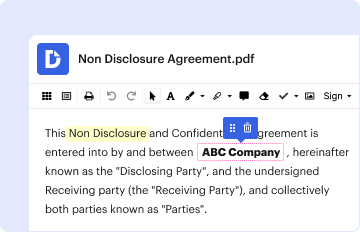
Type text, add images, blackout confidential details, add comments, highlights and more.

Type text, add images, blackout confidential details, add comments, highlights and more.
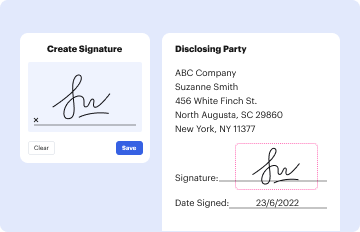
Draw your signature, type it, upload its image, or use your mobile device as a signature pad.

Send it via email, link, or fax. You can also download it, export it or print it out.
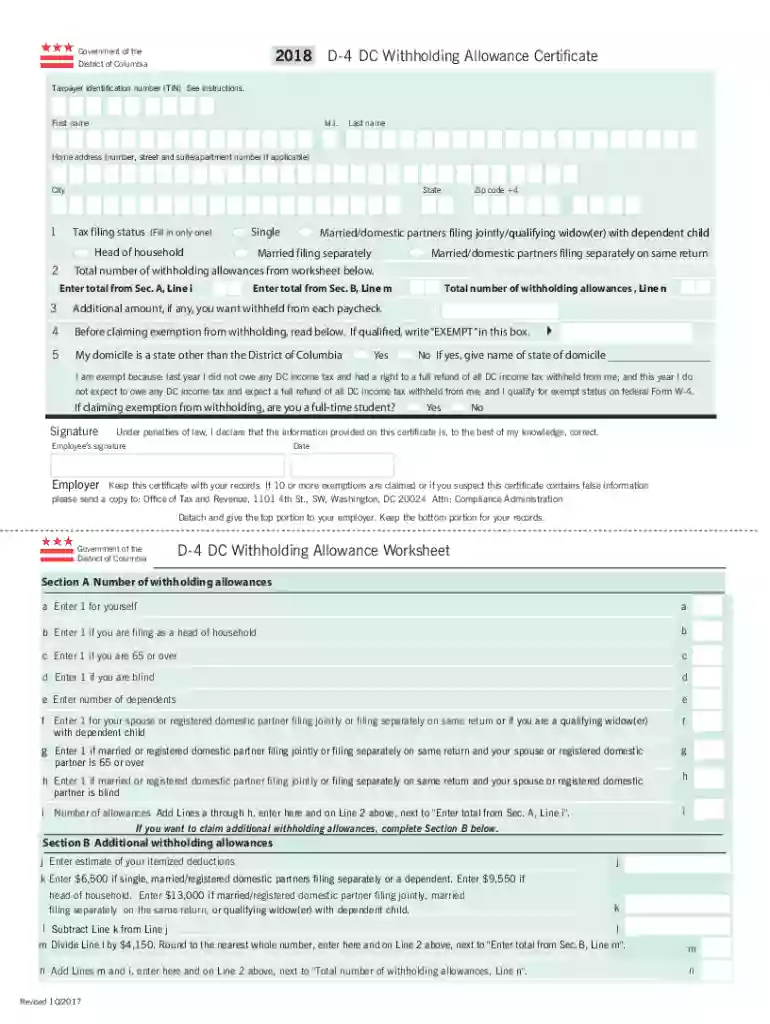
The D-4 Form, officially known as the D-4 DC Withholding Allowance Certificate, is a critical document for new employees working in the District of Columbia. The primary purpose of the D-4 form is to determine the appropriate amount of income tax to withhold from an employee's paycheck. This withholding aligns with an individual's tax filing status and the number of allowances they claim. The D-4 form includes sections that allow employees to provide personal information, specify their tax filing status, and complete a withholding worksheet. By accurately filling out this form, employees ensure the correct taxation of their income, reducing the risk of owing taxes at the end of the year.
Employees must carefully fill out the D-4 form to facilitate proper income tax withholding. Begin by entering personal details such as your name, address, and Social Security number. Next, specify your tax filing status, choosing from options like single, married, or head of household. Use the worksheet provided with the form to calculate the number of withholding allowances based on your circumstances. Sign and date the form to certify the accuracy of the information provided. Submit the completed D-4 form to your employer, who will use the data to adjust your paycheck's tax withholdings. Regularly reviewing and updating the form can help accommodate changes in life circumstances, such as marriage or additional dependents.
The D-4 form can be acquired through several convenient channels. Visit your employer's human resources department, as they often provide necessary employment paperwork, including the D-4 form, during the onboarding process. Alternatively, you can download the form from the official website of the District of Columbia Office of Tax and Revenue, which supplies the most current version. For additional assistance, the IRS website may provide links to local tax resources. Employers are required by law to make these forms easily accessible to new employees, ensuring seamless compliance with tax withholding requirements.
Personal Information: Enter your full name, home address, and Social Security number at the top of the form. Ensure the details are accurate to prevent processing delays.
Filing Status: Select your tax filing status. Options typically include single, married, or head of household.
Allowance Worksheet: Complete the corresponding worksheet to determine the number of allowances you can claim. This step involves calculating personal and dependent allowances.
Exemptions: Indicate any exemptions you are eligible for, such as claiming additional withholding for extra taxes.
Certification: Sign and date the form to verify that all provided information is true and correct.
Submission: Return the completed form to your employer for processing.
Accurately completing each step ensures compliance with DC's tax withholding laws and contributes to precise income tax calculations throughout the year.
Completing the D-4 form is crucial for maintaining accurate tax withholdings from your paycheck. Utilizing this form helps ensure you don't owe a significant tax amount at year-end or receive a surprise bill from the IRS. By correctly accounting for personal situations, such as dependents and marital status, you can avoid over or under-taxation, optimizing your monthly cash flow. Moreover, this proactive approach to tax planning demonstrates financial responsibility and can prevent unnecessary financial stress from unexpected tax liabilities.
The D-4 form is primarily used by employees residing and working in Washington, D.C. This includes individuals starting a new job, as well as existing employees who experience significant life changes affecting their tax situation. Employers in DC require this form to establish accurate withholding protocols. While it is mainly applicable to individual employees, the implications and results of this form also indirectly affect employers, payroll departments, and tax planning professionals who assist with withholding strategies.


These components ensure that all relevant data is collected for accurate income tax calculation and withholding.
Given its specificity to Washington, D.C., the D-4 form operates under particulars that might not be applicable in other states. For instance, DC's withholding rules may account for unique local statutes and tax rates. Employees must understand these state-specific guidelines to ensure compliance. Failure to address these correctly can lead to incorrect tax deductions, potential penalties, or even audits. Keeping informed of any modifications posted by the District's Office of Tax and Revenue is also essential for maintaining up-to-date tax form submissions.
Consider a newly married employee moving to DC for a job. To reflect their new marital status and optimize tax withholding, they must complete a D-4 form. By updating their allowances, they can ensure correct withholding based on their combined household income. Another example involves a DC resident starting a side job; they may choose to file a new D-4 form for the second employer, specifying additional withholdings to cover any potential tax shortfalls resulting from self-employment income. These scenarios illustrate the form's flexibility and capacity to adapt to various personal tax needs.
We've got more versions of the d 4 form form. Select the right d 4 form version from the list and start editing it straight away!
At DocHub, your data security is our priority. We follow HIPAA, SOC2, GDPR, and other standards, so you can work on your documents with confidence.
Dont file Form 2210. You arent required to figure your penalty because the IRS will figure it and send you a bill for any unpaid amount.Read more
The DE 4 is used to compute the amount of taxes to be withheld from your wages, by your employer, to accurately reflect your state tax withholding obligation.Read more


