







Understanding the RTF-3 Form
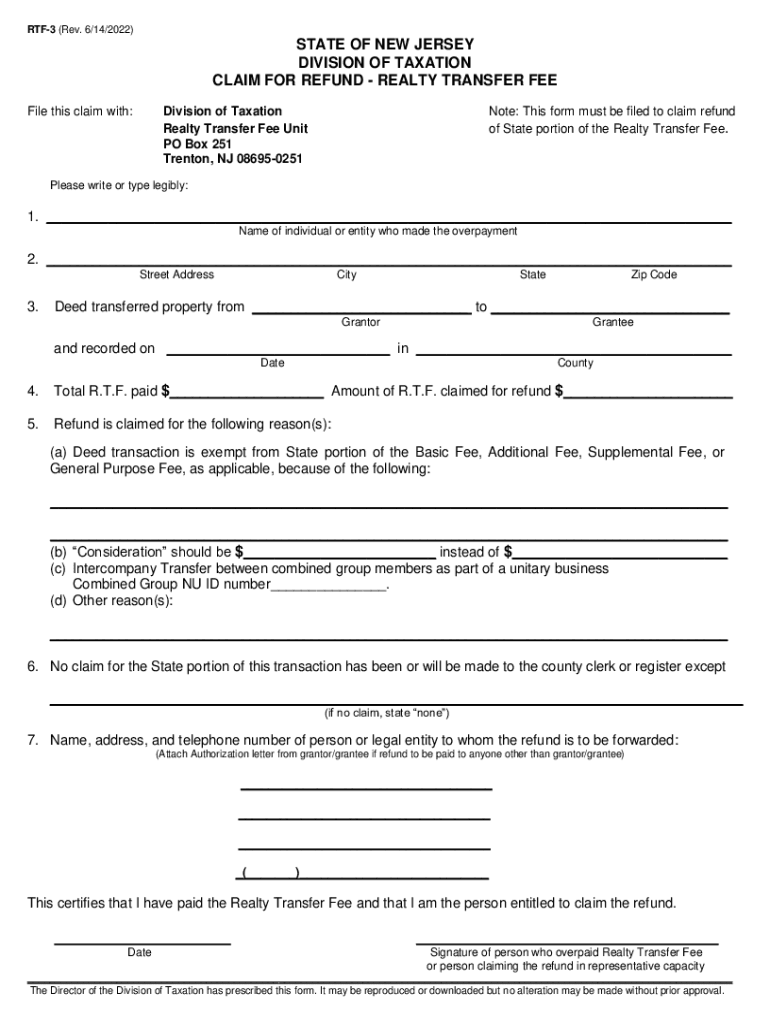
The RTF-3 form, issued by the New Jersey Division of Taxation, serves as a document for claiming refunds of the Realty Transfer Fee. This form is crucial for those who have overpaid this fee, ensuring they can reclaim their funds by providing detailed transaction information and reasons for the refund claim.
How to Use the RTF-3 Form
To effectively utilize the RTF-3 form, individuals or entities must carefully follow specific steps and guidelines. This process begins with accurately gathering all relevant transaction details required by the form. It's essential to ensure that all information is complete before submission, as this can impact the approval of the refund claim.
Steps to Complete the RTF-3 Form
- Gather Transaction Details: Collect information about the property transfer, including dates, involved parties, and the amount of transfer fee paid.
- Identify Reasons for Claim: Clearly state why the refund is sought, such as an overpayment or erroneous calculation of the transfer fee.
- Complete the Form: Fill out each section of the RTF-3 form with the necessary details, ensuring accuracy and compliance with state requirements.
- Attach Necessary Documentation: Include any supporting documents that validate the refund claim, such as payment receipts or legal documents.
Obtaining the RTF-3 Form
Individuals or businesses can access the RTF-3 form through the New Jersey Division of Taxation website. It is available for download, allowing easy access and convenience for those needing to submit a refund claim.
Key Elements of the RTF-3 Form
The RTF-3 form comprises several critical components that must be addressed for a successful refund claim:
- Detailed transaction information
- Specific reasons for the refund request
- Eligibility criteria for the refund
- Required documentation to support the claim
Important Terms Related to RTF-3
Understanding terminology related to the RTF-3 form is vital for accurate completion. Terms such as Realty Transfer Fee, overpayment, transaction date, and supporting documentation should be clearly understood to avoid errors and ensure that the refund claim process proceeds smoothly.
Eligibility Criteria for RTF-3
The eligibility for claiming a refund via the RTF-3 form depends on specific conditions set by the New Jersey Division of Taxation. Generally, any overpayment of the Realty Transfer Fee qualifies for a refund, provided that accurate and complete information accompanies the claim. It's important to review these criteria thoroughly to ensure eligibility before submission.


Submission Methods for the RTF-3 Form
Claimants can submit the RTF-3 form through various methods. While traditional mail and in-person submission are options, digital submission can be more efficient. Online submission through the New Jersey Taxation website offers a streamlined process, reducing the chance of delays associated with other methods.
Legal Use of the RTF-3 Form
Legally, the RTF-3 form is used to rectify any overpayment of the Realty Transfer Fee, ensuring taxpayers are not financially disadvantaged. The form's purpose is solely for refund claims and must be used in accordance with New Jersey's tax laws and regulations.
Required Documents for RTF-3 Submission
When submitting the RTF-3 form, specific documents must accompany the form to validate the claim:
- Receipt or proof of original fee payment
- Legal documents relating to the real estate transaction
- Any other documentation specified by the New Jersey Division of Taxation
Penalties for Non-Compliance
Failing to comply with the RTF-3 form requirements can result in denial of the refund claim. Incomplete or inaccurate information may delay processing, and in some cases, penalties may apply for misrepresenting facts or attempting to claim unauthorized refunds.
State-Specific Rules for the RTF-3 Form
The RTF-3 form is unique to New Jersey, with rules tailored to the state's taxation system. Understanding these state-specific guidelines is crucial to ensuring that claims align with regulatory standards and maximize the likelihood of a successful refund.


