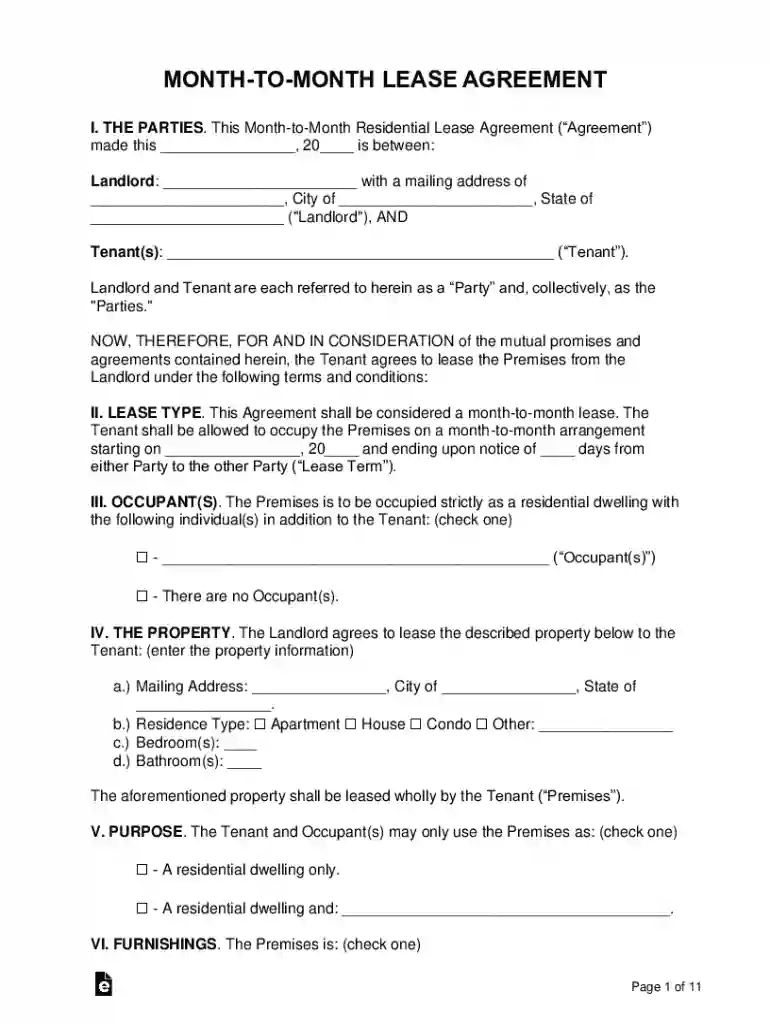
Definition and Overview of Month-to-Month Residential Lease Agreement
A Month-to-Month Residential Lease Agreement is a legal document that outlines the terms under which a tenant agrees to occupy rental property owned by a landlord on a flexible monthly basis. This type of lease allows tenants to rent the property without committing to a long-term contract, typically renewing automatically each month unless either party provides notice to terminate the lease. It provides benefits for both landlords and tenants, including adaptability and ease of management.
Key Characteristics
- Flexibility: This agreement can be canceled with minimal notice, often 30 days, allowing both parties to adapt to changing circumstances.
- Shorter Commitment: Unlike traditional leases, a month-to-month agreement avoids long-term obligations, making it appealing to those in transient situations, such as students or temporary workers.
- Legal Structure: It is a binding contract that includes specific terms regarding rent payments, property maintenance, and tenant responsibilities.
Key Elements of a Month-to-Month Residential Lease Agreement
Understanding the essential components of the Month-to-Month Residential Lease Agreement is vital for both landlords and tenants to ensure clarity and compliance with legal standards.
Components of the Agreement
- Identification of Parties: Clearly states the names of the landlord and tenant and any additional occupants.
- Property Description: Details about the rental property, including the address and any specific inclusions (like furnishings or appliances).
- Rent Payment Arrangements: Specifies the monthly rent amount, due date, and acceptable payment methods.
- Security Deposit Terms: Outlines the amount, conditions for return, and applicable deductions for damages or unpaid rent.
- Maintenance Responsibilities: Defines who is responsible for upkeep, repairs, and utilities during the lease term.
- Termination Conditions: Specifies notice periods for ending the agreement and policies regarding premature termination.
Legal Use and Compliance for the Month-to-Month Residential Lease Agreement
The legal enforceability of a Month-to-Month Residential Lease Agreement is crucial for protecting the rights of both landlords and tenants. It must comply with local and state laws, which can vary significantly.
Legal Considerations
- Terminology: Usage of precise legal language ensures the agreement is clear and can be upheld in court.
- Compliance with Local Laws: Both parties must be aware of state-specific regulations that influence the terms of the agreement, such as allowed security deposit amounts and notice periods.
- Provisions for Modifications: The agreement must include terms for any future amendments, ensuring changes to the contract can be documented formally with mutual consent.
How to Create a Month-to-Month Residential Lease Agreement
Creating a Month-to-Month Residential Lease Agreement involves a series of steps to ensure all important details are included and that it meets legal standards.
Step-by-Step Process
- Research: Begin by reviewing state and local laws governing rental agreements to ensure compliance, including minimum notice periods and required disclosures.
- Draft the Agreement: Utilize templates or professional services, ensuring to include all key elements, such as rent, terms, and responsibilities.
- Review and Modify: Both parties should discuss the draft, making modifications to terms as necessary, agreeing to specifics like rent payment dates and termination clauses.
- Sign the Agreement: Both the landlord and tenant sign the document, indicating their acceptance of the provided terms.
- Distribute Copies: Ensure both parties retain signed copies for their records, which is crucial in case of disputes.
Important Terms Related to the Month-to-Month Residential Lease Agreement
Familiarity with terminology associated with a Month-to-Month Residential Lease Agreement can help both parties understand their rights and responsibilities.
Key Terms
- Lease Term: Refers to the duration of the agreement; in this case, it is month-to-month.
- Early Termination: Conditions under which either party may terminate the agreement prematurely, such as failure to comply with the lease terms.
- Notice Period: The time frame within which one party must inform the other of their intent to terminate the lease, generally specified in the agreement.
- Default: A failure to meet any obligations under the lease, such as late rent payments or property misuse, leading to potential eviction or legal action.
State-Specific Rules for the Month-to-Month Residential Lease Agreement
State laws play a significant role in regulating Month-to-Month Residential Lease Agreements, so understanding these variations is crucial for compliance.
Variations by State
- Notice Requirements: States differ in the mandated notice period (e.g., some may require 30 days while others could require longer).
- Security Deposit Limits: Many states have specific laws regarding the maximum amount that can be charged for security deposits and regulations on their return.
- Termination Rights: Each state may have unique rules concerning tenant protection and rights related to eviction processes. For example, some states may require "just cause" to evict a tenant, while others may have fewer restrictions.
Examples of Using the Month-to-Month Residential Lease Agreement
Real-life scenarios can illustrate the practical application of a Month-to-Month Residential Lease Agreement, highlighting its benefits and potential drawbacks.
Practical Examples
- Transitional Housing: A student moving to a new city for an internship may prefer a month-to-month agreement to avoid being locked into a long-term lease.
- Military Transfers: Service members may benefit from this type of agreement, as they can move without the burden of a long-term commitment.
- Roommates: Individuals who share living spaces may enter into a month-to-month lease to maintain flexibility in their living arrangements, allowing one or more roommates to leave without penalties.
Exploring these aspects gives insight into how a Month-to-Month Residential Lease Agreement operates in various contexts, illustrating its significant advantages for both tenants and landlords.