
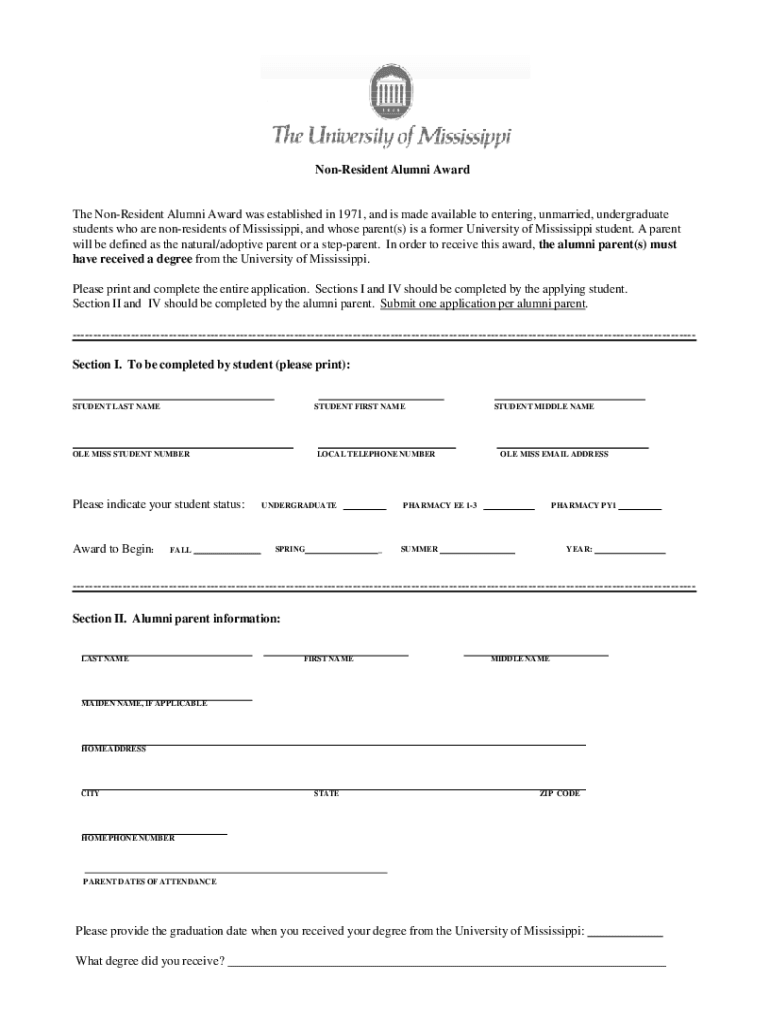





A comparison of transfer and native university student ... 2026

Get Form
A comparison of transfer and native university student ... Preview on Page 1

Here's how it works

01. Edit your form online
Type text, add images, blackout confidential details, add comments, highlights and more.
02. Sign it in a few clicks
Draw your signature, type it, upload its image, or use your mobile device as a signature pad.
03. Share your form with others
Send it via email, link, or fax. You can also download it, export it or print it out.

Definition and Meaning of "A Comparison of Transfer and Native University Student"

Understanding the intricacies between transfer and native university students is crucial for both educational institutions and students themselves. Transfer students refer to those who have enrolled in a university after having attended a different institution for part of their education. Native students, on the other hand, begin and often complete their education at a single institution. Recognizing the key characteristics that differentiate these groups helps in tailoring academic and support services to meet their specific needs.

Key Elements of Comparing Transfer and Native University Students

When examining transfer and native university students, several key elements should be considered:

  • Academic Pathways: Transfer students often navigate different curricula when moving between institutions, impacting their academic progression.
  • Social Integration: Native students may find it easier to build long-term relationships and networks, whereas transfer students might require additional resources to assimilate.
  • Housing and Logistics: Transfer students may encounter unique housing challenges due to their mid-stream entry into the institution.
  • Support Services: Customized support services are crucial to address the unique needs of transfer students, ensuring they receive guidance equivalent to native students.

Steps to Complete an Analysis of Transfer and Native University Students

  1. Data Collection: Gather data on student demographics, academic performance, retention rates, and engagement levels from institutional databases.
  2. Comparative Analysis: Utilize statistical methods to identify differences and similarities in academic outcomes and social integration.
  3. Interviews and Surveys: Conduct qualitative research to understand the subjective experiences of both transfer and native students.
  4. Report Findings: Synthesize the data into a comprehensive report, highlighting key insights and implications for policy and practice.

How to Use the Comparative Analysis of Transfer and Native University Students

The analysis can be utilized to:

  • Inform Policy: Guide institutional policies on student enrollment, transfer credits, and academic advising.
  • Resource Allocation: Assist in efficiently distributing resources to improve student services tailored to each group.
  • Program Development: Aid in developing orientation programs and extracurricular activities that promote inclusive opportunities for all students.

Who Typically Uses This Comparative Analysis?

  • University Administrators: To enhance institutional strategies and improve student success rates.
  • Academic Advisors: To offer personalized guidance based on student backgrounds and needs.
  • Student Affairs Professionals: To develop programs that better integrate transfer students socially and academically.

Examples of Using the Comparative Analysis

  • Institutional Improvement: A university may use the analysis to revamp its orientation program, ensuring it addresses both transfer and native student needs.
  • Retention Strategies: A college might develop mentorship programs specifically for transfer students to bolster retention and graduation rates.

Important Terms Related to the Analysis

  • Transfer Credits: Credits that are accepted from another institution, impacting a student's academic plan.
  • Retention Rate: The percentage of students who continue at their institution from one year to the next.
  • Social Capital: The networks and relationships students build, enhancing their educational experience.

State-Specific Rules Impacting Transfer and Native University Students

  • Credit Transfer Policies: States may have specific articulation agreements dictating how credits transfer between public institutions.
  • Residency Requirements: Some states have particular residency criteria that affect tuition rates and scholarship eligibility.

Legal Use of the Comparative Analysis

While the analysis is primarily academic, legal applications may arise in the context of compliance with state and federal education standards, particularly with reference to non-discrimination and equal opportunity provisions. Understanding these nuances is essential for ensuring institutional processes meet legal requirements.

See more A comparison of transfer and native university student ... versions

We've got more versions of the A comparison of transfer and native university student ... form. Select the right A comparison of transfer and native university student ... version from the list and start editing it straight away!
Versions Form popularity Fillable & printable
2021 4.8 Satisfied (135 Votes)
2018 4.4 Satisfied (290 Votes)
2007 4 Satisfied (21 Votes)
be ready to get more

Complete this form in 5 minutes or less

Get form

Got questions?

We have answers to the most popular questions from our customers. If you can't find an answer to your question, please contact us.
Contact us

If you often deal with documents stored in your Google Drive, DocHub is an excellent solution for you to easily and quickly fill out, edit, and sign them. This editor integrates well with Google services, so you can export your A comparison of transfer and native university student ... from your Google Drive to the editor without the need of downloading and re-uploading it. Right-click on your file, select Open With → DocHub PDF Sign and Edit. In our editor, add and assign Signature Fields for all people involved, then click on the Menu option above → Send → select how you want to share your form.

As a comprehensive document editing service, DocHub is available on mobile devices. Open DocHub in your choice of mobile browser and use our smart mobile-friendly toolset to fill out your A comparison of transfer and native university student ....

So how hard is it to transfer colleges? The easy answer is that its just as difficult as applying to colleges normally, but the process is slightly different. Your college GPA and course load will be a larger factor than your high school GPA, unless youre transferring after one year.
Native students are those students who reported in the Programme for International Student Assessment (PISA) that they were born in the country of assessment and who had at least one parent born in that country.
On average in the United States, the acceptance rate for transfer students in 66%, compared to 62% for first-time college students. Some schools will even actively seek out transfer students. However, you can boost your chance of acceptance even further by ensuring that you stay focused in your current classes.

Security and compliance

At DocHub, your data security is our priority. We follow HIPAA, SOC2, GDPR, and other standards, so you can work on your documents with confidence.

Learn more
ccpa2
pci-dss
gdpr-compliance
hipaa
soc-compliance

People also ask

Each school defines transfer students differently, but in general, this demographic refers to anyone who has attended a college or university before enrolling at a new institution. College credits can be carried over from one school and applied towards another.
Looking broadly at four-year schools across the U.S., transfer students may have slightly more difficulty getting in. ing to a report from the National Association for College Admission Counseling, the average rate of admission for a transfer applicant is 62 percent.
A freshman is a student who is enrolling into any college program for the first time without any previous college credits attained. A transfer student has completed some college coursework and is seeking to transfer to another learning institution to complete their desired degree program.
Statistically indocHub Experts say Native American students are often left out of educational research and initiatives, due to their small population sizes. State data show Native American students are less than 1% of the student population in California.
The numbers tell part of the story: recent data from the Postsecondary Policy Institute shows that less than 10 percent of Native Americans receive their associate degree, and only 16 percent attain a bachelors degree or higher.

Related links