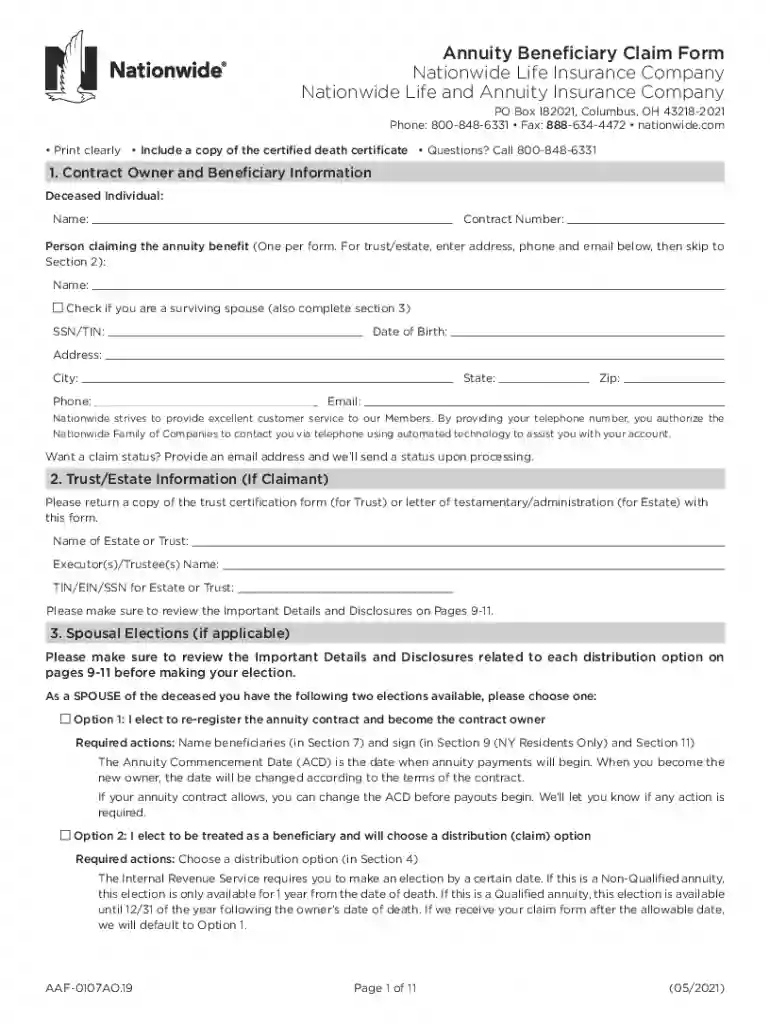
Definition and Purpose of the Annuity Beneficiary Claim Form
The Annuity Beneficiary Claim Form from Nationwide Life Insurance is a crucial document used by beneficiaries to claim the benefits associated with an annuity contract following the death of the contract owner. This form includes sections for beneficiaries to provide detailed information about themselves and the deceased, as well as select their preferred method of benefits distribution. Designed for clarity and compliance, the form ensures that legal and administrative processes are followed correctly.
Key Components of the Form
- Deceased's Information: Requires detailed data about the deceased annuity owner, including full name, date of birth, and Social Security number.
- Beneficiary Details: Includes sections for the claimant's personal information, such as contact details, relationship to the deceased, and identification numbers.
- Benefits Distribution Options: Outlines various payment choices available to beneficiaries, including lump-sum or periodic payments, with provisions for spousal elections.
Steps to Complete the Annuity Beneficiary Claim Form
Completing the Annuity Beneficiary Claim Form involves a series of methodical steps that ensure all necessary information is provided, complying with Nationwide’s requirements.
- Gather Required Information: Collect details about the deceased and the beneficiary, including tax identification numbers and banking details for direct deposit.
- Select Distribution Method: Choose how to receive the benefits, considering options like one-time lump sum or installment payments.
- Complete Personal and Beneficiary Sections: Accurately fill in all required fields with the beneficiary's and deceased's personal data.
- Attach Supporting Documentation: Include any necessary documents such as a death certificate, proof of identity, and any prior consent forms.
- Review and Sign: Double-check for errors before signing. Both a signature and date are required to validate the form.
Common Errors to Avoid
- Incomplete Fields: Ensure all mandatory sections are filled to avoid processing delays.
- Mismatched Information: Double-check names and numbers to match official records.
- Missing Documents: Attach all necessary supporting documentation before submission.
Required Documents for Submission
The submission of the annuity claim form mandates attaching various essential documents. Securing these documents ahead of time will expedite the claims process.
- Death Certificate: An official copy is required to verify the death of the annuity owner.
- Beneficiary ID: A government-issued identification document for the beneficiary to authenticate identity.
- Beneficiary’s Relationship Proof: Legal documents or affidavits proving the claimant's relationship to the deceased, if necessary.
- Payment Information: If opting for direct deposit, attach bank details or a voided check.
Form Submission Methods
Nationwide Life Insurance accommodates multiple submission methods for the convenience of beneficiaries.
Digital Submission
Submitting the form digitally allows for faster processing and acknowledgement.
- Online: Use Nationwide’s online portal to upload the completed form and documents.
- Email: For digital copies, email them directly to the designated claims department address.
Physical Submission
For those who prefer traditional methods:
- Mail: Send the completed form and copies of required documents to Nationwide’s official mailing address.
- In-Person: Deliver the form directly to a local branch for personal assurance of receipt.
Legal and Privacy Considerations
Handling an annuity claim is a matter that requires attention to legal and privacy standards, ensuring beneficiary rights and data protection.
Privacy Protection
- Data Security Measures: Nationwide employs encryption for digital submissions to protect personal data.
- Rights to Privacy: Beneficiaries have the right to know how their information is used and stored, as outlined by federal privacy laws.
Compliance Obligations
- Fraud Prevention: The form includes disclosures on legal consequences for false claims, aligning with state and federal laws.
- Information Accuracy: Beneficiaries are legally obliged to provide truthful and accurate information throughout the process.
Examples of Using the Annuity Beneficiary Claim Form
Understanding practical applications of this form can guide beneficiaries through the claims process.
Scenario 1: Surviving Spouse
- The surviving spouse of the deceased annuity holder opts for a spousal continuation, allowing the transfer of assets into a new annuity contract without immediate tax implications.
Scenario 2: Multiple Beneficiaries
- In situations where an annuity is split among several beneficiaries, each party completes a separate form and chooses their respective distribution method, ensuring fair division and compliance.
IRS Guidelines and Tax Implications
Navigating tax obligations is an essential component of processing annuity beneficiary claims.
Tax Considerations
- Income Tax: Payments from an annuity may be subject to federal income taxes. Beneficiaries should consider consulting with a tax advisor for their specific situation.
- Distribution Type Effects: The method of benefits distribution can impact taxable income, with lump-sum payments potentially incurring higher immediate tax liabilities.
Compliance with IRS Requirements
- Form 1099-R: Beneficiaries will receive this form detailing distributions that may affect their taxable income.
- Reporting Deadlines: Ensure submission aligns with annual tax filing deadlines to avoid penalties.
Eligibility Criteria and Common Users
Understanding who is eligible to use this form clarifies its purpose and scope.

Eligibility
- Designated Beneficiaries: Only individuals named by the annuity owner are eligible to file a claim.
- Spouses and Dependents: Special considerations often apply to surviving spouses or dependents based on the annuity owner’s initial contracts and terms.
Typical Users
- Immediate Family Members: Primarily surviving spouses and children.
- Trustees: In cases where an annuity is held within a trust, trustees may submit on behalf of the beneficiaries.
Thoroughly exploring these aspects ensures beneficiaries are well-prepared to execute their claim effectively and in compliance with legal and company policies.