
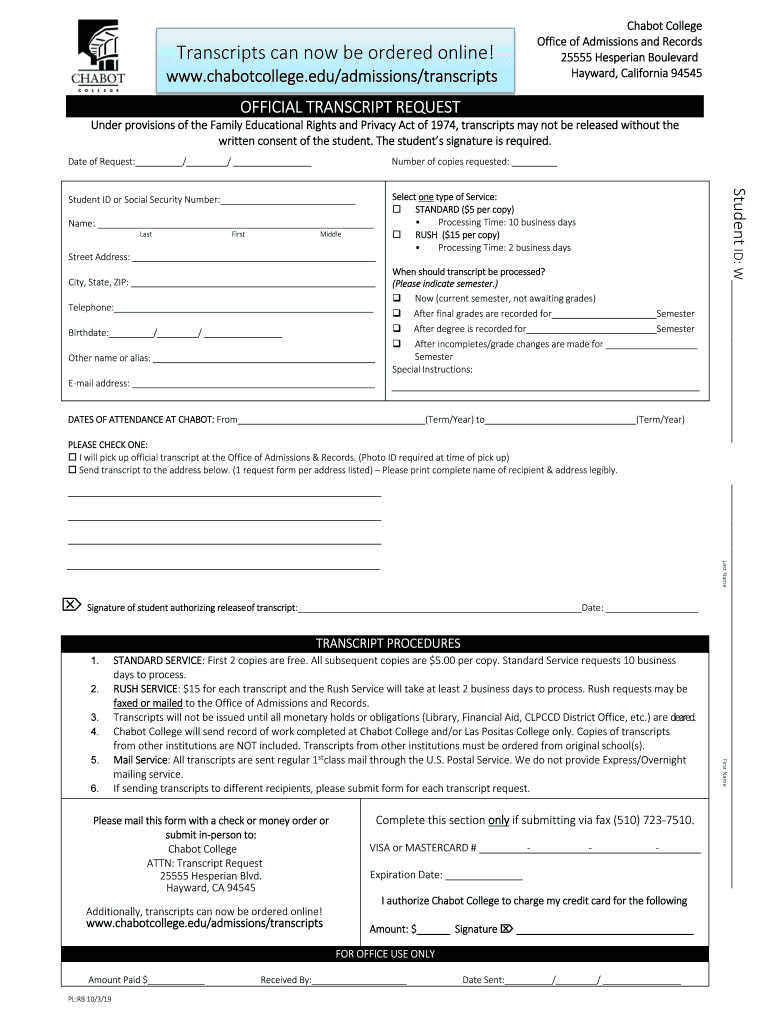







Definition and Meaning
The "edu/admissions/transcripts" pertains to official educational documents that reflect a student's academic history. These transcripts provide a chronological record of courses taken, grades received, degrees awarded, and other significant academic achievements. They are crucial for students transitioning between educational institutions, applying for graduate programs, or seeking employment that requires verification of academic credentials.
How to Use the edu/admissions/transcripts
Transcripts are integral to various administrative processes within the educational system:
- College Applications: High school students often submit transcripts as part of college applications to demonstrate their academic preparedness.
- Graduate School Admission: Undergraduate transcripts are usually required when applying for advanced degree programs.
- Employment Verification: Some employers request transcripts to validate the credentials of recent graduates or new employees.
- Transfer of Credits: Students switching schools may need transcripts to have their credits evaluated and accepted by the new institution.
How to Obtain the edu/admissions/transcripts
Obtaining your academic transcript typically involves the following steps:
- Contact the Registrar's Office: Reach out to your educational institution's registrar's office, which is generally responsible for managing transcript requests.
- Request Submission: Fill out a request form online or in person, specifying details such as the number of copies required and the destinations for each transcript.
- Fee Payment: Some institutions charge a fee for transcript processing. Confirm payment methods, which may include online portals, checks, or cash.
- Verification and Consent: Provide any required identification and, if applicable, a signed consent form authorizing release of your transcripts.
- Processing Time: Understand the processing timeline, which can vary from same-day service to several business days, especially during peak periods like graduation season.
Steps to Complete the edu/admissions/transcripts
When you receive the form to request your transcript:
- Fill in Personal Details: Accurately enter your full name, student ID, and contact information.
- Specify Transcript Type: Indicate whether you need an official or unofficial transcript. Official transcripts are usually sealed and signed.
- Recipient Information: Clearly state where each transcript should be sent, especially if sending to multiple addresses.
- Review and Submit: Double-check all entered information for accuracy before submitting the form to prevent delays.
- Follow Up: If the transcript hasn’t been received within the stipulated timeframe, contact the registrar's office for status updates.
Key Elements of the edu/admissions/transcripts
The transcript includes several key elements that collectively represent an individual's academic record:
- Student Information: Name, student number, and both current and past academic statuses.
- Course Listings: Records of courses undertaken, inclusive of codes, titles, and semester taken.
- Grades and GPA: Detailed grades for each course and the cumulative Grade Point Average.
- Degree Confirmation: If applicable, it lists degrees awarded and the dates of conferral.
- Institutional Endorsement: Signs and stamps verifying the transcript's authenticity and issuance by the institution.
State-Specific Rules for the edu/admissions/transcripts
State regulations regarding transcripts can differ, primarily affecting public educational entities:
- Fee Structures: Some states mandate public institutions to provide transcripts for free or at a capped fee.
- Privacy Laws: States have varying interpretations of federal privacy laws like FERPA, influencing consent requirements.
- Access Rights: Laws may dictate the timelines within which institutions must furnish transcripts upon request.
- Retention Guidelines: States also differ on how long schools must retain transcripts after a student has left.”
Examples of Using the edu/admissions/transcripts
Real-world applications of academic transcripts are varied:
- Graduate Applications: A student applying for a Master’s program may submit undergraduate transcripts alongside letters of recommendation.
- Job Applications: A recent grad listing a degree in their resume may attach a transcript to verify completion.
- Transfer Students: A student looking to transfer to a different university may submit high school and prior college transcripts to meet credit requirements.
Required Documents for edu/admissions/transcripts
Students seeking their transcripts should prepare:
- Completed Request Form: Whether paper-based or digital, this form initiates the transcript request.
- Identification Proof: A valid government or school-issued ID to verify identity.
- Consent Documents: If a third party is retrieving the transcript, a signed document authorizing the release may be necessary.
- Payment Confirmation: Proof of payment, if required, should be attached to avoid processing delays.
Form Submission Methods (Online / Mail / In-Person)
Depending on the institution’s policies, there are several ways to submit a transcript request:
- Online Requests: Many institutions have digital request systems integrated into student portals for easy access and tracking.
- Mail-In Requests: Some require sending the completed form to the registrar's office, accompanied by payment.
- In-Person Submission: If nearby, individuals can visit the registrar's office to submit forms and pay directly, often ensuring quicker processing times.
Legal Use of the edu/admissions/transcripts
Transcripts have several legal applications:
- Verification for Employment: Many jobs, particularly in regulated fields, require verified transcripts to ensure candidates meet the necessary educational criteria.
- Academic Verification: Other educational institutions request transcripts to confirm an applicant’s previous scores and qualifications.
- Legal Documentation: In certain legal cases involving custody or divorce, transcripts might be used to assess a student’s educational standing or future needs.
In all instances, compliance with privacy laws such as the Family Educational Rights and Privacy Act (FERPA) is mandatory, allowing students to control who accesses their academic records.




