Definition & Meaning
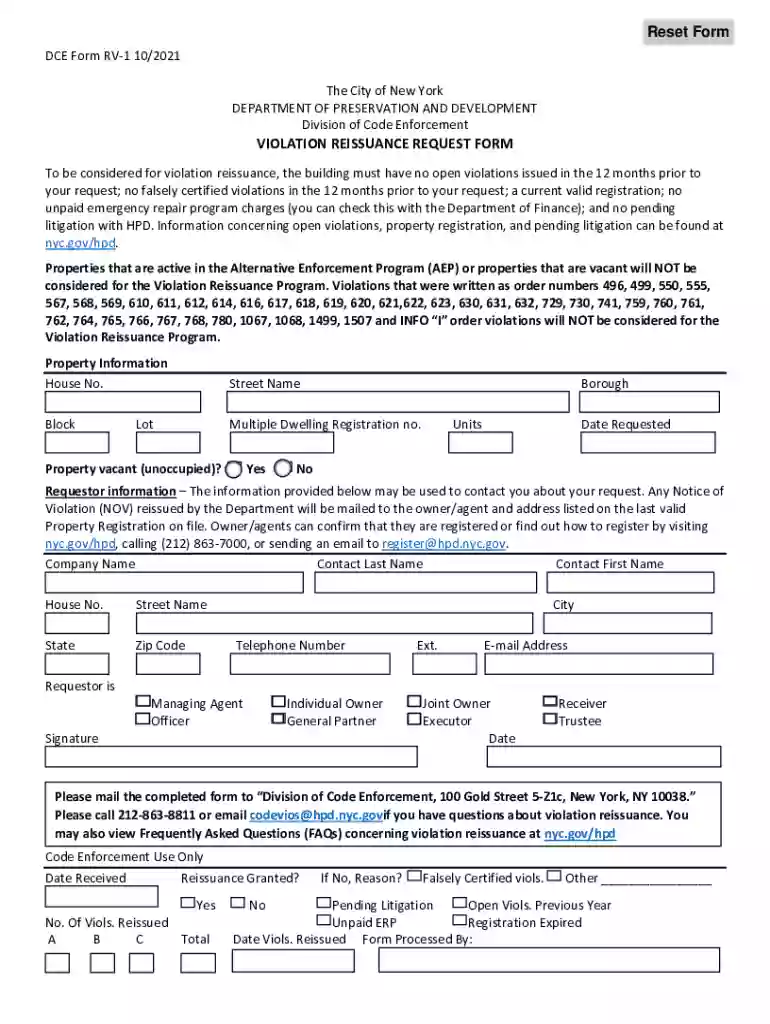
A reissuance form is a specific document used to request the reissuance of previously issued official documents or records, such as building violations, permits, or certificates that need correction or updating. The process ensures all relevant details are accurately reflected and that the requesting party's records are up-to-date.
How to Use the Reissuance Form
To effectively use a reissuance form, follow these steps:
- Identify the Need: Determine if reissuance is necessary. This could be due to incorrect details on the original document or legal reasons requiring an update.
- Complete the Form Accurately: Fill in all required fields as specified in the instructions. Common sections may include personal information, document details, and the reason for reissuance.
- Provide Supporting Documents: Attach any required documentation to support your request, such as identification or proof of the initial error.
- Submit the Application: Follow the specific submission instructions, which may vary between online, mail, or in-person methods, depending on the issuing authority.
Eligibility Criteria
Eligibility for using a reissuance form typically requires meeting several conditions:

- No Open Violations: For forms related to violations, ensure there are no unresolved issues within a specific time frame, often twelve months.
- Valid Registration: Property or entity involved should have current, valid registration.
- No Pending Litigation: Any ongoing legal disputes related to the document must be resolved before seeking reissuance.
Key Elements of the Reissuance Form
Key elements commonly found in a reissuance form include:
- Requestor Information: Full name, contact details, and, if applicable, company information.
- Document Details: Information about the original document, such as identification numbers and dates.
- Reason for Reissuance: A clear explanation of why the reissuance is necessary.
- Authorization Section: Signature area for legal acknowledgement and consent.
Steps to Complete the Reissuance Form
Completing a reissuance form involves several detailed steps:
- Read Instructions: Thoroughly understand the form's guidelines before completing it to avoid errors.
- Gather Information: Collect all necessary information and supporting documents required for the form.
- Fill Out the Form: Carefully enter all requested information, double-checking for accuracy and completeness.
- Review and Sign: Make sure all sections are correct before signing and dating the form.
- Submit for Processing: Submit according to the guidelines, ensuring delivery confirmation if needed.
Form Submission Methods (Online / Mail / In-Person)
Reissuance forms can be submitted through various methods:
- Online Platforms: Conveniently submit via an official website, if available, often with immediate confirmation.
- Mail Services: Send the completed form and attachments to the designated postal address; ensure you use a tracking service.
- In-Person Submission: Deliver the form directly to the appropriate office, allowing for immediate receipt verification.
Legal Use of the Reissuance Form
Using a reissuance form legally involves:
- Compliance with Regulations: Ensure that all steps taken are within legal limits and guidelines outlined by the governing authority.
- Fulfilling All Requirements: Meet all eligibility and documentation requirements before submission.
- Maintaining Documentation: Keep copies of the completed form and any correspondence related to the reissuance for records and potential audits.
State-Specific Rules for the Reissuance Form
State-specific regulations may impact the use of a reissuance form:
- Different Processing Times: Some states may have specific deadlines or processing periods that differ.
- Unique Eligibility Criteria: Requirements for reissuance may vary based on state laws.
- Varied Submission Procedures: Submission methods and document requirements might be jurisdiction-specific.
Who Typically Uses the Reissuance Form
The reissuance form is commonly used by:

- Property Owners: To address discrepancies in property records or building violations.
- Business Entities: For updating or correcting permits, licenses, or official documents.
- Legal Representatives: Acting on behalf of clients needing reissuance due to errors or legal requirements.
Examples of Using the Reissuance Form
Examples include:
- Correcting Property Violations: When a property owner discovers inaccurate violation records, they can request reissuance to reflect true compliance status.
- Business License Updates: Businesses may need to reissue licenses due to name changes or new ownership.
- Permit Amendments: Updating construction permits to include revised plans or project details.
Penalties for Non-Compliance
Failure to properly manage reissuance forms can result in:
- Legal Penalties: Financial penalties or legal action due to non-compliance with regulations.
- Delay Consequences: Potential delays in project timelines or business operations due to inaccurate documents.
- Administrative Rejections: Rejection of requests due to missing information or improper submission, necessitating resubmission and additional processing time.