





Definition & Meaning
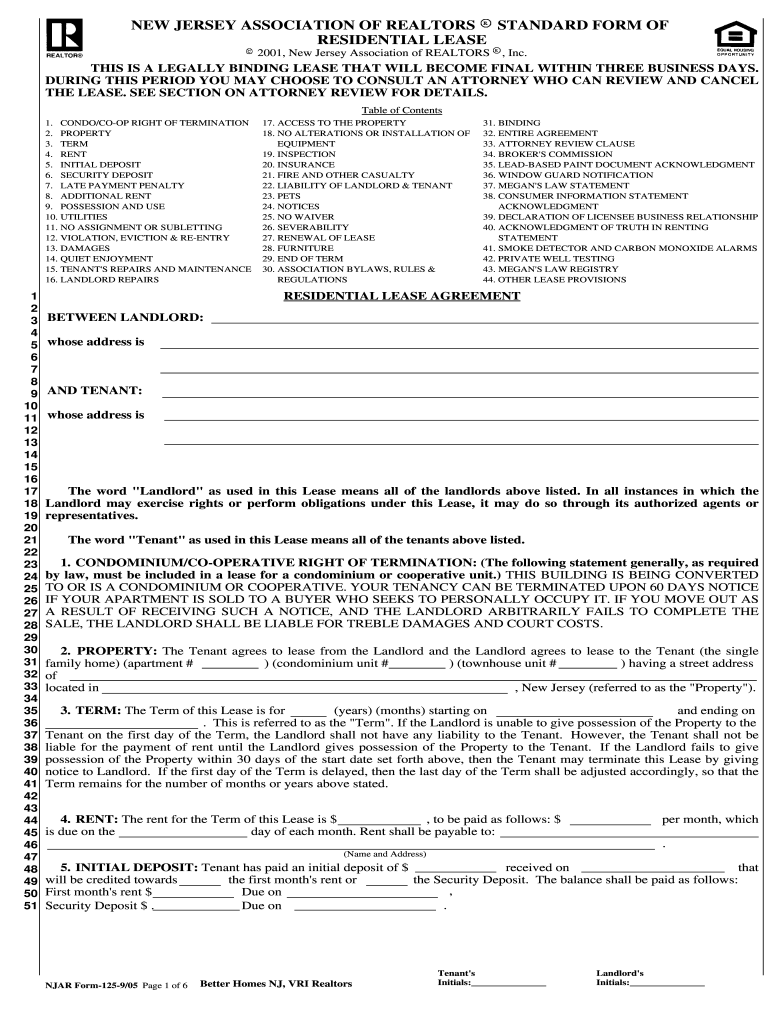
The NJAR Form, also known as the New Jersey Association of Realtors Standard Form of Residential Lease, sets forth the obligations and rights of both landlords and tenants in rental agreements. This form is essential for facilitating legally sound residential leases within New Jersey. Its function is to standardize leasing terms, ensuring clarity and fairness in rental transactions across different parties.
Key Concepts
- Standard Lease: Provides a uniform foundation that is widely recognized and accepted, reducing confusion and disputes in rental agreements.
- Legal Compliance: Meets New Jersey state legal requirements, ensuring all terms and conditions are in line with current laws.
- Clarity of Terms: Clearly outlines essential contract components such as rent amounts, lease terms, and maintenance responsibilities, providing transparency for both parties.
How to Use the NJAR Form
To effectively use the NJAR Form, both landlords and tenants should review the document together to ensure mutual understanding and agreement upon each section. This collaborative review process helps prevent any future misunderstandings.
Practical Steps
- Review Terms: Both parties should carefully read through the terms, considering responsibilities and legal obligations.
- Modify If Necessary: Discuss any adjustments or special conditions pertinent to the specific rental agreement.
- Consult Legal Aid: For those unclear about specific clauses, obtaining legal counsel might be advantageous to ensure the agreement is comprehensive and appropriate.
How to Obtain the NJAR Form
The NJAR Form can be obtained through the New Jersey Association of Realtors or authorized membership platforms. Access might require an account or membership in the association.
Access Methods
- Realtor Platforms: Access via an authorized realtor website that offers document downloads for members.
- Real Estate Offices: Physical copies are often available at local real estate offices for those preferring in-person inquiries.
- Legal Assistance: Attorneys specializing in property law often have templates or access to standard forms.
Steps to Complete the NJAR Form
Completing the NJAR Form involves a thorough understanding of the details required in each section. Accurate and truthful information is crucial for the form’s validity.
Detailed Guide
- Fill Personal Details: Enter the names and contact information of both parties involved.
- Specify Property Details: Include the address and a brief description of the rental property.
- Outline Terms: Record rent amounts, due dates, security deposit information, and lease durations.
- State Responsibilities: Define maintenance obligations and tenant rights for clarity.
Who Typically Uses the NJAR Form
Primarily, landlords and property managers in New Jersey use the NJAR Form for residential properties. It’s a common tool for those leasing out properties to both individuals and families.


User Demographics
- Landlords: Individual property owners or investors seeking to lease properties.
- Property Managers: Professionals managing multiple residential units for different owners.
- Tenants: Individuals or families looking for standardized lease agreements for rental clarity.
Important Terms Related to NJAR Form
Understanding the terminology within the NJAR Form aids all parties in fully comprehending their rights and responsibilities.
Common Terms Explained
- Lease Term: The period during which the lease is active and binding.
- Security Deposit: A sum of money held by the landlord as a precautionary measure against damages.
- Attorney Review: A stipulated period allowing legal review and potential modification of the lease terms.
Legal Use of the NJAR Form
The legal aspects of the NJAR Form ensure compliance with state regulations governing residential leases in New Jersey.
Compliance Guidelines
- Attorney Involvement: Engaging a lawyer to review the form is strongly recommended to ensure its legality.
- State-Specific Laws: The form incorporates state-required disclosures and responsibilities, aligning with New Jersey laws.
- Protection of Rights: The form ensures both tenant and landlord rights are upheld, providing legal redress avenues if needed.
Key Elements of the NJAR Form
Several key elements are critical in ensuring the NJAR Form comprehensively covers all necessary legal and logistical aspects of a rental agreement.
Components to Highlight
- Lease Duration: Clearly outlines start and end dates, reducing ambiguity about lease length.
- Rent Details: Specifies amounts, due dates, and acceptable payment methods.
- Termination Clauses: Conditions under which the lease can be terminated, protecting both parties.
State-Specific Rules for the NJAR Form
New Jersey’s real estate laws inform the framework of the NJAR Form, ensuring local regulations are adhered to throughout the leasing process.
Regional Compliance Requirements
- Disclosure Norms: Mandatory information such as lead paint presence must be included according to New Jersey law.
- Tenant Rights: Ensures alignment with state laws focused on tenant protections, like a timely return of security deposits.
- Rent Control Guidelines: Adopts any localized rent control measures applicable in certain New Jersey municipalities.
Examples of Using the NJAR Form
Exploring real-world scenarios where the NJAR Form is applied can clarify its utility and potential challenges in usage.
Example Scenarios
- Suburban Rentals: Often used for single-family homes rented to families or individual tenants.
- Apartment Complexes: Property managers may use this standardized form when leasing multiple units, ensuring consistency across leases.
- Legal Massachusetts: Leases involving special considerations, like modifications for enhanced accessibility, can adapt this form with supplemental clauses.