







Definition & Meaning
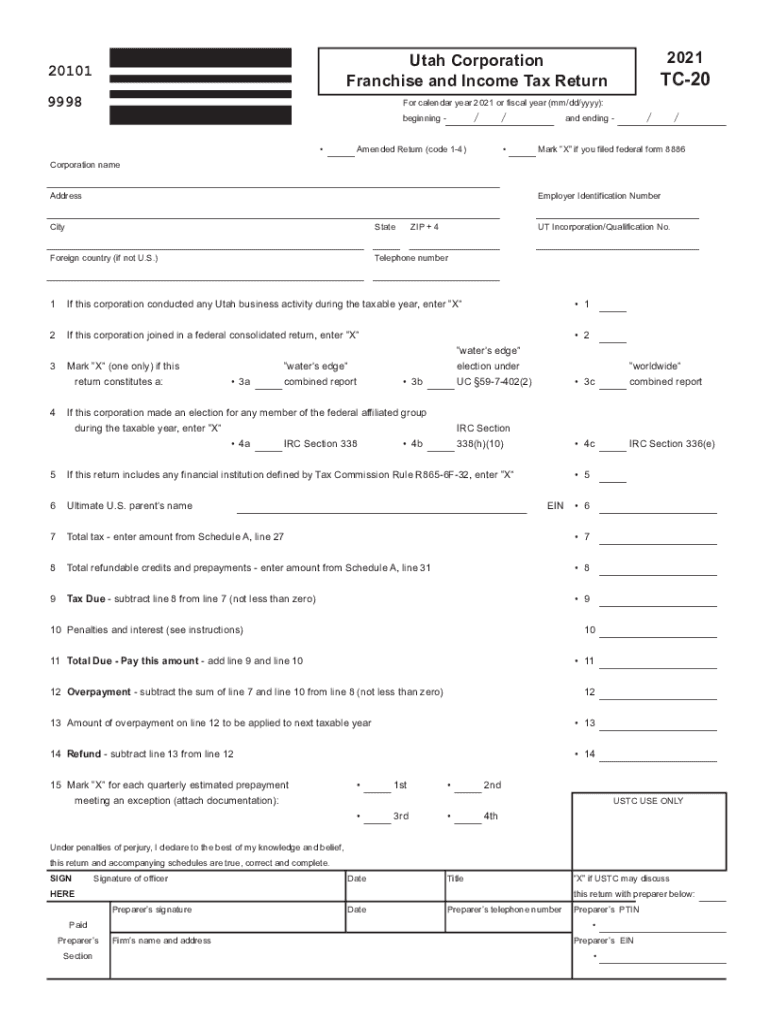
The TC-20 Instructions for 2021 provide detailed guidance on how Utah corporations should complete their TC-20 tax return. This document clarifies the reporting and calculation of both franchise and income taxes for corporations operating in Utah. It is mandatory for corporate entities to correctly fill out this form to ensure compliance with state taxation laws. The instructions help corporations understand various sections, such as corporate identification, income adjustments, and tax calculations specific to the fiscal year 2021.
Steps to Complete the TC-20 Form
-
Corporate Identification Section: Begin by filling out your corporate details, including name, address, and federal employer identification number (FEIN).
-
Income Calculation: Compute total income, adjusted for state-specific modifications. Follow the instructions to adjust for differences between federal and state tax laws.
-
Tax Calculation: Calculate your corporate franchise or income tax using the current rate as specified in the instructions. Factor in any available credits or adjustments.
-
Contributions Deduction: Enter any qualifying deductions for charitable contributions following specific guidelines provided in the instructions document.
-
Apportionment Schedule: For corporations operating in multiple states, an apportionment schedule must be included to accurately reflect the portion of income attributable to Utah.
-
Federal Tax Adjustments: Disclose any relevant federal adjustments that might affect your state tax calculations. The instructions outline the exact nature and types of adjustments required.
Key Elements of the TC-20 Instructions
-
Franchise Tax: Details how to calculate the tax based on either income or the net worth method, depending on which is applicable.
-
Income Tax Calculations: Guidance on determining net income subject to tax and applicable rates.
-
Credits and Incentives: Information about eligible credits such as research credits or economic development incentives that may reduce liability.
-
Deductions and Exemptions: Lists eligible items that can be deducted from gross receipts, reducing taxable income.
Who Issues the Form
The TC-20 form and its accompanying instructions are issued by the Utah State Tax Commission. This body is responsible for administrating and enforcing state tax laws, ensuring compliance, and providing the necessary resources and instructions for completing tax forms accurately.
Filing Deadlines / Important Dates
Utah corporations must file the TC-20 tax return by the 15th day of the fourth month following the end of the corporation's fiscal year. For example, if a corporation's fiscal year ends on December 31, the return is due by April 15. Late filing may incur penalties and interest, so adherence to these deadlines is crucial.
Required Documents
- Current and prior year financial statements: To provide a basis for income calculations and adjustments.
- Federal tax return copy: Necessary for aligning state adjustments with reported federal income.
- Supporting schedules: Documentation supporting claims for credits, deductions, and apportionment.
Penalties for Non-Compliance
Failure to file the TC-20 form or inaccurately reporting information can result in significant penalties. These may include late fees, interest on unpaid tax, and additional charges for incorrect or incomplete returns. It is crucial for corporations to carefully follow the instructions to avoid such penalties.
State-Specific Rules for the TC-20
Utah-specific taxation rules can differ markedly from federal regulations, making state-specific compliance essential. These instructions provide comprehensive guidance on:
-
State Tax Credit Utilization: Limitations and eligibility peculiar to Utah, ensuring that corporations maximize benefits under state law.
-
Apportionment Rules: Special provisions for multistate corporations detailing how to attribute and calculate income attributable to operations in Utah.
Software Compatibility
The TC-20 is compatible with various tax preparation software, such as TurboTax and QuickBooks. These tools facilitate accurate completion by integrating with financial systems, automating calculations, and streamlining form submission processes. Corporations using these platforms benefit from error checking, direct e-filing capabilities, and seamless data integration.




