




01. Edit your nj 1040 form 2021 online
Type text, add images, blackout confidential details, add comments, highlights and more.

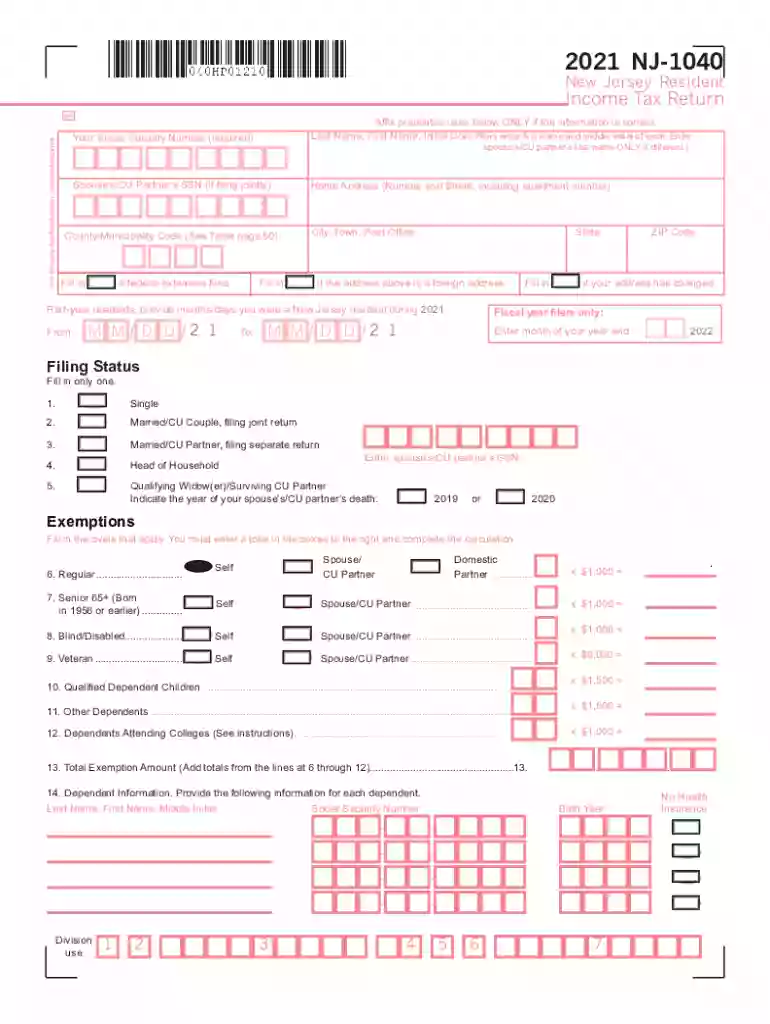
Type text, add images, blackout confidential details, add comments, highlights and more.

Draw your signature, type it, upload its image, or use your mobile device as a signature pad.

Send 2021 nj 1040 via email, link, or fax. You can also download it, export it or print it out.
The New Jersey NJ-1040 form is the state equivalent to the federal income tax return form for residents of New Jersey. It is specifically designed for residents to report their income, calculate tax liabilities, and declare any applicable deductions or credits. This form serves a fundamental purpose in the state tax filing process, ensuring accurate reporting of income to reflect financial liabilities or refunds owed for the tax year.
Understanding this form's structure and requirements is essential for compliance and optimal tax management.
Using the NJ-1040 form involves several steps and requires careful attention to detail to ensure accuracy and compliance. Here's a breakdown of the process:
Gather Required Information:
Fill Out Personal Information:
Report Income:
Claim Deductions and Credits:
Calculate Tax:
Review and File:
Completing the NJ-1040 involves a structured series of actions to ensure comprehensive and correct filing. Here is a step-by-step guide:
Initial Review:
Data Entry:
Verification:
Error Check:
Submission:
Confirmation:
The NJ-1040 form consists of multiple components, each critical to its purpose. Key elements include:
Personal Information:
Income Section:
Deductions and Credits:
Tax Liability Calculation:
Understanding these elements facilitates a correct and efficient filing process.
Several terms are essential when completing the NJ-1040. Understanding these can alleviate confusion and potential mistakes:
Being familiar with these terms helps taxpayers navigate the complexities of the form.
New Jersey's tax code includes specific regulations that can affect how the NJ-1040 is filed:
Filing in New Jersey requires awareness of these nuances to fully benefit from eligible deductions or exclusions.
For timely submission and to avoid penalties, understanding the NJ-1040 filing deadlines is crucial:
April 15: Typically the due date for filing state tax returns in New Jersey.
Extension Deadline: October 15, if an extension is granted (an extension of time to file, not to pay).
Payment Deadline: Same as filing, to avoid interest on any taxes owed.
Staying informed about these dates ensures compliance and maximizes the benefit of timely filing.
Having the correct documents available is critical when preparing the NJ-1040. Relevant documents include:
These documents support accurate entries and validate claims on the tax return.
We've got more versions of the nj 1040 form 2021 form. Select the right nj 1040 form 2021 version from the list and start editing it straight away!
| Versions | Form popularity | Fillable & printable |
|---|---|---|
| 2025 | 4.5 Satisfied (22 Votes) | |
| 2024 | 4.6 Satisfied (57 Votes) | |
| 2023 | 4.1 Satisfied (42 Votes) | |
| 2022 | 4.9 Satisfied (54 Votes) | |
| 2021 | 4.8 Satisfied (86 Votes) | |
| 2020 | 4.1 Satisfied (52 Votes) | |
| 2019 | 4.3 Satisfied (170 Votes) | |
| 2018 | 4.3 Satisfied (120 Votes) | |
| 2017 | 4.1 Satisfied (68 Votes) | |
| 2016 | 4.4 Satisfied (48 Votes) | |
| 2015 | 4.4 Satisfied (552 Votes) | |
| 2013 | 4.2 Satisfied (58 Votes) | |
| 2012 | 4 Satisfied (31 Votes) | |
| 2011 | 4 Satisfied (47 Votes) | |
| 2008 | 4.9 Satisfied (31 Votes) |
At DocHub, your data security is our priority. We follow HIPAA, SOC2, GDPR, and other standards, so you can work on your documents with confidence.


