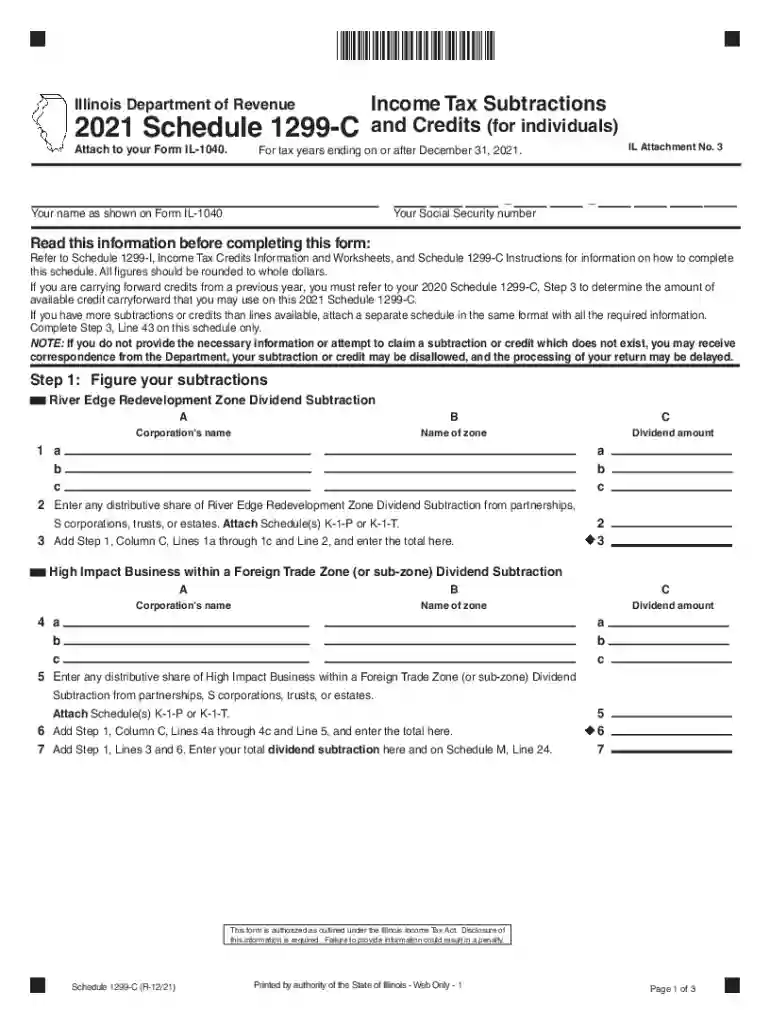
Understanding the Purpose and Definition of the 1299-C
The 1299-C form is primarily associated with the Illinois Department of Revenue, used by individuals to report various income tax subtractions and credits on their Form IL-1040. A crucial part of understanding this form involves recognizing its intention to facilitate the process of claiming reductions in taxable income through eligible credits. These credits can significantly lower the overall amount of taxable income an individual reports, thereby potentially reducing the taxes owed.
Key Aspects of the 1299-C Form
- Income Tax Credits: This form aids taxpayers in identifying and applying for specific credits such as those related to research and development or expenses incurred for K-12 instructional materials.
- Accuracy and Compliance: It emphasizes providing precise information to avoid penalties or processing delays.
How to Use the 1299-C Form
Utilizing the 1299-C requires careful attention to detail and an understanding of the tax credits you are eligible to claim. To effectively use the form:
- Gather Required Information: Compile relevant receipts and documentation that substantiate claims for credits.
- Understand Credit Eligibility: Research eligibility criteria for each type of credit, such as education or adoption-related credits, ensuring compliance with specific guidelines.
- Fill Out the Form Accurately: Enter precise information to mirror documented evidence, thereby avoiding discrepancies.
Practical Scenarios
- Adoption Credits: For individuals who have incurred expenses related to adopting a child, detailed expenditure documentation is imperative when claiming associated credits on the 1299-C.
- R&D Credits: For small business owners or self-employed individuals, clearly document research and development costs to qualify for potential deductions.
Obtaining the 1299-C Form
To acquire the 1299-C, taxpayers can:
- Visit the Official Website: The Illinois Department of Revenue's website offers downloadable versions of the form alongside instructions and guidelines.
- Request Physical Copies: Those who prefer paper forms can request print versions via mail by contacting the department's offices.
Online vs. Offline Acquisition
- Download Options: Most taxpayers find downloading and printing the form from the website convenient and quick.
- Mail Requests: While less common due to increased digital access, mail requests provide an alternative for those lacking internet connectivity.
Steps to Complete the 1299-C Form
Accurate completion of the 1299-C involves a systematic and thorough approach:
- Read Instructions Carefully: Begin by studying the instructions, which offer a step-by-step guide for filling in each section.
- Input Data Methodically: Start with personal information and proceed through each segment, matching the data with your financial records.
- Verify Entries: Regularly cross-check entries against documents to ensure data accuracy.
Detailed Sections
- Common Errors: Avoid typical pitfalls such as incorrect credit computations or overlooked data, which can result in processing delays or rejections.
- Verification: Use a checklist to confirm every required field is appropriately filled, and signatures are included.
Benefits of Completing the 1299-C Form
Completing the 1299-C correctly enables taxpayers to leverage significant financial benefits:
- Tax Savings: Proper application of eligible credits can considerably reduce tax liability.
- Ensuring Compliance: Accurately filed forms ensure adherence to state tax laws, mitigating risks of audits or fines.
Example Benefits
- Educational Materials Credits: By correctly applying for these credits, parents can significantly offset costs incurred in purchasing instructional materials.
- Development Expense Deductions: Businesses investing in development can apply these expenses to reduce taxable income.
Typical Users of the 1299-C Form
The 1299-C is particularly relevant to:
- Individuals with Specific Credits: It primarily serves taxpayers eligible for certain credits, such as those related to education and adoption.
- Business Entities: Companies engaged in research and development often utilize this form to claim credits that support innovation.
User Cases
- Families with Children in K-12: Those investing in required educational materials for schooling.
- Adoption Agencies: Agencies or individuals managing adoption processes and related expenses.
State-Specific Regulations for the 1299-C
While the 1299-C pertains to Illinois, understanding local laws and criteria for credit eligibility within Illinois is crucial. Specific rules may vary from other state requirements:
- Unique Credits Offered: Illinois may offer specific credits not available in other states, necessitating familiarization with state-specific benefits.
- Documentation Standards: Adopting state-mandated documentation standards for claiming credits.
Illinois-Centric Details
- Local Tax Laws: Familiarization with state laws ensures compliance and maximizes potential credit claims.
Penalties for Non-Compliance
Failure to comply with the 1299-C filing requirements can result in significant penalties:
- Monetary Fines: Incorrect or late submissions may incur financial penalties.
- Legal Repercussions: In severe cases, constant non-compliance may invoke legal action.
Mitigation Strategies
- Timely Filing: Adhering to deadlines prevents unnecessary fines; employing reminders for upcoming submissions can be beneficial.
- Engagement of Tax Professionals: Consulting with experienced tax advisors minimizes risks of non-compliance.