






Definition and Overview of Publication 596
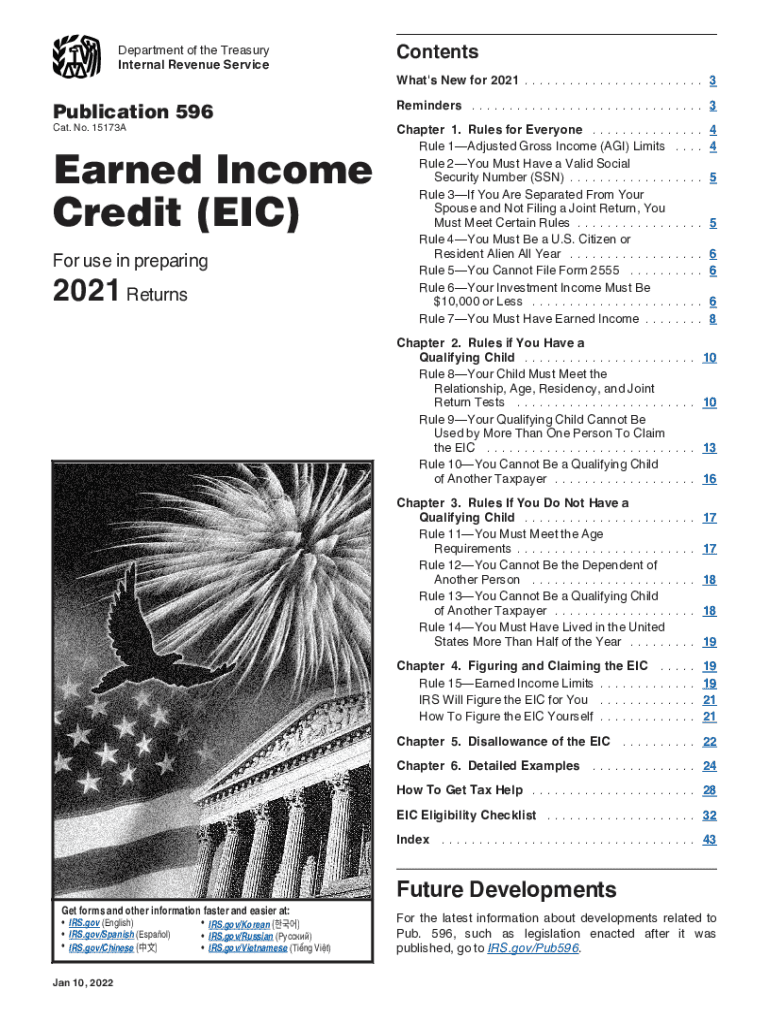
Publication 596 from the IRS serves as a comprehensive guide for the Earned Income Credit (EIC). This form is essential for taxpayers seeking to understand the qualifications needed to claim the EIC, ensuring they accurately and efficiently determine their eligibility. It provides vital information about income thresholds, filing status, and the presence of qualifying children, all of which are critical factors that influence EIC eligibility.
Key Terminology
Publication 596 explains several terms crucial to understanding and claiming the Earned Income Credit:
- Earned Income: Refers to wages, salaries, tips, and other taxable employee pay. It also includes net earnings from self-employment.
- Qualifying Child: A dependent who meets specific criteria concerning relationship, age, residency, and joint return standards.
- Adjusted Gross Income (AGI): Your total gross income minus specific deductions, fundamental in calculating the EIC.
Eligibility Criteria for the Earned Income Credit

Income Limits
Publication 596 outlines that eligibility for the EIC is largely determined by income limits, which vary depending on your filing status and the number of qualifying children. It's crucial that taxpayers understand these limits to avoid overestimating their eligibility.
Filing Status and Other Requirements
To qualify, you must file as single, head of household, or married filing jointly. Further, taxpayers and all qualifying children must have valid Social Security numbers, and the investment income must not exceed a set threshold.
How to Use Publication 596 Effectively
To make the most of Publication 596, taxpayers should begin by reviewing the detailed eligibility requirements for the EIC. Key sections offer step-by-step instructions for calculating the credit amount and provide examples to illustrate potential scenarios.
Steps to Complete
- Review Eligibility Requirements: Ensure income, filing status, and other criteria are met.
- Gather Documents: Collect all relevant financial records, including W-2s and any 1099 forms.
- Calculate the Credit: Use the tables provided in the publication to determine the potential credit.
- Consult Examples and Scenarios: Refer to the examples to see if a similar situation applies to your case.
How to Obtain Publication 596
Publication 596 is readily available through several channels, reflecting the IRS's commitment to accessibility:
- IRS Website: Easily downloadable as a PDF, offering convenience for digital users.
- Physical Copies: Request via phone from the IRS, or pick up at local IRS offices.
- Tax Preparation Software: Often integrated within programs like TurboTax or H&R Block.
Important Considerations When Filing
Filing Deadlines and Important Dates
It's imperative to adhere to the IRS's established deadlines to ensure you maximize your entitled credits. Filing beyond these dates can result in penalties or interest charges.
Required Documents for Submission
To successfully claim the EIC, you should prepare:
- Completed tax return with Form 1040
- Social Security numbers for you, spouse, and qualifying children
- All applicable income-related documents
IRS Guidelines and Updates on Publication 596
The IRS periodically updates Publication 596 to reflect changes in tax law and policy. It is essential for taxpayers to refer to the latest version each year to account for new income limits and eligibility criteria.
Real-World Examples and Applications of Publication 596
Taxpayer Scenarios
- Self-Employed Individuals: Must carefully track expenses to accurately report net income.
- Families with Dependents: More likely to benefit due to higher income thresholds when qualifying children are present.

Case Studies
We often find that illustrative scenarios within Publication 596 clarify complex rules. These examples help demystify calculations and lay out the steps clearly, allowing taxpayers to understand how to transition from the guidelines to the filing process.
Legal Implications and Compliance
The IRS provides Publication 596 as an authoritative source to ensure all taxpayers comply with federal tax laws regarding the EIC. Understanding these regulations helps in avoiding inaccuracies or omissions that could trigger audits or penalties. It's crucial to realize that the consequences of non-compliance can lead to disqualification from claiming the EIC and in severe cases, investigation for fraudulent claims. Ensure thorough understanding and truthful reporting by adhering to the guidelines set forth in the publication.


