
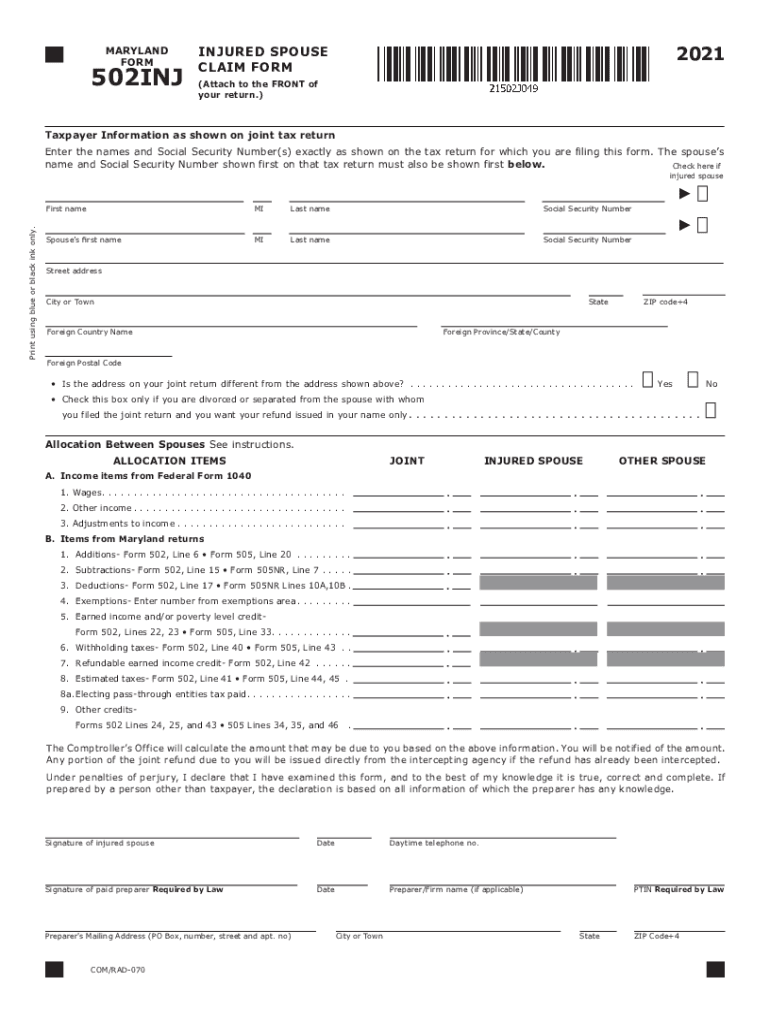







Definition and Meaning of Maryland Tax
Maryland tax pertains to the spectrum of taxes imposed by the state of Maryland on its residents and businesses. These include personal income tax, corporate income tax, sales and use tax, property tax, and other specific taxes like inheritance and estate taxes. Understanding Maryland tax is essential for individuals and businesses operating or residing within the state, as it directly impacts financial planning and compliance.
Types of Maryland Tax
- Personal Income Tax: Maryland imposes a progressive income tax system with rates that increase based on income brackets.
- Corporate Income Tax: Businesses operating within Maryland are subject to a flat corporate income tax rate.
- Sales and Use Tax: A tax levied on sales of tangible personal property and certain services within the state.
- Property Tax: Tax on real estate properties owned within the state of Maryland.
Understanding the nuances of each type of tax, including applicable rates, exemptions, and credits, is crucial for compliance and financial planning.
Steps to Complete the Maryland Tax Form
Completing a Maryland tax form involves several key steps to ensure accuracy and compliance with state tax laws. The steps typically include gathering necessary documentation, filling out the required details, and submitting the form within specified deadlines.
Key Steps in Completion
- Gather Required Documents: Collect W-2s, 1099s, and other income statements, along with documents on deductions and credits.
- Fill Personal Information: Enter personal and dependent information accurately as per state records.
- Report Income and Deductions: Accurately report all forms of income and applicable deductions or credits.
- Calculate Tax Liability: Utilize Maryland tax tables and rates to determine tax owed or refund due.
- Review and Sign: Carefully review the filled form for any errors and sign to authenticate the submission.
- Submit Form: Mail or electronically submit the completed form to the Maryland Revenue Administration Division.
Ensuring these steps are meticulously followed helps avoid delays in processing and potential penalties for errors or omissions.
Who Typically Uses the Maryland Tax Form
Various taxpayers, including individuals, businesses, and non-residents with Maryland income sources, utilize the Maryland tax form. Understanding the specific obligations and benefits for each taxpayer category is essential.


Taxpayer Scenarios
- Residents: Maryland residents must file state tax returns to report their income and claim deductions or credits.
- Non-Residents: Those earning income from Maryland sources but residing outside the state need to file non-resident returns to report this income.
- Businesses: Maryland-based corporations and partnerships file specific income tax returns to report earnings.
- Self-Employed Individuals: Freelancers and independent contractors need to report their earnings through relevant Maryland tax forms.
Awareness of the correct form and filing requirements is crucial for adherence to state laws and maximizing potential tax savings or refunds.

State-Specific Rules for Maryland Tax
Maryland has specific tax regulations that differentiate it from federal and other state tax systems. Knowledge of these rules aids in ensuring compliance and accurately fulfilling tax obligations.
Key State-Specific Regulations
- Progressive Income Tax Rates: Maryland employs a structured rate that varies across multiple income brackets.
- Local Taxes: Maryland localities may impose additional income taxes, requiring taxpayers to account for both state and local obligations.
- Credits and Deductions: Specific state-level credits, like the Earned Income Credit, can significantly impact taxable income.
Staying informed about these regulations enables taxpayers to better manage their finances in accordance with Maryland's tax codes.
Important Terms Related to Maryland Tax
Understanding the terminology associated with Maryland tax can aid in the comprehension of forms and filing requirements.
Fundamental Terms
- Adjusted Gross Income (AGI): Total income subject to tax after deductions and adjustments.
- Taxable Income: Portion of income subject to state tax obligations.
- Withholding: Amounts automatically deducted from earnings for state tax purposes.
- Exemptions and Credits: Allowances reducing taxable income or liability.
Familiarity with these terms helps navigate Maryland tax documentation and facilitates accurate filing.
Filing Deadlines and Important Dates
Timely filing of Maryland tax forms is critical to avoid penalties and interest charges. Deadlines are aligned with the state's tax calendar and mirror certain federal deadlines.
Critical Filing Dates
- April 15: Standard deadline for filing individual tax returns for the previous fiscal year.
- October 15: Deadline for filing extended individual tax returns.
- Quarterly Estimated Payments: Due on January 15, April 15, June 15, and September 15 for self-employed individuals and businesses.
Adhering to these deadlines ensures compliance and avoids unnecessary financial penalties.
Required Documents for Maryland Tax
Proper documentation is necessary for accurate and complete Maryland tax form submissions. The requirements vary based on taxpayer status and income sources.
Commonly Required Documents
- W-2 Forms: For reporting wages and salaries from employment.
- 1099 Forms: For reporting freelance, investment, or other non-wage income sources.
- Schedule C: Applicable for self-employed individuals declaring business income.
- Receipts for Deductions: Documentation supporting claimed deductions or credits.
Having these documents ready before preparing tax forms facilitates a smoother filing process.
Legal Use of the Maryland Tax Form
Maryland tax forms are designed to accurately report income and calculate tax liabilities, serving as a legal document of financial dealings with the state.
Legal Compliance
- Accurate Reporting: Ensures all earnings and deductions are transparent and verifiable.
- Taxpayer Responsibility: The filer must ensure the authenticity and correctness of reported information.
- Record Keeping: Retaining copies of filed returns and supporting documents for at least three to five years is vital for legal purposes.
Compliance with these legalities safeguards against audits and potential legal consequences.
Understanding these aspects of the Maryland tax system supports taxpayers and businesses in effectively managing their state tax obligations.




