Definition and Meaning of Tax Cincinnati
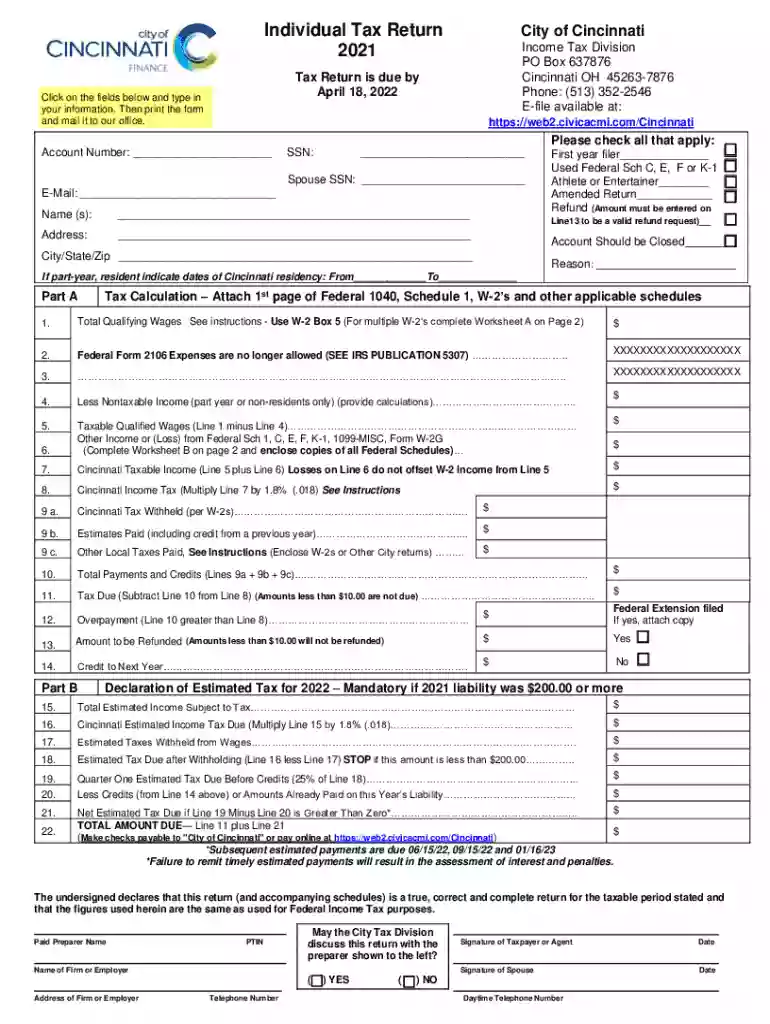
The "tax cincinnati" refers to the local income tax obligations and procedures specific to residents and businesses in Cincinnati, Ohio. This includes guidelines and forms necessary for filing local income taxes, which are separate from federal and state tax obligations. These documents are critical for ensuring compliance with municipal tax laws and provide details on calculating income taxes, deductions, and credits available at the local level.
Key Elements of the Tax Cincinnati Form
- Personal Information: Basic data such as name, address, and Social Security number.
- Income Details: Information from forms like W-2s or relevant federal schedules that delineate income from employment, self-employment, or other sources.
- Tax Calculations: Sections for determining taxable income, applying local tax rates, and calculating total tax due.
- Deductions and Credits: Specific allowances and tax credits applicable under Cincinnati's local tax laws.
- Payment Information: Instructions for submitting payment for any taxes owed and options for estimated tax payments for the following year.
Important Terms Related to Tax Cincinnati
Understanding specific terminology is crucial when dealing with tax forms. Key terms include:
- Taxable Income: The portion of income subject to Cincinnati's local tax after deductions.
- Estimated Taxes: Payments made periodically throughout the year based on projected tax liabilities.
- Filing Status: The category of a filer that affects tax rates (e.g., single, married filing jointly).
Steps to Complete the Tax Cincinnati
Filing your Cincinnati tax form requires careful attention to detail. Follow these general steps:
- Gather Required Documents: Collect all necessary forms, such as W-2s, any relevant federal tax schedules, and proof of other income sources.
- Complete Personal Information: Enter your name, address, Social Security number, and other identifying information.
- Calculate Income: Utilize forms to report and calculate your annual income.
- Determine Deductions and Credits: Identify and apply any applicable local tax deductions or credits.
- Calculate Tax Liability: Use the specific tax rates and provisions indicated on the form to compute your total tax owed.
- Sign and Date: Ensure all forms are signed and dated as required for validity.
- Choose a Submission Method: Decide whether you will file online, by mail, or in person.
How to Obtain the Tax Cincinnati Form
The Cincinnati tax form can be accessed and acquired through several methods:
- Online: Visit official websites of local government or tax service providers.
- In Person: Obtain physical copies from municipal offices or public libraries that offer tax-related resources during tax season.
- Mail Requests: Request forms to be mailed to your address by contacting local tax offices.
Filing Deadlines and Important Dates
Adhering to deadlines is crucial to avoiding penalties. Important dates include:
- Annual Filing Deadline: Typically aligns with the federal tax deadline, although local variances can occur.
- Estimated Tax Payments: Often due quarterly; specific dates are detailed on the form or the city's tax website.
- Extension Requests: Must be filed if additional time is needed, typically following the same deadline as federal extension requests.
Required Documents for Filing
Accurate and complete documentation is needed to ensure compliance:
- Income Statements: W-2s, 1099s, or other forms documenting all streams of income.
- Federal Returns: Copies of the federal tax return and schedules that display your reported income and deductions.
- Supporting Documents: Any additional paperwork necessary for deductions, such as business expense receipts or charitable contribution confirmations.
Legal Use of the Tax Cincinnati Form
The tax cincinnati form serves specific legal functions including:
- Documentation of Local Tax Compliance: Verifies that local taxes are calculated and paid according to municipal regulations.
- Record Keeping: Ensures that individuals and businesses have official records of their local tax filings and liabilities.
Digital vs. Paper Versions
Choosing between digital and paper submissions offers several considerations:
- Digital Submissions: Typically faster processing and confirmation; provides instant access and the convenience of online filing portals.
- Paper Submissions: Necessary for those who prefer physical documentation or if digital access is limited.
Software Compatibility for Tax Cincinnati
Several software options are available to facilitate filing:
- TurboTax and QuickBooks: Often support Cincinnati tax forms, providing automated computing and e-filing solutions.
- Official Software Options: Some local tax offices may also provide free or low-cost software suited for straightforward filing needs.
Effective completion and submission of local tax forms ensure compliance and avoid potential fines or penalties. Properly managing these responsibilities is crucial for residents and businesses in Cincinnati seeking seamless tax processes.