
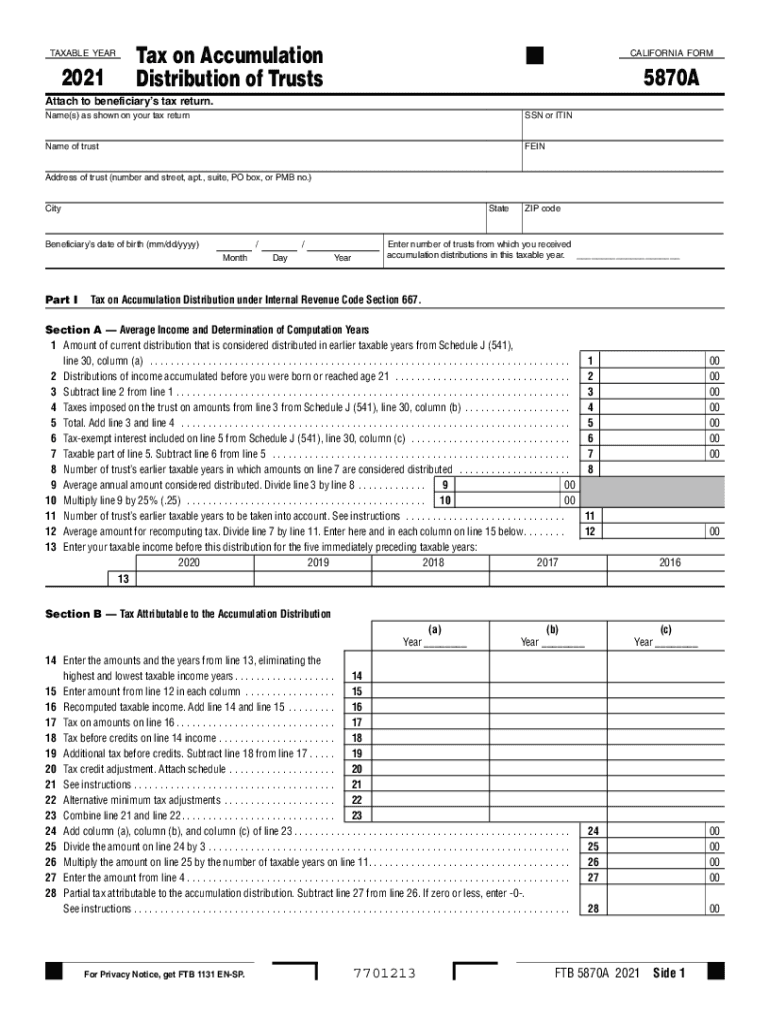







Definition & Purpose of Form FTB 5870A
Form FTB 5870A is a California state tax form used to report tax on accumulation distributions from trusts. This document is specifically designed for beneficiaries who need to disclose particular details about the trust distributions they have received. The form requires beneficiaries to calculate the taxes owed under various sections of the Internal Revenue Code and California Revenue and Taxation Code. Understanding the purpose of this form is crucial for accurately reporting income and ensuring compliance with state tax obligations.
Key Components of the Form
- Personal Information: Beneficiaries must provide personal details, including name, address, and Social Security Number.
- Trust Distribution Details: Information about the trust, such as the trust name and distributing party details.
- Tax Calculations: Sections dedicated to computing the taxable income and taxes owed from trust distributions.
How to Use Form FTB 5870A
Using Form FTB 5870A involves several steps focused on accurately recording information about the accumulation distributions received from trusts.
Step-by-Step Guide
- Gather Required Information: Obtain all relevant trust documents and personal identification information prior to filling out the form.
- Complete Personal Information Section: Enter personal details as required.
- Enter Trust Details: Record necessary trust information, including the trustee's details.
- Calculate Taxable Income: Use the IRS Code references provided in the form to compute taxable income from distributions.
- Finalize Tax Liabilities: Determine the final taxes owed using the provided sections for calculations.
Practical Example
Suppose a beneficiary received a distribution from a trust last year. To use the form, they would first collect details of that distribution, understand how much of it is taxable, and then use the form to determine the specific tax amount owed to the state of California.
Steps to Complete Form FTB 5870A
Completing Form FTB 5870A can be straightforward when you follow a structured approach. Here are the major steps:
- Filling Out Personal and Trust Information: Begin by entering your personal details and the trust's information, ensuring accuracy to avoid processing delays.
- Calculating Accumulated Distribution: The form outlines specific sections to assist in calculating the accumulated income from past distributions.
- Computing Tax Liability: Use the pre-defined sections to calculate any taxes due based on prior income and distribution rules.
- Review and Verify: Double-check all entered data for accuracy and ensure all required fields are completed before submission.
Additional Considerations
- Amendments: If errors are found after submission, an amended form can be filed.
- Professional Assistance: Complex cases may require consulting with a tax professional.
Who Typically Uses Form FTB 5870A
Eligible Individuals
The form is primarily used by beneficiaries of trusts who receive accumulation distributions subject to state taxes. These individuals are often:
- Beneficiaries of perpetual family trusts
- Individuals receiving distributions from investment trusts
- Taxpayers who inherited trusts with specific distribution guidelines
Importance for Various Users
Beneficiaries should use Form FTB 5870A to remain compliant with tax regulations. Failure to do so may result in penalties or additional scrutiny from tax authorities.
Important Terms Related to Form FTB 5870A
Understanding specific terminology related to Form FTB 5870A is crucial for proper completion:
- Accumulation Distribution: Income distributed to beneficiaries that have accumulated in previous years.
- Distribution Year: The year in which the distribution payment is made to the beneficiary.
- Tax Liability: The total amount of tax owed based on accumulations and other income factors.
Key Terminology
- Beneficiary: A person entitled to benefits or proceeds from a trust or estate.
- Trustee: An individual or organization that holds or manages and invests assets for the benefit of another.
Legal Use of Form FTB 5870A
Form FTB 5870A has legal implications both for individual taxpayers and trust entities. This form ensures that beneficiaries appropriately report and pay taxes due on accumulated distributions.
Legal Framework
- Compliance with IRS Code: Taxpayers must adhere to specific IRS codes when calculating taxes
- State Tax Regulations: The form ensures compliance with California-specific tax laws and requirements.
Consequences of Non-Compliance
Failure to properly complete or file Form FTB 5870A can result in legal penalties, including fines or increased scrutiny during audits.
Filing Deadlines and Important Dates
Adhering to deadlines for submitting Form FTB 5870A is essential to avoid penalties.
Critical Dates
- Annual Filing Date: Typically aligned with federal and California state tax deadlines, often April 15.
- Extension Deadline: If an extension is filed, the new deadline is typically extended by six months.
Monitoring Deadlines
Keeping track of deadlines ensures compliance and prevents late fee assessments.
Penalties for Non-Compliance with Form FTB 5870A
Potential Penalties
Non-compliance penalties can include:
- Late Filing Fees: Charged for forms submitted past the due date without an approved extension.
- Accuracy Penalties: Applied if the information provided is intentionally or significantly inaccurate.
Avoiding Penalties
- Timely Filing: Ensure all deadlines are met.
- Accurate Information: Double-check entries before submission.
- Seek Professional Help: Utilize tax professionals when necessary to ensure compliance.
Maintaining compliance with Form FTB 5870A helps beneficiaries avoid penalties and ensures accurate tax reporting.




