







Definition & Meaning
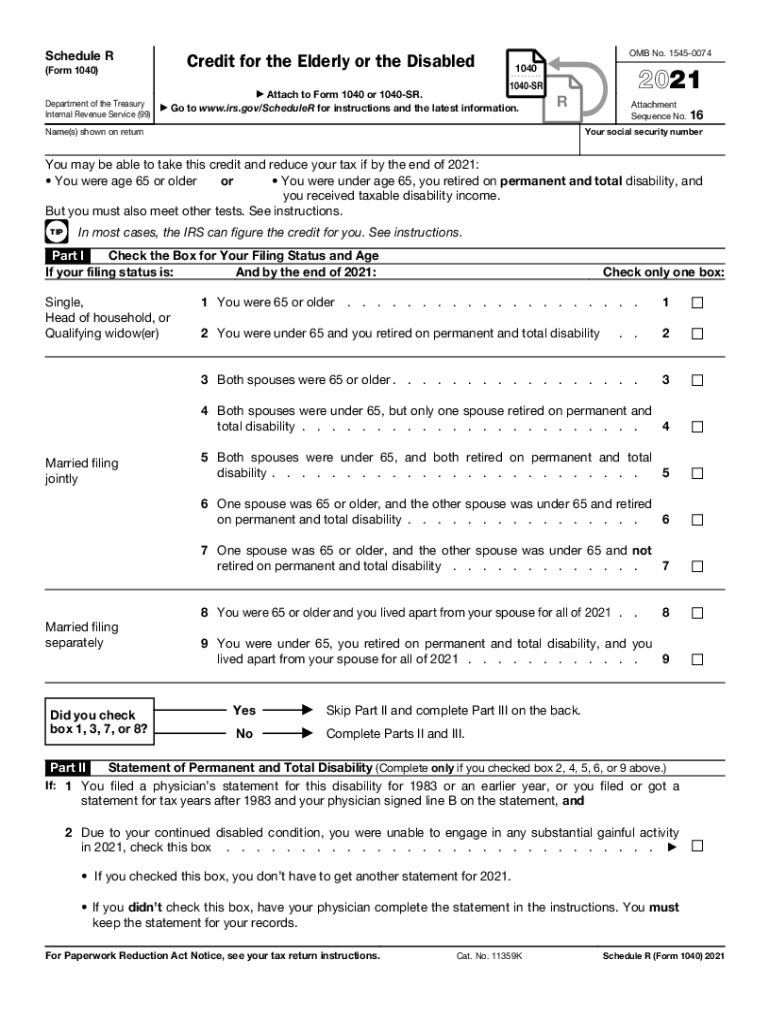
The IRS R form is used specifically for the Credit for the Elderly or Disabled within tax returns, such as Form 1040 or 1040-SR. This form is designed to simplify the process of claiming tax credits for individuals who meet certain age or disability criteria. It helps taxpayers determine eligibility based on filing status and adjust their taxes accordingly, providing a vital tool for ensuring correct credit calculation.
How to Use the IRS R
Utilizing the IRS R form involves several steps. First, ensure you meet the preliminary criteria for either age or disability, as this determines your eligibility. Follow the form’s structured sections, which guide users through providing necessary personal information, income details, and the specific circumstances that qualify you for the credit. Complete each section carefully, verifying the accuracy of all provided information to prevent processing errors.
Eligibility Criteria
Applicants seeking to use the IRS R form need to meet specific criteria. For age, taxpayers should be 65 or older by the end of the tax year. For disability-related eligibility, individuals must be permanently and totally disabled, which typically requires a physician's certification. The form also takes into account filing status, which influences the eligibility thresholds and credit amounts.


Steps to Complete the IRS R
- Gather Necessary Information: Collect all personal, income, and medical documents that substantiate your eligibility.
- Fill Out Personal Information: Include basic details like name, address, and Social Security number.
- Determine Eligibility: Use the criteria section to ensure you qualify based on age or disability.
- Calculate Income for Eligibility: List all sources of income to check against thresholds that affect credit amount.
- Complete the Credit Calculation: Utilize the form’s instructions to compute the credit correctly, ensuring you deduct allowable expenses.
Important Terms Related to IRS R
Understanding the terminology on the IRS R form is crucial for accurate completion:
- Adjusted Gross Income (AGI): Income amount used to determine eligibility, adjusted for certain deductions.
- Permanent Disability: A condition certified by a physician indicating long-term and irreversible impairment.
- Filing Status: Tax return classification (e.g., single, married) that affects eligibility criteria and credit amount.
IRS Guidelines
The IRS provides detailed guidelines to aid in completing the IRS R form. These guidelines clarify eligibility criteria, acceptable documentation, and how to interpret the form’s specific entries. It's essential to adhere to these guidelines to ensure the form is filled out accurately and accepted by the IRS.
Filing Deadlines / Important Dates
Meeting deadlines is crucial when submitting the IRS R form. Ensure your form is completed and filed by the annual tax deadline, usually April 15th. Missing this deadline can result in penalties or forfeited credits, so timely submission should be prioritized.
Required Documents
To complete the IRS R form accurately, have the following documents ready:
- Personal Identification: A valid ID or Social Security card.
- Proof of Income: Documentation of all income sources.
- Medical Records: Physician's certification for disability claims.
- Prior Tax Returns: Useful for cross-referencing data and ensuring consistent filing history.
Application Process & Approval Time
The application process for the IRS R form requires careful preparation of all necessary documents and precise completion of the form itself. Once submitted, the IRS processes the form alongside your tax return. Approval involves verifying eligibility and, if necessary, conducting further evaluations, especially for disability claims. Typically, the processing time aligns with the standard tax return processing timeline, contingent upon the accuracy and completeness of the submission.




