




01. Edit your form 11652 online
Type text, add images, blackout confidential details, add comments, highlights and more.

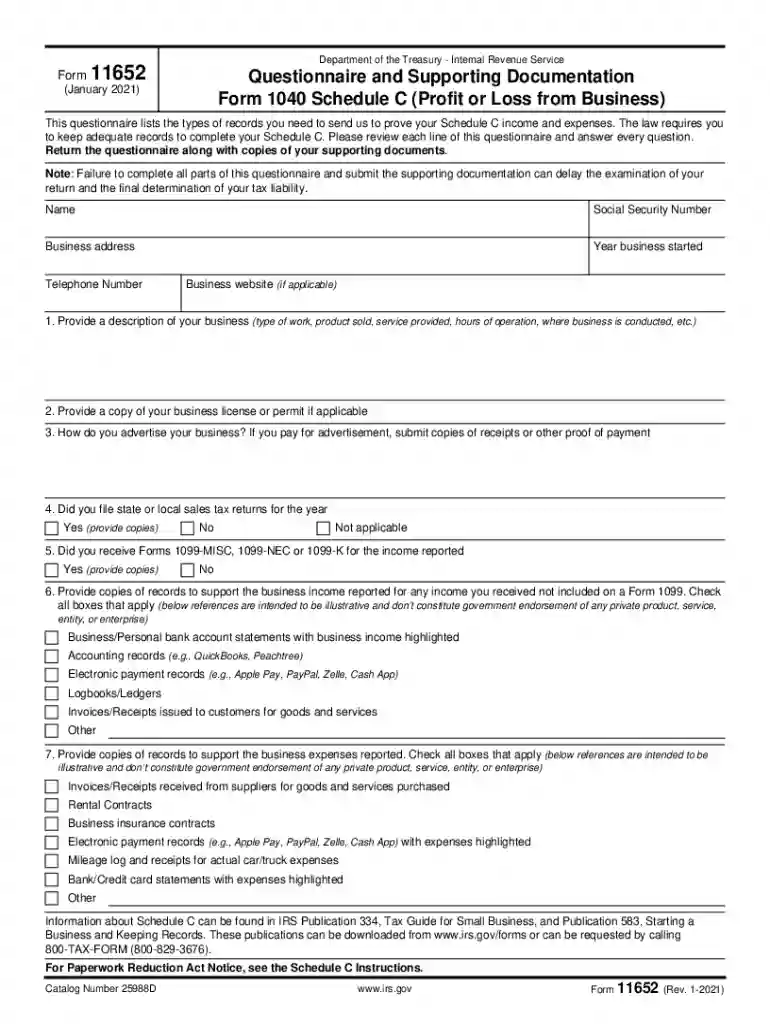
Type text, add images, blackout confidential details, add comments, highlights and more.

Draw your signature, type it, upload its image, or use your mobile device as a signature pad.

Send it via email, link, or fax. You can also download it, export it or print it out.
The I-9 Form, officially known as the Employment Eligibility Verification form, is a document U.S. employers must use to verify the identity and employment authorization of individuals hired to work in the United States. The "I-9 list of acceptable documents" refers to the specific set of documents that can be used by employees to prove both their identity and their eligibility to work in the country. The documents are divided into three categories: List A, List B, and List C.
Understanding the purpose and requirements of these documents is crucial for both employees and employers to ensure compliance with U.S. immigration law.
Navigating the I-9 process requires familiarity with certain key terms. Here are a few important ones:
These terms facilitate a better understanding of the I-9 process and ensure employers and employees are aligned with legal requirements.
Employers should follow explicit guidelines when utilizing the I-9 list of acceptable documents to ensure compliance:
Provide Employees with the List: New hires must be given access to the list of acceptable documents so they can select which ones to provide.
Review the Documents: Ensure that the documents appear genuine and relate to the employee presenting them. Employers are not permitted to specify which documents they will accept from an employee.
Completion of Form I-9: Fill out Section 2 of the Form I-9 by recording document information, including the title, issuing authority, document number, and expiration date, if applicable.
Record Keeping: Maintain Form I-9 for each employee for as long as they work for the company and for either one year after employment ends or three years after the date of hire, whichever is later.
Employers must exercise due diligence to prevent potential legal or compliance issues.
Here’s a detailed process to successfully complete the Form I-9 using the list of acceptable documents:
Employee Completes Section 1: On or before their first day of employment, the employee should complete Section 1 with basic information such as name, address, date of birth, and employment authorization status.
Presenting Documents: Employees have three business days to present acceptable documents from List A, or from both List B and List C.
Employer Review and Verification: Employers must physically examine each original document provided to determine if they reasonably appear to be genuine.
Employer Completes Section 2: The employer must record the document title, issuing authority, document number, and expiration date (if any) under the List A, List B, or List C area, as applicable.
Sign and Date: The employer signs and dates the certification in Section 2.
These steps ensure the correct and legal completion of the Form I-9, which is crucial for compliance with federal regulations.
The I-9 list of acceptable documents is a critical component for compliance with U.S. immigration laws:
Verification of Employment Eligibility: Employers must use the I-9 list of acceptable documents to confirm that their employees are authorized to work in the U.S.
Anti-Discrimination Rules: Employers must not specify which documents employees must present, as this could lead to allegations of discrimination based on national origin or citizenship status.
Retention and Re-Verification: While the I-9 itself is retained for audit purposes, re-verification is required for employees with temporary work authorization before their authorization expires.
Employers must adhere strictly to these guidelines to avoid potential legal penalties.
To illustrate the use of the I-9 list of acceptable documents, consider these practical scenarios:
Scenario 1: A U.S. citizen may choose to present a U.S. Passport (List A) to verify both identity and employment eligibility.
Scenario 2: A lawful permanent resident with a green card might present the Permanent Resident Card (List A) as a single document sufficing for both identity and work authorization.
Scenario 3: An individual with a state ID card (List B) may present it along with a Social Security card (List C) to meet the requirements.
These examples showcase compliance with documentation requirements while respecting employee rights.
Failure to comply with I-9 documentation requirements can lead to serious penalties for employers:
Civil Penalties: Employers may face fines ranging from several hundred to thousands of dollars for each unauthorized worker or each failure to correctly complete, retain, or present Forms I-9.
Criminal Penalties: In cases of knowing violations, such as knowingly hiring unauthorized workers, employers may face criminal charges, which can result in further fines or even imprisonment.
Reputational Damage: Non-compliance can harm a company’s reputation and lead to a loss of trust among stakeholders.
Understanding and following I-9 requirements diligently minimizes the risk of facing these penalties.
Employers have options for managing the I-9 list of acceptable documents in either digital or paper formats:
Paper I-9 Forms: Traditionally completed on paper and stored as physical copies, these forms can be cumbersome, leading to storage and retrieval inefficiencies.
Digital I-9 Forms: Many employers now opt for electronic I-9 systems, which often provide advantages like streamlined data entry, easy access, and integration with payroll and human resources systems.
E-Verify Integration: Digital systems often include seamless E-Verify services, increasing accuracy and reducing potential errors.
Employers should weigh the benefits of digital transformation against their operational capacities to choose the most suitable method for I-9 documentation.
We've got more versions of the form 11652 form. Select the right form 11652 version from the list and start editing it straight away!
At DocHub, your data security is our priority. We follow HIPAA, SOC2, GDPR, and other standards, so you can work on your documents with confidence.
LISTS OF ACCEPTABLE DOCUMENTS. All documents containing an expiration date must be unexpired. * Documents extended by the issuing authority are consideredRead more
Jan 3, 2022 to provide identity source documents that satisfy the requirements of Form I-9, Employment Eligibility reflect updated list of acceptedRead more


