




01. Edit your 2021 form 940 online
Type text, add images, blackout confidential details, add comments, highlights and more.

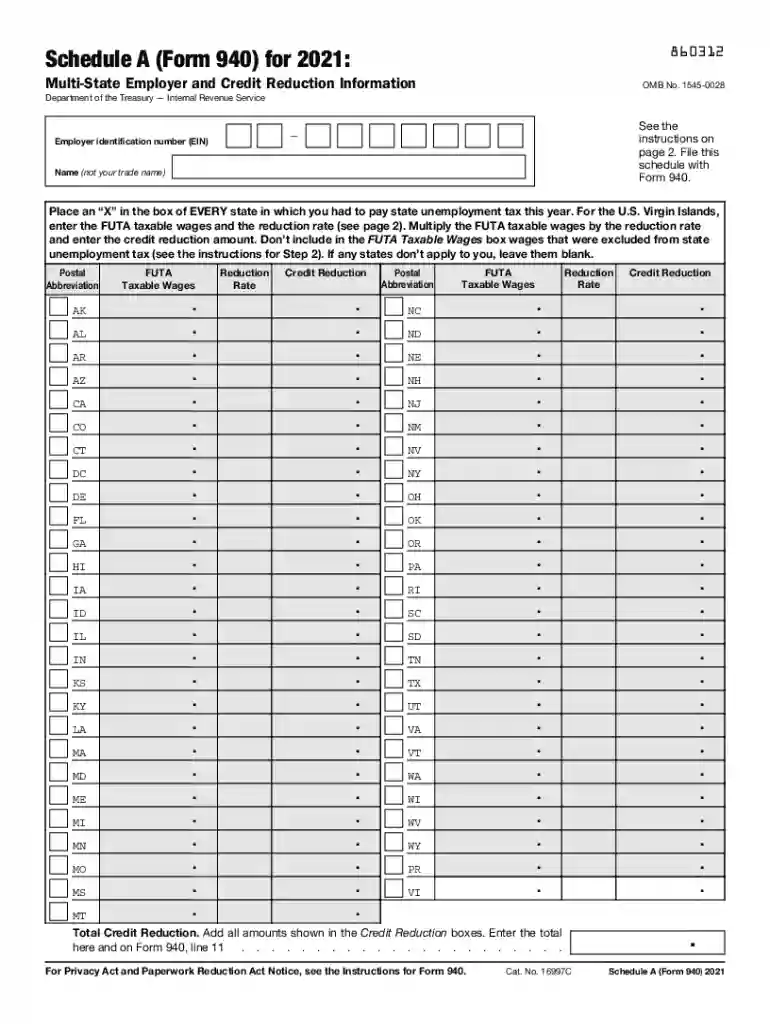
Type text, add images, blackout confidential details, add comments, highlights and more.

Draw your signature, type it, upload its image, or use your mobile device as a signature pad.

Send form 940 schedule a 2021 via email, link, or fax. You can also download it, export it or print it out.
Form 940 is an annual tax form used by employers in the United States to report and calculate Federal Unemployment Tax Act (FUTA) taxes. The FUTA tax provides funds for paying unemployment compensation to workers who have lost their jobs. Employers are required to pay a percentage of their employee's wages, which is usually subject to reduction based on state unemployment insurance contributions. This form is critical for businesses in managing their federal tax obligations related to unemployment benefits.
Employers use Form 940 to calculate their FUTA tax liability. The form helps in determining the FUTA taxable wages, calculating the FUTA tax due, and claiming any available credits. Employers generally apply the FUTA tax rate of 6% on the first $7,000 paid to each employee annually. However, certain conditions allow for a credit up to 5.4% if state unemployment taxes are paid on time, reducing the effective FUTA tax rate to 0.6%.
To obtain Form 940, employers can visit the Internal Revenue Service (IRS) website, where the form is available for download. Employers may also receive the form by mail from the IRS. Additionally, tax preparation software like TurboTax or QuickBooks offers access to digital versions of Form 940 and helps automate the filling process. Whether opting for a digital or physical form, ensuring the latest version is crucial for compliance and accurate reporting.
Fill in Employer Information
Calculate FUTA Taxable Wages
Determine Tax Liability
Report Total FUTA Liability
Finalize and Submit
Filing Form 940 is mandatory for understanding and managing a business's unemployment tax responsibilities. This form ensures compliance with federal regulations and that sufficient funds are contributed to support unemployment insurance programs. Properly filing the form prevents potential penalties and interest for underpayment or late payment of FUTA taxes, maintaining the entity's good standing with the IRS.
Form 940 is primarily used by employers who have paid $1,500 or more in wages to any employee during a calendar quarter or had at least one employee working at least part of a day in any 20 different weeks within the year. This makes it relevant for many business entities, including corporations, partnerships, and certain non-profits that meet the wage or employee criteria.
The IRS provides detailed guidelines and instructions for filling out Form 940. These instructions include important information about payment schedules, potential total liabilities, and guidelines for availing of tax credits and reductions. Employers are advised to refer to these instructions to ensure accurate filings and to avoid common errors.
The deadline for submitting Form 940 is January 31 for the previous calendar year’s wages. However, if the FUTA tax due is deposited in full by this date, the deadline is extended to February 10. Missing these deadlines can result in penalties and interest, emphasizing the importance of timely and accurate filing.
When preparing Form 940, employers should gather records of all wages paid throughout the year, any unemployment tax payments made to state agencies, and any previous communications with the IRS regarding adjustments or amendments to the form. Detailed records help ensure that calculations are accurate and reduce the likelihood of discrepancies during future reviews or audits.
We've got more versions of the 2021 form 940 form. Select the right 2021 form 940 version from the list and start editing it straight away!
| Versions | Form popularity | Fillable & printable |
|---|---|---|
| 2025 | 4.4 Satisfied (56 Votes) | |
| 2024 | 4.4 Satisfied (49 Votes) | |
| 2023 | 2.9 Satisfied (88 Votes) | |
| 2022 | 4.4 Satisfied (43 Votes) | |
| 2021 | 4.8 Satisfied (160 Votes) | |
| 2020 | 3.9 Satisfied (49 Votes) | |
| 2019 | 4.3 Satisfied (134 Votes) | |
| 2018 | 4 Satisfied (65 Votes) | |
| 2017 | 4.4 Satisfied (137 Votes) | |
| 2016 | 4.4 Satisfied (90 Votes) | |
| 2015 | 4 Satisfied (22 Votes) | |
| 2014 | 4 Satisfied (35 Votes) | |
| 2014 | 4.9 Satisfied (44 Votes) | |
| 2013 | 4 Satisfied (28 Votes) | |
| 2011 | 4.4 Satisfied (45 Votes) |
At DocHub, your data security is our priority. We follow HIPAA, SOC2, GDPR, and other standards, so you can work on your documents with confidence.
Jun 2, 2025 Complete Schedule A (Form 940). if your FUTA tax is $500 or less. or money order made payable to United States Treasury.
Make your check or money order payable to the. United States Treasury. Be sure to enter your employer identification number, Form 940, and 2000 on yourRead more


