



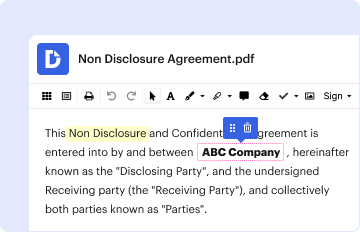
01. Edit your 8804 online
Type text, add images, blackout confidential details, add comments, highlights and more.

Type text, add images, blackout confidential details, add comments, highlights and more.
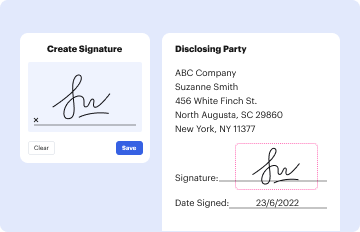
Draw your signature, type it, upload its image, or use your mobile device as a signature pad.

Send can form 8804 be filed electronically via email, link, or fax. You can also download it, export it or print it out.
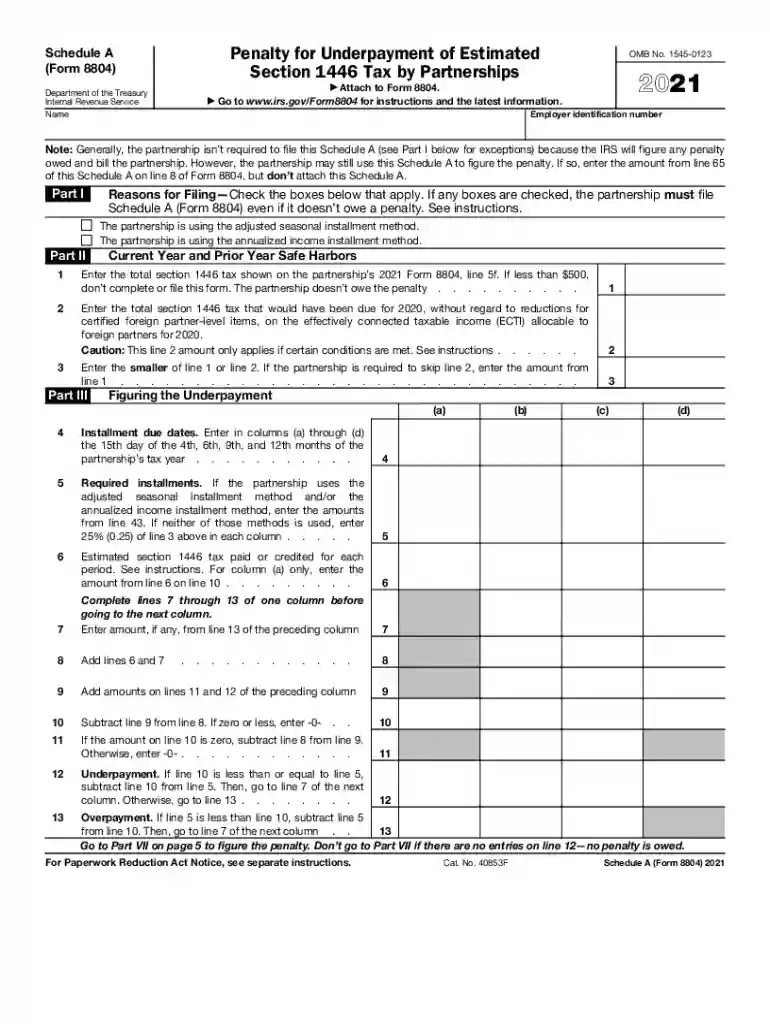
Form 8804 is a crucial document used by partnerships to report and pay the annual withholding tax under Section 1446 of the Internal Revenue Code. This tax applies to effectively connected income allocable to foreign partners of the partnership. The form serves as both a payment voucher and a return for the tax withheld. The accompanying Schedule A (Form 8804) is used to calculate any penalties for underpayment of estimated Section 1446 tax. Understanding how this form functions is essential for compliance and avoiding potential penalties.
To secure a copy of Form 8804, partnerships can download it directly from the Internal Revenue Service (IRS) website. The IRS provides the form in PDF format, allowing users to fill it out digitally or print it for manual completion. Additionally, tax software solutions like TurboTax or QuickBooks may offer pre-filled versions of the form tailored to specific financial data. It’s advisable to ensure the download is from an official source to guarantee the form's validity and compliance with current tax laws.
Gather Required Information: Collect all necessary financial data, including the partnership's total effectively connected taxable income and foreign partners' share.
Calculate Withholding Tax: Use the partnership's total effectively connected taxable income to calculate the withholding tax owed under Section 1446.
Fill Out the Form: Enter the calculated tax amount in the appropriate section of Form 8804.
Attach Schedule A: If applicable, complete and attach Schedule A to report any underpayment penalties or adjustments.
Sign and Date the Form: Ensure the form is duly signed by an authorized partner.
Submit the Form: File the form with the IRS by the required deadline, either electronically or via mail, depending on the partnership's filing procedures.
Partnerships utilize Form 8804 to comply with federal requirements for reporting and paying anticipated withholding tax on foreign partners' income. This ensures that the U.S. government collects taxes on income connected to U.S. businesses that foreign entities benefit from. Proper filing of Form 8804 prevents legal and financial repercussions for the partnership, such as fines for non-compliance or inaccurate reporting.
Typically, Form 8804 is employed by partnerships that have foreign partners. These partnerships might include entities like limited partnerships (LPs), limited liability partnerships (LLPs), and certain limited liability companies (LLCs) that elect to be treated as partnerships for tax purposes. Any partnership in these categories that expects to have effectively connected income allocable to foreign partners must file Form 8804 to fulfill their tax obligations.


The use of Form 8804 comes with significant legal obligations. Filing this form ensures compliance with U.S. tax laws governing income derived from U.S. connections allocated to foreign partners. Non-compliance, incorrect calculations, or failure to file can lead to penalties. Correct use of Form 8804 demonstrates transparency and adherence to U.S. taxation requirements, safeguarding the partnership's legal standing.
Form 8804 must be filed annually by the 15th day of the fourth month following the close of the partnership's taxable year. For calendar-year partnerships, the due date is typically April 15. It's vital to adhere to these deadlines to avoid late filing penalties. Extensions may be available, but they require separate formal requests through other IRS forms.
Failure to accurately file Form 8804 or to pay the required withholding tax can result in substantial penalties from the IRS. These penalties may include late payment fees, interest on the unpaid tax, and additional charges if the payment is considerably overdue. The IRS provides specific guidelines and examples to help partnerships understand how penalties might be assessed, depending on their filing situation and compliance status.
Consider a partnership, ABC Partners, with foreign partners holding an interest in the business. During the fiscal year, ABC Partners must calculate the effectively connected income and determine the Section 1446 withholding tax applicable to the foreign partners. By correctly completing Form 8804 and the associated Schedule A, ABC Partners can ensure that they meet IRS requirements, thereby avoiding penalties for underpayment or late filing.
The IRS provides comprehensive instructions for completing Form 8804, available on their official website. These guidelines offer detailed explanations of the tax computation process, filing instructions, and examples of specific scenarios that may affect how the form is completed. The IRS aims to assist partnerships in meeting their legal obligations and understanding the nuances of tax withholding under Section 1446.
To appropriately file Form 8804, partnerships must have a variety of documents at hand, including:
Ensuring all documentation is accurate and complete will facilitate smooth form completion and filing, reducing the risk of errors and potential penalties.
We've got more versions of the 8804 form. Select the right 8804 version from the list and start editing it straight away!
| Versions | Form popularity | Fillable & printable |
|---|---|---|
| 2025 | 4.6 Satisfied (29 Votes) | |
| 2024 | 4.5 Satisfied (25 Votes) | |
| 2023 | 4.9 Satisfied (23 Votes) | |
| 2022 | 4.6 Satisfied (27 Votes) | |
| 2021 | 4.9 Satisfied (59 Votes) | |
| 2020 | 4.1 Satisfied (62 Votes) | |
| 2019 | 4.2 Satisfied (53 Votes) | |
| 2018 | 4.3 Satisfied (95 Votes) | |
| 2017 | 4.4 Satisfied (102 Votes) | |
| 2016 | 4.4 Satisfied (1167 Votes) | |
| 2015 | 4.3 Satisfied (35 Votes) | |
| 2014 | 4 Satisfied (50 Votes) | |
| 2013 | 4.4 Satisfied (70 Votes) | |
| 2011 | 4 Satisfied (30 Votes) |
At DocHub, your data security is our priority. We follow HIPAA, SOC2, GDPR, and other standards, so you can work on your documents with confidence.
Form 8804, annual return for partnership withholding tax (Section 1446) [electronic resource]. Format: Journal, Periodical Online Resource; URL:
Mar 30, 2026 Use Form 8804 to report the total liability under section 1446 for the partnerships tax year. Form 8804 is also a transmittal form for Form(s)Read more
Feb 1, 2018 Use Form 7004 to request an automatic extension of time to file certain business income tax, information, and other returns. The extension willRead more


