



01. Edit your 1099 r instructions 2021 online
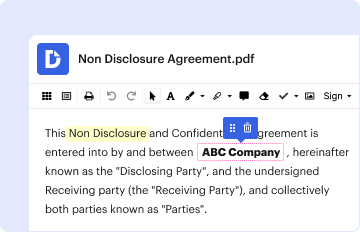
Type text, add images, blackout confidential details, add comments, highlights and more.

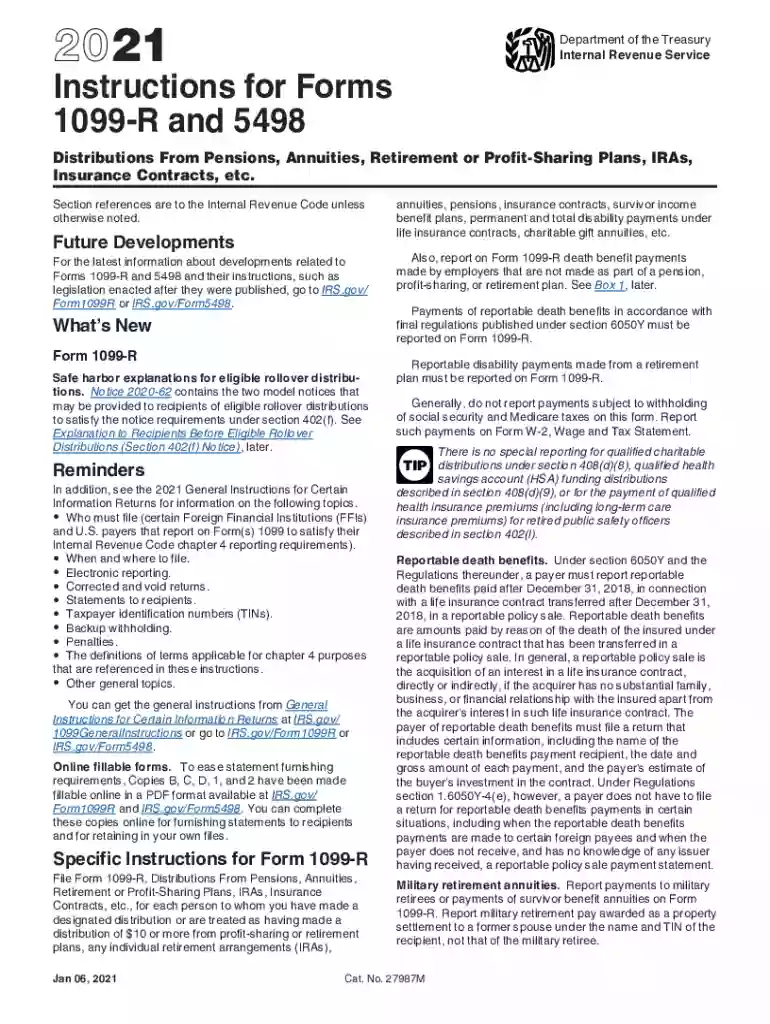
Type text, add images, blackout confidential details, add comments, highlights and more.
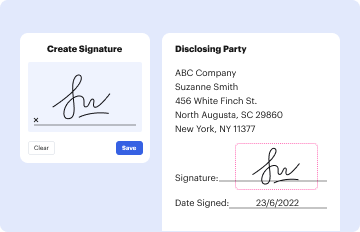
Draw your signature, type it, upload its image, or use your mobile device as a signature pad.

Send it via email, link, or fax. You can also download it, export it or print it out.
Form 1099-R is issued by financial entities to report distributions from pensions, annuities, retirement plans, IRAs, or insurance contracts. Used primarily for tax purposes, it documents the total withdrawals made in a fiscal year, which recipients must report as income on their federal tax return. This ensures that individuals pay the appropriate taxes on retirement distributions.
To obtain Form 1099-R, check your mail or digital e-documents around early February, as financial institutions typically distribute these documents at the start of each year. If you do not receive it, you can access your account online with the financial institution that manages your retirement funds, or you may contact their customer service for assistance. Additionally, most financial institutions provide options for downloading the document directly from their website.
The IRS mandates the use of Form 1099-R for reporting distributions, ensuring transparency and compliance with tax laws. Non-compliance or inaccuracies can result in penalties, so it is essential to verify all information. Legal obligations include understanding explicit codes for each type of distribution and adhering to filing deadlines. Ensure compliance with the IRS guidelines by referencing the instructions included with the form.
The primary deadline for receiving Form 1099-R is January 31. Taxpayers must ensure they have all forms by this date to file their taxes accurately and on time. Filing deadlines for federal tax returns generally fall on April 15, unless otherwise extended. Failure to file timely or accurately may result in penalty or interest from the IRS.
Form 1099-R is available in both digital and paper forms. Many financial institutions offer electronic delivery to streamline the process and reduce paper usage. Digital versions are typically more accessible and convenient for record-keeping and can be imported directly into tax preparation software, aiding efficient and error-free filing.
Failure to report distributions or incorrect filing of Form 1099-R can result in penalties. Common issues include not reporting the taxable amount, misunderstanding the distribution code, or missing the filing deadline. Penalties include interest on unpaid taxes and potential fines for incorrect or late filings. It is crucial to review the form thoroughly and report accurately to avoid these issues.
We've got more versions of the 1099 r instructions 2021 form. Select the right 1099 r instructions 2021 version from the list and start editing it straight away!
| Versions | Form popularity | Fillable & printable |
|---|---|---|
| 2025 | 4.7 Satisfied (24 Votes) | |
| 2024 | 4.2 Satisfied (45 Votes) | |
| 2023 | 4.8 Satisfied (36 Votes) | |
| 2022 | 4.8 Satisfied (58 Votes) | |
| 2021 | 4.8 Satisfied (32 Votes) | |
| 2020 | 4.3 Satisfied (218 Votes) | |
| 2019 | 4.3 Satisfied (167 Votes) | |
| 2018 | 4.4 Satisfied (117 Votes) | |
| 2017 | 4.4 Satisfied (138 Votes) | |
| 2016 | 4.3 Satisfied (117 Votes) | |
| 2015 | 4 Satisfied (37 Votes) | |
| 2014 | 4.4 Satisfied (53 Votes) | |
| 2013 | 4 Satisfied (38 Votes) | |
| 2012 | 4 Satisfied (26 Votes) |
At DocHub, your data security is our priority. We follow HIPAA, SOC2, GDPR, and other standards, so you can work on your documents with confidence.
Mar 30, 2026 File Form 1099-R for each person to whom you have made a designated distribution or are treated as having made a distribution of $10 or more.Read more
May 2, 2017 Generally, report distributions from section 457(b) plans of state and local agencies on Form 1099-R, Distributions From Pensions,. Annuities,Read more
The Form 1099-R reports supplemental pensions paid from the January 10 payday through the December 25 payday. The State of Washington Department of RetirementRead more


