



Oregon form 41 2026

Get Form
oregon form 41 instructions Preview on Page 1

Here's how it works

01. Edit your oregon form 41 instructions online
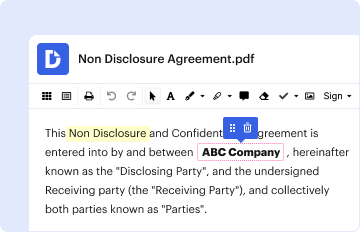
Type text, add images, blackout confidential details, add comments, highlights and more.
02. Sign it in a few clicks
Draw your signature, type it, upload its image, or use your mobile device as a signature pad.
03. Share your form with others
Send or 41 instructions via email, link, or fax. You can also download it, export it or print it out.

How to use or fill out Oregon Form 41 with DocHub

Form edit decoration
9.5
Ease of Setup
DocHub User Ratings on G2
9.0
Ease of Use
DocHub User Ratings on G2
  1. Click ‘Get Form’ to open it in the editor.
  2. Begin by entering the name of the trust or estate and its Federal Employer Identification Number (FEIN) in the designated fields.
  3. Indicate whether this is an amended return, a first return, or a final return by checking the appropriate boxes.
  4. Fill out the fiscal year dates and provide details about the executor or trustee, including their name and contact information.
  5. Complete Schedule 1 by detailing distributable net income and taxable income of fiduciary. Ensure all calculations are accurate.
  6. Proceed to calculate taxes owed using the provided rate schedule on page 4, ensuring you include any applicable credits.
  7. Finally, review all entries for accuracy before signing and submitting your form through our platform.

Start using our editor today for free to simplify your Oregon Form 41 completion!

See more oregon form 41 versions

We've got more versions of the oregon form 41 form. Select the right oregon form 41 version from the list and start editing it straight away!
Versions Form popularity Fillable & printable
2022 4.7 Satisfied (58 Votes)
2021 4.9 Satisfied (31 Votes)
2020 4.4 Satisfied (113 Votes)
2015 4.4 Satisfied (186 Votes)
2014 3.9 Satisfied (49 Votes)
2013 4.3 Satisfied (40 Votes)
2012 4 Satisfied (50 Votes)
be ready to get more

Complete this form in 5 minutes or less

Get form

Got questions?

We have answers to the most popular questions from our customers. If you can't find an answer to your question, please contact us.
Contact us
The fiduciary of a domestic decedents estate, trust, or bankruptcy estate files Form 1041 to report: The income, deductions, gains, losses, etc. of the estate or trust. The income that is either accumulated or held for future distribution or distributed currently to the beneficiaries.
Form 10-IEA is a declaration made by the return filers for choosing the Opting Out of New Tax Regime. An Individual, HUF, AOP (not being co-operative societies), BOI or Artificial Juridical Person with business or professional income must submit Form 10-IEA if they wish to pay income tax as per the old tax regime.
The fiduciary of an estate or trust is required under Pennsylvania law to file a PA-41 Fiduciary Income Tax Return, and pay the tax on the taxable income of such estate or trust. If two or more fiduciaries are acting jointly, the return may be filed by any one of them.
If the estate generates a gross income of $600 or more or has any nonresident alien beneficiaries, you generally must file Form 1041.
The kicker is triggered when Oregons actual revenue for a two-year budget period exceeds the forecasted revenue by more than 2%. When this happens, the surplus is returned to taxpayers in the form of a credit on their state income tax return. The kicker is only available in odd-numbered years (e.g., 2023, 2025).

Security and compliance

At DocHub, your data security is our priority. We follow HIPAA, SOC2, GDPR, and other standards, so you can work on your documents with confidence.

Learn more
ccpa2
pci-dss
gdpr-compliance
hipaa
soc-compliance

People also ask

Unsure about whether you need to file a Pennsylvania state tax return? Lets get you on the right track. Pennsylvania residents, part-year residents and nonresidents must file a state tax return if one of the following applies: Your Pennsylvania gross taxable income exceeds $33 even if no taxes are due.
Oregon Estate Tax Strategies Make lifetime gifts. Use an irrevocable life insurance trust (ILIT). Donate via a charitable trust. Employ a family limited partnership. Use a qualified personal residence trust (QPRT).

Related links