




01. Edit your kentucky ifta surcharge online
Type text, add images, blackout confidential details, add comments, highlights and more.

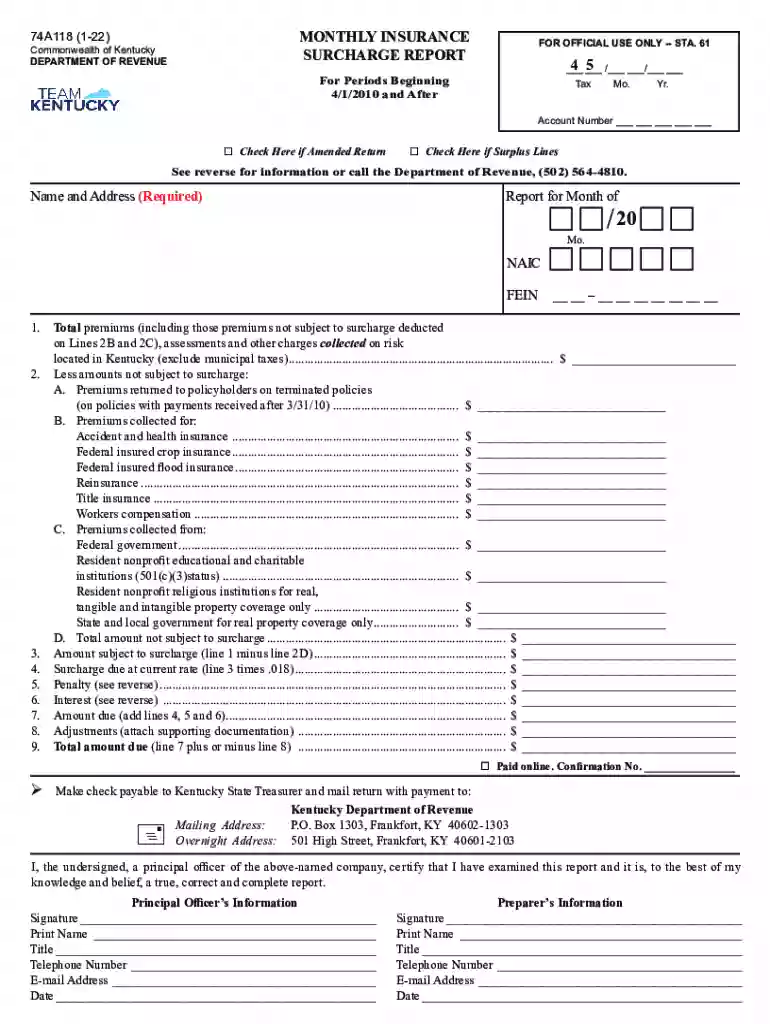
Type text, add images, blackout confidential details, add comments, highlights and more.

Draw your signature, type it, upload its image, or use your mobile device as a signature pad.

Send kentucky insurance surcharge via email, link, or fax. You can also download it, export it or print it out.
The "ky surcharge," or Kentucky surcharge, is a mandatory fee imposed on certain insurance premiums in the state of Kentucky. It serves as a supplemental charge that insurers, excluding life and health insurers, must collect from policyholders and remit to the state. This surcharge is part of a broader fiscal strategy to fund various state programs, making it a crucial aspect of Kentucky's insurance landscape. Understanding the intricacies of this surcharge is essential for both insurers and policyholders to ensure compliance with state regulations.
Insurers must integrate the Kentucky surcharge into their billing systems to ensure it's collected effectively. This involves calculating the appropriate surcharge amount based on the insurance premiums and including this as a separate item on policyholders' invoices. The surcharge must be clearly identified to avoid confusion among policyholders. Accurate remittance to the state is required, often entailing monthly or annual reports to document collected surcharges.
The legal foundation for the Kentucky surcharge is laid out in state legislature, detailing how and when insurers must apply the surcharge. Misapplication or failure to remit these funds can lead to legal repercussions, making adherence to these laws critical. The legal parameters ensure transparency and proper allocation of funds, bolstering public trust in the system.
Kentucky enforces specific rules and deadlines for surcharge collection and remittance. These regulations are unique to the state and are designed to fit its fiscal policies and needs. Insurers operating in Kentucky must be well-versed in these rules to avoid penalties for non-compliance.
Failing to comply with Kentucky's surcharge regulations can result in significant penalties, including fines and potential criminal charges. Insurers must be vigilant in both collection and remittance processes to avoid these punitive measures. Non-compliance not only incurs financial costs but can also tarnish the insurer’s reputation and undermine consumer trust.
Kentucky offers both digital and paper forms for surcharge reporting. Many insurers prefer digital submissions due to ease of use, faster processing times, and lower risk of errors. Digital forms often allow for automatic calculations and validations, reducing the burden of manual paperwork. However, traditional paper submissions remain an option for those preferring or requiring physical documentation for submission. Each method has its own guidelines and deadlines, which must be adhered to for successful compliance.
We've got more versions of the kentucky ifta surcharge form. Select the right kentucky ifta surcharge version from the list and start editing it straight away!
At DocHub, your data security is our priority. We follow HIPAA, SOC2, GDPR, and other standards, so you can work on your documents with confidence.
This administrative regulation establishes the manner in which the surcharge required by KRS 136.392 is to be disclosed to policyholders.Read more
The Insurance Premiums Tax and Premium Surcharge laws are located in Kentucky Revised Statutes Chapter 136 and Chapter 304. Service provider fees may apply.Read more


