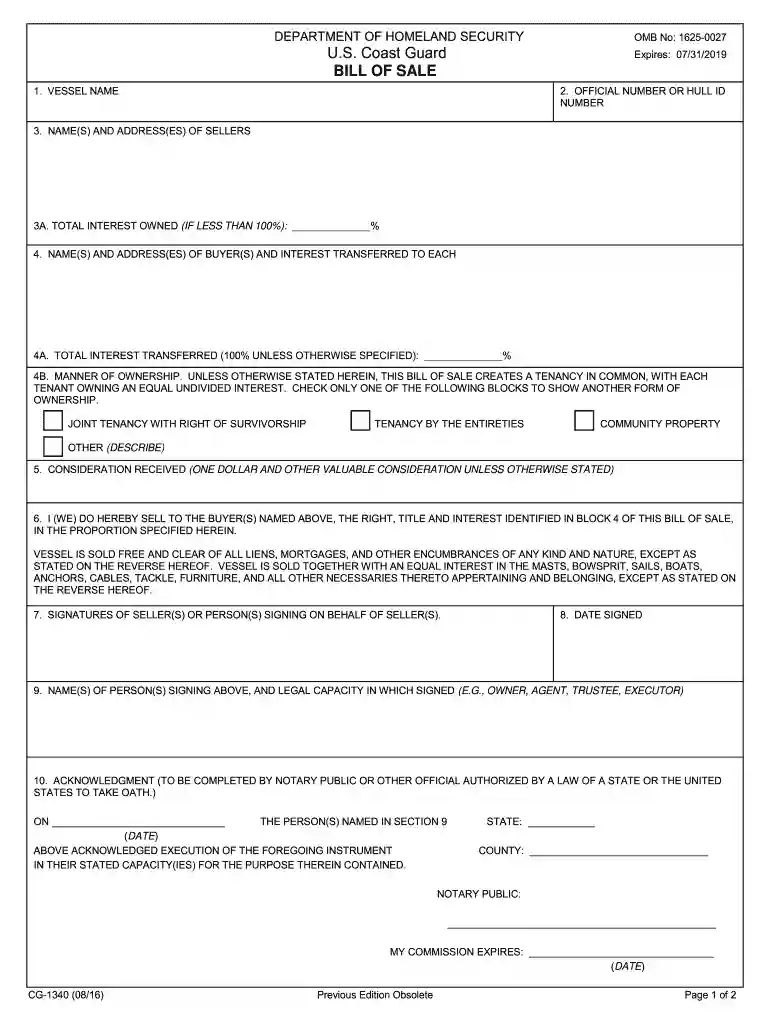
Definition and Meaning of the Vessel Sale Bill Sample
A vessel sale bill is a legal document used in the transfer of ownership of a vessel, such as a boat or ship. This document acts as a detailed receipt that highlights the transaction between the seller and the buyer. It includes essential information such as the identities and addresses of both parties, a description of the vessel, the sale amount, and the terms of sale. Not only does the vessel sale bill serve as proof of purchase, but it also outlines the conditions under which the sale has been agreed upon, making it crucial for establishing legal rights and responsibilities.
Key Elements Included in the Vessel Sale Bill
- Buyer and Seller Information: Contains the full name, address, and contact details of both parties.
- Vessel Description: A comprehensive description of the vessel, including make, model, year, Hull Identification Number (HIN), and registration numbers.
- Sale Price: Details the agreed-upon amount for the sale of the vessel.
- Terms and Conditions: Specifies the conditions under which the sale is executed, including any warranties or guarantees provided by the seller.
- Signatures: Both parties must sign the document to indicate their agreement and consent to the terms outlined.
- Notary Acknowledgment: Often includes a section for a notary public to affirm the authenticity of the parties' signatures, adding a layer of legal validation.
How to Use the Vessel Sale Bill Sample
Understanding how to effectively use a vessel sale bill sample is critical in ensuring a smooth transaction. The sample acts as a guide for drafting a precise and binding document, ensuring all necessary components are included.
- Review the Sample: Examine the template to familiarize yourself with its structure and required elements.
- Insert Specific Information: Replace placeholders with the actual details of the transaction, including buyer and seller data, vessel specifics, and terms of sale.
- Ensure Accuracy: Double-check all entries for accuracy to prevent any misunderstandings or disputes.
- Signatures: Have both parties sign the document in front of a notary public if required, to ensure the transaction is recognized legally.
- Distribute Copies: Give each party a copy of the completed and signed bill of sale for their records.
Steps to Complete the Vessel Sale Bill Sample
Completing a vessel sale bill sample involves several essential steps to guarantee the document is legally credible and comprehensive.
- Gather Information: Collect all necessary details about the vessel and the parties involved.
- Complete the Document: Fill out the sample with accurate data, ensuring that each section is thoroughly addressed.
- Verify Details: Carefully verify all the information entered to avoid mistakes that could lead to complications later.
- Notary Session: If a notary acknowledgment is required, schedule a session, and bring valid identification.
- Distribution and Filing: After signing, distribute copies to all relevant parties and file a copy with necessary authorities if required.
Legal Use of the Vessel Sale Bill Sample
The vessel sale bill serves multiple legal purposes that are integral in the transfer of ownership.
- Proof of Ownership Transfer: Establishes the legal recognition of the new owner after purchase.
- Compliance with State Laws: Protects both parties by ensuring compliance with relevant state laws governing the sale of vessels.
- Future Disputes: Provides a legal fallback document in case disputes arise post-sale regarding the terms or conditions agreed upon.
Who Typically Uses the Vessel Sale Bill Sample
The vessel sale bill sample is generally used by individuals and entities involved in the transaction of buying and selling vessels.

- Private Sellers and Buyers: Individuals or entities handling personal transactions between private parties.
- Dealers and Brokers: Professionals facilitating the sale of vessels as part of their business operations.
- Financial Institutions: Entities such as banks or credit unions that may require evidence of the transfer for financing and loan purposes.
State-Specific Rules for the Vessel Sale Bill Sample
While the vessel sale bill is widely used, it's essential to accommodate varying state-specific regulations.
- Registration Requirements: Some states require document evidence for vessel registration, necessitating special clauses or sections in the bill of sale.
- Tax Implications: Differences in state tax laws may affect the terms within the sale bill, such as sales tax inclusion.
- Notarization Needs: Specific states may mandate notarization for the bill of sale to be legally binding.
Examples of Using the Vessel Sale Bill Sample
Real-world scenarios illustrate the practical application of a vessel sale bill.
- Private Transaction: John sells his fishing boat to Mike. They use a vessel sale bill template to cover details like price, transfer conditions, and warranties.
- Dealer Sale: Emily purchases a yacht from a dealership. The dealer provides a vessel sale bill reflecting the transaction with detailed vessel descriptions and terms.
- Bank Financing: Tom obtains a marine loan for buying a vessel. His bank uses the bill of sale to verify the ownership transfer before disbursing funds.
Important Terms Related to the Vessel Sale Bill Sample
Familiarizing with these terms can enhance understanding and accuracy when handling the vessel sale bill sample:
- Hull Identification Number (HIN): Unique identifier for vessels, akin to a vehicle's VIN.
- Notarization: Official validation of signatures on a legal document by a certified notary public.
- Bill of Sale (BOS): A generic term for a document recording the sale and transfer of goods.
By adhering to the guidelines and insights provided, individuals can effectively engage with the process of completing a vessel sale bill, ensuring that the administrative and legal facets of the vessel transfer are well-managed and thoroughly documented.