







Definition & Meaning
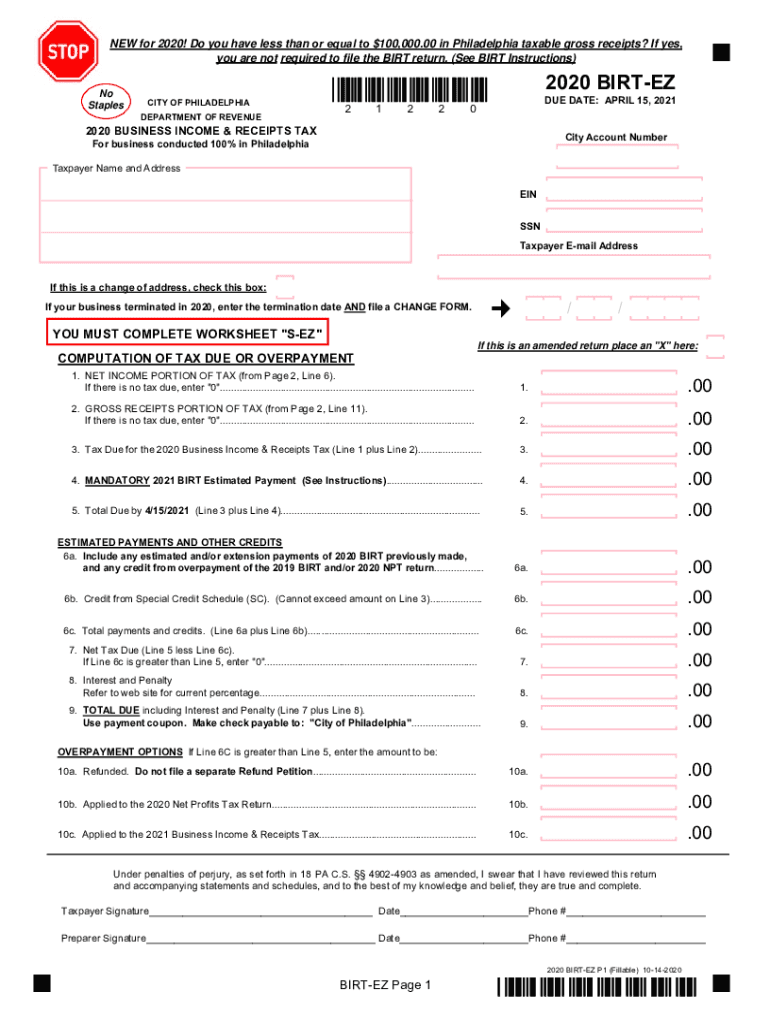
The Business Income & Receipts Tax (BIRT) is a critical fiscal requirement governing businesses operating within the city limits of Philadelphia. As a mandate, the BIRT focuses on two primary elements: a gross receipts tax and a net income tax. The gross receipts tax involves a levy on the total revenue generated by a business, regardless of its profitability, while the net income tax is imposed on the profit left after expenses have been deducted. Both components are essential to understanding the comprehensive fiscal obligations for businesses, particularly those operating in diverse sectors from retail to service industries.
Key Elements of the BIRT
- Gross Receipts Tax: Imposed on the total revenue a business earns.
- Net Income Tax: Applied to the net profits after business expenses.
- Mandatory Filing: Both BIRT components must be filed annually by eligible businesses.
How to Use the BIRT Form
Filing the BIRT form requires an understanding of the different sections that need to be completed accurately. This form is a multipurpose document that facilitates the reporting of your business’s income and receipts to the city of Philadelphia.
-
Gather Financial Documentation: Before initiating the form, organize all relevant financial records, including revenue statements and expense reports.
-
Fill Out Form Sections: The form is divided into sections focusing on gross receipts and net income. Input accurate figures derived from your financial documentation.
-
Submit the Form: Once completed, the BIRT can be submitted either through designated online platforms or via mail to the Philadelphia Department of Revenue.
Steps to Complete the BIRT Form
-
Calculate Gross Receipts: Determine the total revenue collected during the fiscal year, irrespective of its source.
-
Deduct Allowable Expenses: Identify which business expenses are permitted as deductions under current tax law.
-
Determine Net Income: Compute the net income by subtracting total expenses from gross receipts.
-
Enter Data on Form: Carefully input all calculated figures in their respective sections on the form, ensuring no fields are left unchecked.
-
Review and Verify: Double-check all entries for accuracy to prevent processing delays or legal ramifications.
Important Terms Related to BIRT Form
Understanding the terminology associated with the BIRT form is vital for accurate completion and compliance.
- Taxable Gross Receipts: The portion of business revenue subject to tax.
- Allowable Deductions: Expenses that can legally reduce taxable income.
- Preparer's Signature: An attestation from the individual completing the form confirming its accuracy.
Legal Use of the BIRT Form
The BIRT form is legally mandated for businesses operating in Philadelphia and plays a critical role in maintaining fiscal compliance for entities within the city.
- Legal Mandate: Misappropriation or failure to file the form can result in penalties.
- Documentation Requirement: Businesses must retain completed forms for auditing purposes.
Filing Deadlines / Important Dates
Adhering to filing deadlines is crucial to avoid penalties and ensure compliance.
- Annual Deadline: The BIRT form must be filed by April 15 of the following year.
- Extension Requests: Businesses may request an extension, though conditions apply.
Required Documents
To accurately complete the BIRT form, the following documents are typically required:
- Revenue Statements: Detailed reports of earned revenue over the tax period.
- Expense Reports: Verification of expenditures incurred throughout the fiscal year.
- Previous Year’s Tax Filings: For reference and ensuring consistency in reporting.
Form Submission Methods
Businesses have multiple options for submitting the BIRT form, ensuring flexibility and convenience.
Online Submission
- Portal Access: Utilize the Philadelphia Department of Revenue’s online portal for electronic submission.
- Instant Confirmation: Receive immediate acknowledgment of form receipt.
Mail Submission
- Postal Delivery: Forms can be mailed to the department’s official address.
- Delivery Confirmation: Utilize certified mail to confirm arrival.
Penalties for Non-Compliance
Non-compliance with BIRT filing requirements can result in severe financial penalties. These include:
- Late Filing Fees: Charges applied for failing to submit the form by the deadline.
- Interest on Unpaid Taxes: Accruing interest on any unpaid tax amounts.
- Potential Audits: Increased risk of audit by the city’s revenue department.
By thoroughly understanding and adhering to the BIRT form requirements, businesses can ensure they meet their tax obligations, avoid penalties, and support fiscal transparency.




