
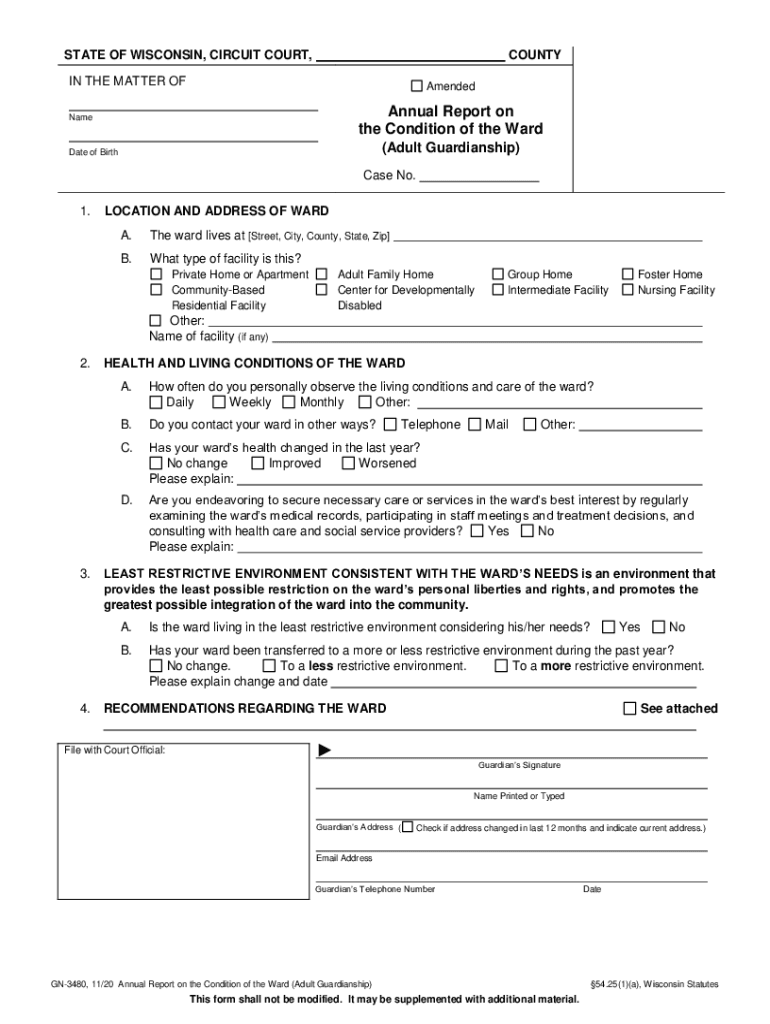







Definition and Purpose of the Wisconsin Condition Report
The Wisconsin Condition Report is a critical document used to inform courts about the status of a ward under adult guardianship. It provides essential insights concerning the ward's location, health, and living conditions, along with ensuring that they reside in the least restrictive environment necessary. This report forms part of the legal process by which guardians are required to update the court on the ward's welfare, often on an annual basis.
Essential Components of the Report
-
Location and Living Situation:
- Details the ward's current residence.
- Assesses whether this residence is the best fit for the ward's needs.
-
Health Analysis:
- Includes medical updates and health conditions.
- Provides information on physical and mental health changes over time.
-
Environment Suitability:
- Evaluates if the current living arrangements adhere to the least restrictive environment principle.
- Justifies the suitability or potential need for a change in residence.
-
Guardian Observations:
- Records guardian's notes on the ward's daily care.
- Outlines any significant changes or issues observed by the guardian.
Importance of the Condition Report
The Wisconsin Condition Report plays a vital role in monitoring the welfare of individuals under guardianship. It serves multiple purposes:
- Judicial Oversight: Ensures transparency and accountability in the guardianship.
- Informed Decisions: Provides data for courts to make decisions regarding the ward's care.
- Guardian Accountability: Holds guardians responsible for justifying their management decisions.
How to Obtain the Wisconsin Condition Report
Obtaining a Wisconsin Condition Report involves several steps that guardians must undertake to comply with state laws. Guardians need to liaise with local court systems and usually follow these steps:
-
Contact the Appropriate Court:
- Reach out to the county probate court handling the guardianship case.
- Obtain necessary paperwork or instructions specific to the jurisdiction.
-
Complete Required Forms:
- Fill out any requests or applications needed to access or file the report.
-
Submission Protocol:
- Follow the local court's submission guidelines, whether digital or paper-based.
-
Consult Legal Counsel:
- Consider legal advice to ensure compliance with state regulations.
Required Documentation and Eligibility
- Proof of Guardianship: Legal documents establishing guardianship authorization.
- Health and Residence Records: Documents verifying the ward's health status and living conditions.
- Personal Identification: Necessary ID for the guardian responsible for filing the report.
Steps to Complete the Wisconsin Condition Report
Completing the Wisconsin Condition Report requires accurate and thorough documentation. Follow these critical steps to ensure a comprehensive submission:
-
Gather Relevant Information:
- Collect medical records, living situation details, and any recent observations of the ward.
-
Fill in the Required Sections:
- Accurately complete each section of the report, addressing location, health, and care conditions.
-
Review for Accuracy:
- Double-check all entries for correctness before submission to avoid legal complications.
-
File with the Appropriate Court:
- Submit the report by the designated deadline to the relevant court system.
-
Retain Copies:
- Keep duplicates of the submitted documents for personal records and future reference.
Common Mistakes to Avoid
- Incomplete Information: Ensure all sections are thoroughly filled out.
- Late Submission: Adhere strictly to the filing deadlines.
- Inaccurate Data: Validate all information through cross-checking with professionals involved in the ward’s care.
Key Elements of the Wisconsin Condition Report
The condition report includes various vital components essential for ensuring the ward's welfare. Below are key areas covered:
Health and Medical Status
- Detailed health assessments and recent medical changes.
- Information from healthcare providers regarding medical needs.
Living Conditions and Community Interaction
- Evaluation of the ward’s environment and its conduciveness to their well-being.
- Inclusion of social activities and interactions affecting the ward’s quality of life.
Guardian Recommendations
- Suggestions made by the guardian regarding any potential changes in care or residence.
- Justification for recommendations to enhance the ward’s living conditions.
Who Typically Uses the Wisconsin Condition Report
The primary users of the Wisconsin Condition Report are those involved in the care and oversight of individuals under guardianship. These include:


Guardians and Conservators
- Responsible for compiling, documenting, and submitting the report on behalf of the ward.
Judiciary Members
- Judges and legal staff use the report to assess guardianship compliance and welfare concerns.
Healthcare Professionals
- May provide supporting documentation and updates relevant to the ward’s medical condition.
Social Workers
- Assist in ensuring the well-being and safety of wards in various environments.
State-Specific Rules and Procedures for the Wisconsin Condition Report
Given the jurisdictional nature of guardianship processes, Wisconsin has specific legal guidelines overseeing the report:
- Annual Filing Requirements: Guardians are typically required to submit reports annually unless stated otherwise by a court order.
- Local Court Variations: Different counties may impose additional requirements or specific formats.
- Legal Compliance: Any changes in guardianship laws or policies must be reflected in the reports to remain compliant.
Legal Implications
Failure to accurately file the Wisconsin Condition Report can result in legal consequences, including:
- Revocation of Guardianship: Possible removal from guardianship duties.
- Fines or Sanctions: Legal penalties for non-compliance or false reporting.
- Mandated Court Appearances: Additional court hearings to clarify and rectify reporting issues.
The comprehensive understanding and correct completion of the Wisconsin Condition Report are crucial components of fulfilling guardianship responsibilities while adhering to state laws.




