
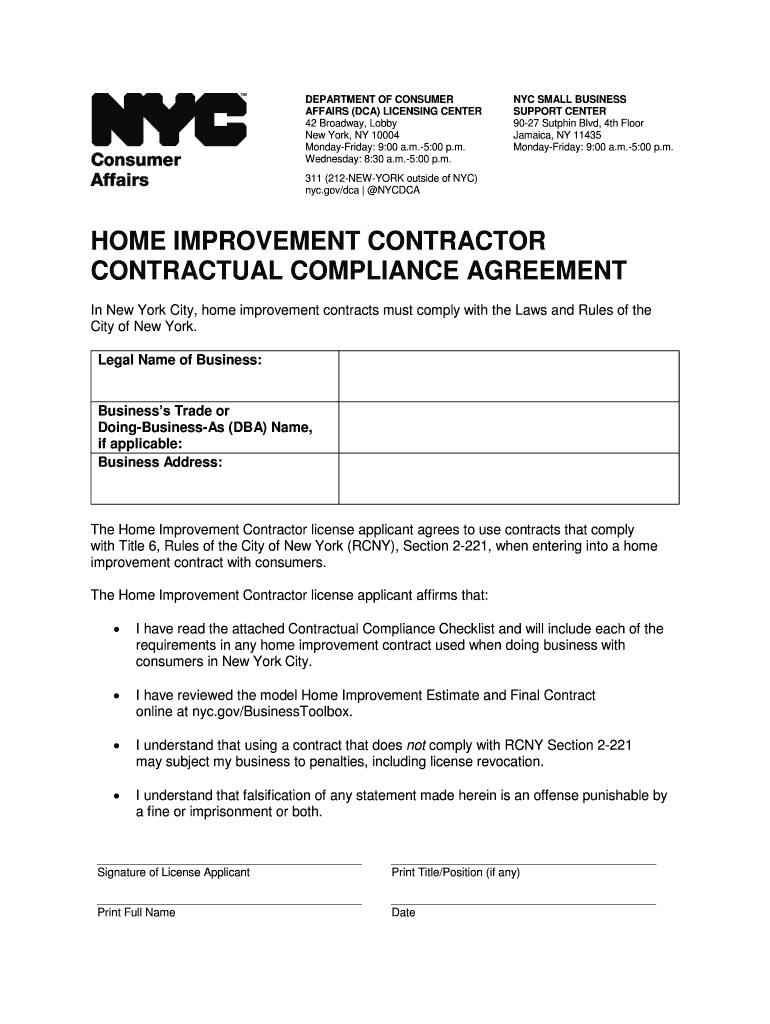







Definition and Meaning
A contractual compliance agreement is a vital document used to affirm understanding and adherence to specific legal obligations in a contractual relationship. It establishes clear guidelines for parties involved in a contract, ensuring that all legal parameters and standards are met. Typically, this agreement requires parties to acknowledge their compliance with relevant laws and regulations, which can vary depending on the nature and location of the contract. For example, home improvement contractors in New York City might use this document to confirm adherence to local consumer protection laws.
Core Components
- Acknowledgment of Legal Obligations: Requires parties to affirm their understanding of the legal responsibilities associated with the contract.
- Guidelines for Compliance: Outlines specific actions and standards parties must follow to remain compliant.
- Legal Clauses: Includes key legal terms that define the scope and limits of the agreement.
- Penalties for Breach: Details consequences for failing to uphold the agreement's terms.
Key Elements of the Contractual Compliance Agreement
Understanding the principal components of a contractual compliance agreement is crucial for effective use. These elements ensure that all parties are on the same page regarding their responsibilities.
Main Features
- Parties Involved: Clearly identifies all parties who are entering into the agreement.
- Scope of Compliance: Defines the exact legal and regulatory compliance the agreement covers.
- Term of Agreement: Specifies the duration for which the agreement is valid.
- Amendment Clauses: Provides guidelines on how the agreement can be modified in the future.
Detailed Clauses
- Confidentiality: Protects sensitive information shared under the agreement.
- Dispute Resolution: Establishes mechanisms to resolve conflicts that arise from the agreement.
- Termination Conditions: Outlines the conditions under which the agreement can be terminated by either party.
Steps to Complete the Contractual Compliance Agreement
Completing a contractual compliance agreement involves several meticulous steps to ensure all legal requirements are met.
- Identify Obligations: Review the legal responsibilities pertinent to the contract's nature.
- Draft Agreement: Create the document, including all required legal clauses and terms.
- Review by Legal Counsel: Have legal professionals review the draft to ensure accuracy and compliance.
- Signatures: Obtain signatures from all parties to validate the agreement.
- Distribute Copies: Ensure all parties have access to the finalized version.
Practical Tips
- Consult Legal Experts: Always seek professional legal advice to tailor the agreement to specific needs.
- Use Clear Language: Ensure the document is understandable to all parties involved.
- Verify Information: Double-check all details to avoid errors that could invalidate the agreement.
Who Typically Uses the Contractual Compliance Agreement
This type of agreement is used by various entities and individuals across different sectors to ensure compliance with requisite legal standards.


Common Users
- Contractors: Builders, electricians, and other service providers use it to affirm compliance with industry standards.
- Businesses: Companies across sectors rely on it to establish clear compliance frameworks with partners and clients.
- Legal Practitioners: Lawyers use it to craft agreements for clients in various legal scenarios.

Use Cases
- Home Improvement Contracts: Used for ensuring compliance with local building codes and consumer protection laws.
- Consulting Services: Facilitates clear agreements between consultants and clients concerning legal obligations.
Legal Use of the Contractual Compliance Agreement
Ensuring that a contractual compliance agreement is legally sound is critical for protecting all parties involved.
Legal Considerations
- Jurisdiction: The agreement must conform to the laws of the geographical area where it is used.
- Validity: Legal terminology must be precise to avoid ambiguities that could result in legal challenges.
- Documentation: Proper documentation of all conditions and terms is essential to uphold the agreement in court.
Legal Framework
- State and Federal Laws: Be aware of differences in legal requirements between state and federal levels.
- Consumer Protection Laws: Contracts involving consumers must comply with applicable consumer rights laws.
State-Specific Rules for the Contractual Compliance Agreement
State laws in the U.S. can significantly influence the content and structure of a contractual compliance agreement.
Notable Variances
- New York: Emphasizes consumer protection and may require additional disclosures in home improvement contracts.
- California: Known for strict environmental regulations that can impact contracts in construction and manufacturing.
- Texas: Contracts may need to include specific clauses pertaining to business activities and labor laws.
Adapting to State Laws
- Custom Drafts: Adapt contract templates to align with state-specific requirements.
- Regular Updates: Keep contracts updated to reflect any legislative changes at the state level.
Important Terms Related to Contractual Compliance Agreement
Understanding specific terminology is vital for effective use and comprehension of a contractual compliance agreement.
Common Terms
- Obligor: The party legally bound to meet the obligations set forth in the agreement.
- Indemnity: A clause ensuring compensation for losses or damages incurred.
- Force Majeure: Circumstances beyond control that could free parties from fulfilling the agreement.
Detailed Definitions
- Covenant: A formal promise within the agreement, critical in maintaining trust between parties.
- Breach: Failure to comply with agreement terms, potentially leading to penalties.
Examples of Using the Contractual Compliance Agreement
This agreement sees a wide range of applications in different scenarios.
Case Studies
- Construction Projects: Ensures all contractors and subcontractors adhere to safety and building regulations.
- Consulting Agreements: Provides a legal framework for consultants to deliver services within regulatory guidelines.
Real-World Scenarios
- Supplier Contracts: Assures that suppliers comply with quality and delivery standards as stipulated by the buyer.
- Joint Ventures: Facilitates partnerships by ensuring all parties commit to common legal and ethical standards.




