




01. Edit your connecticut summons online
Type text, add images, blackout confidential details, add comments, highlights and more.

Type text, add images, blackout confidential details, add comments, highlights and more.

Draw your signature, type it, upload its image, or use your mobile device as a signature pad.

Send jd cv 1 via email, link, or fax. You can also download it, export it or print it out.
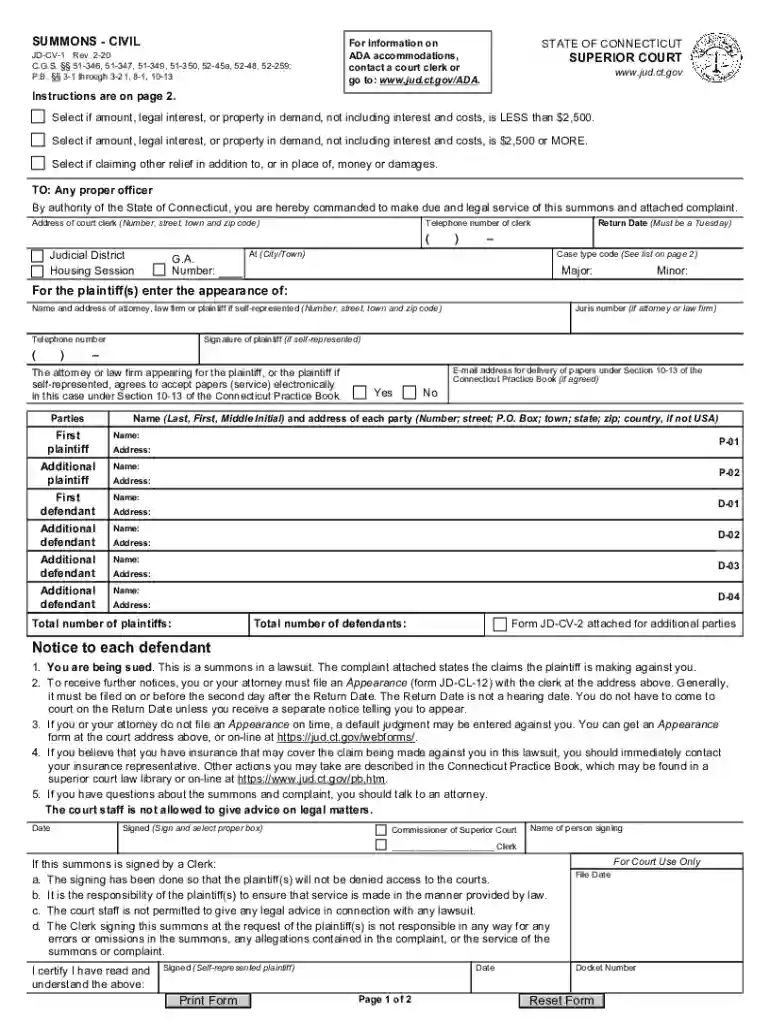
The Connecticut civil form, commonly referred to as a civil summons form, is an essential legal document used in the State of Connecticut. It serves the primary function of initiating a civil lawsuit by officially notifying defendants of a legal action taken against them. This form indicates the summons and outlines critical components of the legal procedure, such as the requirement for defendants to file an Appearance to prevent a default judgment. The form typically accompanies a complaint that details the plaintiff's allegations and demands.
The civil summons form is crucial in ensuring all involved parties are appropriately informed of their legal obligations and rights. It provides a structured format for commencing legal proceedings and sets the stage for interactions between plaintiffs, defendants, and the court system in Connecticut.
Using the Connecticut civil form involves several methodical steps to ensure compliance with state legal standards. The process generally begins with the plaintiff or their legal representative filling out the form accurately. Each section must be completed meticulously to avoid any delay in legal proceedings.
Identify the Parties: Clearly list the names, addresses, and contact information for both the plaintiff(s) and defendant(s). Ensure that all parties are identified correctly to avoid deviations in the legal process.
Details of the Case: Include the docket number, court location, and a concise statement of the claim. This ensures the case is directed to the proper court and highlights the nature of the legal dispute.
Filing the Form: Submit the completed form and any related documents to the court. This usually involves paying a filing fee, which can vary depending on the specifics of the case.
Service of Process: Arrange for proper service of the summons and complaint to the defendant. This step is vital as it officially notifies the defendant of the legal action and allows them to prepare a defense.
Receipt and Record Keeping: Maintain a copy of all submissions and receipts for record-keeping and potential future reference.
Completing the Connecticut civil form accurately is critical to its effectiveness in legal proceedings. The following step-by-step guide outlines the process:
Access the Form: Obtain the civil summons form from the Connecticut Judicial Branch website or a local courthouse.
Fill Out Plaintiff Information: Enter the full name, address, and contact details of the plaintiff or their attorney.
Provide Defendant Details: Clearly state the defendant's full name and address. Accurate information is crucial for proper service.
Outline Court Information: Specify the court where the case will be heard, including the judicial district and court address.
Detail the Legal Claim: Briefly describe the nature of the case and the relief sought by the plaintiff.
Signature and Certification: The plaintiff or their attorney should sign the document, certifying that the information provided is accurate to the best of their knowledge.
Filing and Service Instructions: Follow court procedures to file the form and ensure the defendant is served with the summons and complaint.
Several key elements are integral to the Connecticut civil form, ensuring its effectiveness within legal proceedings:
Plaintiff and Defendant Information: Accurate and complete details regarding all parties involved are mandatory.
Court and Docket Information: This specifies the court processing the case and provides the docket number for reference.
Summary of the Claim: A concise overview of the plaintiff's allegations and requests, providing a foundation for the case.
Instructions for Defendant: Guidelines for how the defendant should respond, including deadlines and required appearances.
Service of Process Information: Details regarding how the summons and accompanying documents will be served.
The legal use of the Connecticut civil form is governed by state laws and regulations, ensuring that the initiation of civil lawsuits is conducted within the framework of the judicial system. Legal professionals must adhere to guidelines for preparing, filing, and serving the form, emphasizing its role in upholding procedural justice.
Adherence to State Laws: Ensure compliance with Connecticut's civil procedure rules.
Service of Process: Follow legal requirements for serving the summons to avoid jeopardizing the case due to improper notification.
Timely Filing: Meet deadlines for filing and service to prevent involuntary dismissals.
The Connecticut civil form is primarily used by individuals and legal professionals involved in civil litigation. Typical users include:
Plaintiffs: Individuals or entities initiating a lawsuit for various claims, such as breach of contract, personal injury, or property disputes.
Attorneys: Legal representatives acting on behalf of plaintiffs to ensure forms are accurately completed and filed.
Courts: Judicial entities that process and manage civil cases using standardized forms to maintain consistency in legal proceedings.


Understanding important terms associated with the Connecticut civil form facilitates better navigation of the legal process:
Summons: A document issued by the court to a defendant, indicating a lawsuit initiation and outlining the need to respond.
Complaint: An attached document to the summons detailing the plaintiff's allegations.
Appearance: A legal document that a defendant must file to respond to the summons, indicating their intention to contest the lawsuit.
Default Judgment: A court judgment in favor of the plaintiff when the defendant fails to respond or appear in court within the stipulated time.
Connecticut's legal system outlines specific rules for using the civil form, ensuring compliance with state procedures.
Filing Fees: Varied based on case type; accurate payment is necessary for document acceptance.
Submission Procedures: Connecticut offers online filing options in addition to traditional in-person courts, which can expedite the process.
Governmental and Institutional Plaintiffs: Additional guidelines may apply to suits involving governmental entities.
Understanding these rules ensures the civil summons process is completed according to Connecticut state law, maintaining the integrity of legal proceedings.
We've got more versions of the connecticut summons form. Select the right connecticut summons version from the list and start editing it straight away!
At DocHub, your data security is our priority. We follow HIPAA, SOC2, GDPR, and other standards, so you can work on your documents with confidence.
Feb 1, 2018 Use Form 7004 to request an automatic extension of time to file certain business income tax, information, and other returns. The extension willRead more
Mar 27, 2026 Here you can search all federal court forms by name, keyword, or category. Note that this page does not include local court forms. Here youRead more
Civil Forms grouped by Subject Apply for a Habeas Filing a Civil Lawsuit Forms to Apply for a Subpoena Forms to file if you are a Defendant in a ForeclosureRead more


