







Definition and Meaning
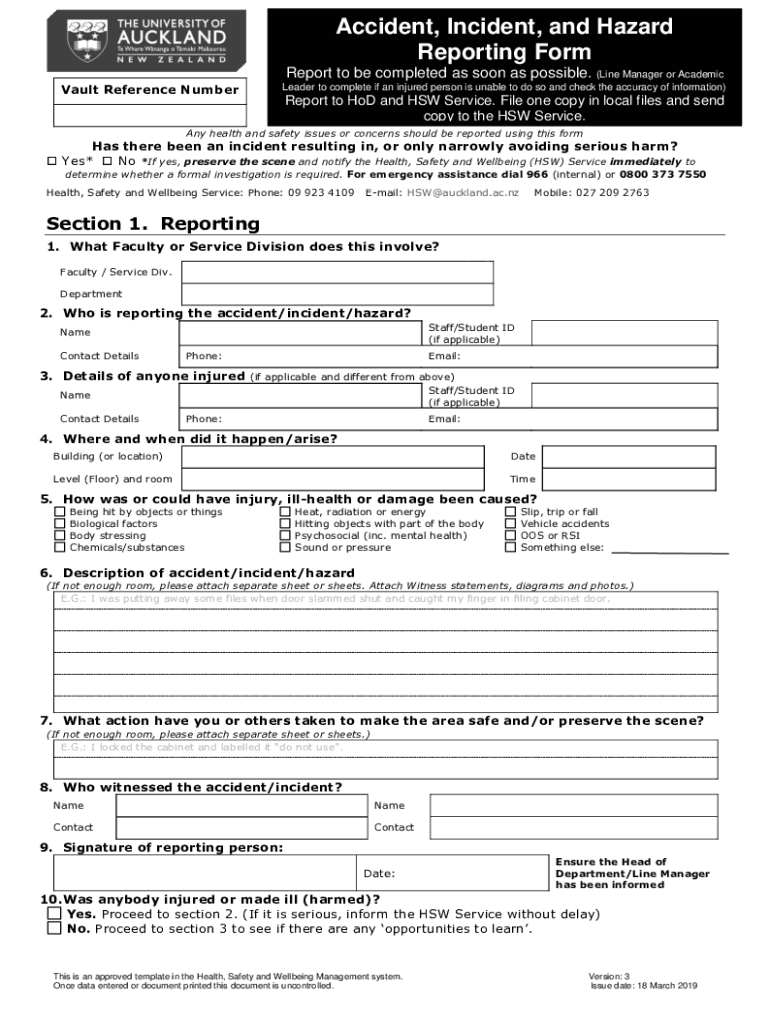
The NZ Incident Form is a structured document used for reporting and documenting incidents, accidents, or hazards that occur within an organization. It serves as a comprehensive tool for capturing details related to any event that might affect health and safety at work. This form includes sections for collecting information about what happened, the individuals involved, and any corrective actions taken to address the situation. Its primary purpose is to ensure that incidents are thoroughly investigated and documented to prevent future occurrences.
The form aligns with health and safety regulations, providing a standardized approach to incident reporting. This ensures compliance with legal obligations and helps organizations maintain a safe working environment. By using this form, organizations can identify patterns or recurring issues, which can inform the development of preventive measures.
How to Use the NZ Incident Form
Using the NZ Incident Form involves a systematic process to ensure that all pertinent details are accurately captured. Typically, this process starts immediately after an incident occurs:
- Initiate the Form: Begin by entering the date, time, and location of the incident.
- Describe the Incident: Provide a detailed account of the event, including what happened and how it occurred. Use clear, factual language to avoid ambiguity.
- Identify the Parties Involved: Record the names and roles of individuals directly involved or witnessing the incident.
- Document the Injuries and Damage: Note any injuries sustained, as well as any property damage or potential hazards identified.
- Outline Actions Taken: List any immediate corrective actions or remedial measures implemented to manage the situation.
- Conduct an Investigation: Follow up with a more detailed investigation, identifying root causes and proposing long-term solutions.
How to Obtain the NZ Incident Form
Organizations can acquire the NZ Incident Form in several ways. It may be distributed internally by the health and safety department or security personnel. Alternatively, downloadable templates might be available through official company intranets or public health and safety websites.
Forms are often provided in both digital and paper formats. Digital forms can be filled out electronically using document management software like DocHub, which allows users to edit the document directly online. This method facilitates easier distribution and record-keeping. Paper forms may still be preferred in environments where electronic access is limited or unavailable.
Steps to Complete the NZ Incident Form
Completing the NZ Incident Form requires attention to detail and a diligent approach to ensure all necessary information is included:
- Gather Preliminary Information: Start by collecting all relevant details about the incident, including witness statements and initial reports.
- Fill Out Personal Details: Enter information about the employee(s) involved, including contact details and job descriptions.
- Describe the Incident Context: Use the section provided to explain the circumstances leading to the incident, ensuring clarity and detail.
- Outline Injury and Treatment: Describe any physical injuries and specify whether medical treatment was administered onsite or elsewhere.
- State Actions Taken: Outline immediate actions taken to rectify the situation and note any pending follow-up actions.
- Submit for Review: Once completed, submit the form to the designated health and safety officer or committee for evaluation.
Key Elements of the NZ Incident Form
The NZ Incident Form contains several key elements designed to ensure comprehensive data capture:
- Incident Description Section: A thorough account of the incident's nature and impact.
- Involved Parties: A list of all individuals affected, including witnesses, injured parties, and responders.
- Time and Location Details: Specifics about when and where the incident took place.
- Injury Reporting: Information related to any injuries, including severity and treatment administered.
- Corrective Actions: Detailed overview of measures taken to prevent recurrence.
- Investigation Summary: A reflection of the findings and recommendations based on the incident review.
Legal Use of the NZ Incident Form
The NZ Incident Form holds legal significance as part of an organization's compliance with health and safety regulations. Accurate reporting and documentation are crucial because they can influence liability and compensation decisions. This form can be cited in legal proceedings to demonstrate compliance with safety protocols and diligent management of workplace risks.
Organizations are advised to keep these forms on file for several years, aligning with prescribed retention periods. The documentation serves as evidence of proactive safety management, aimed at reducing legal exposure and enhancing workplace safety culture.
Who Typically Uses the NZ Incident Form
The NZ Incident Form is commonly used by a wide range of professionals within an organization, including:
- Health and Safety Officers: Responsible for ensuring compliance and conducting incident investigations.
- HR Personnel: Collaborate on managing health and safety records.
- Supervisors and Managers: Report and respond to incidents within their respective departments.
- Employees: Fill out forms in the event of their involvement in or witness to an incident.
These stakeholders collaborate to maintain a safe working environment through the consistent use of incident reporting processes.


Importance of the NZ Incident Form
Utilizing the NZ Incident Form carries significant importance for organizational health and safety management. This form ensures systematic recording of all incidents, which is essential for tracking trends and identifying areas requiring improvement. By maintaining thorough records, organizations can implement more effective safety strategies and demonstrate accountability.
Moreover, the form supports a culture of transparency and continuous improvement, helping to reinforce employee confidence in workplace safety standards. Regular use of this form also underpins insurance and regulatory compliance, contributing to organizational resilience and reputation.




