






Definition and Meaning of the Appraisal Checklist Form
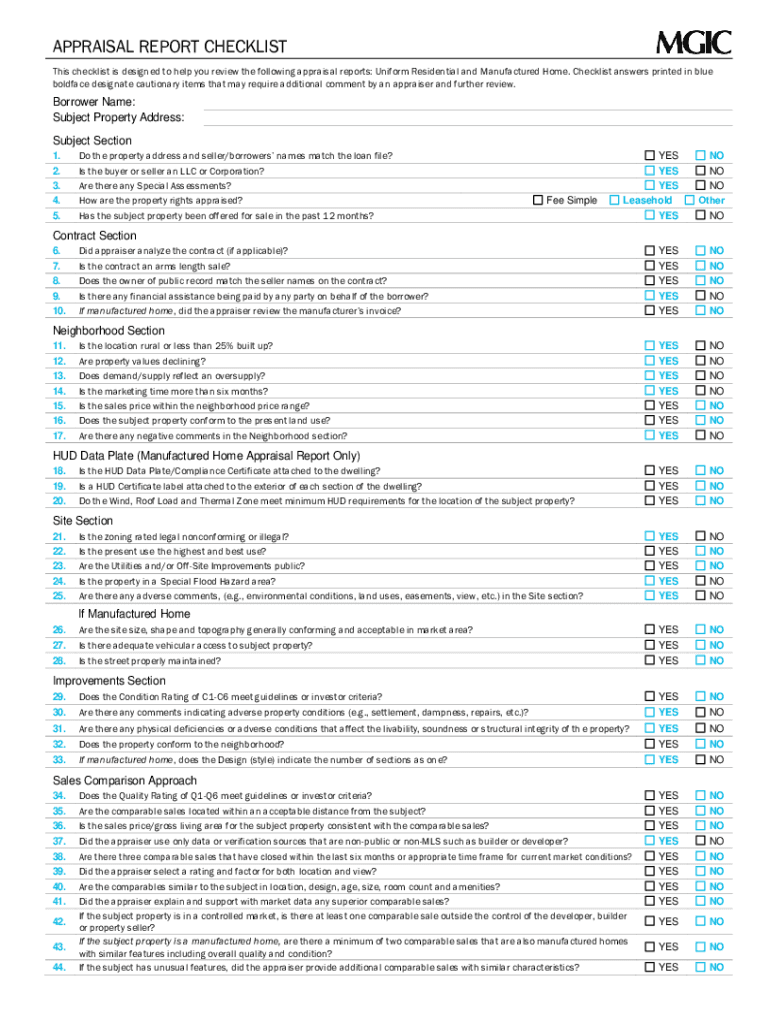
An appraisal checklist form is an essential document utilized primarily in real estate appraisals to ensure that all critical factors impacting the valuation of a property are assessed systematically. This form serves as a guideline for appraisers, outlining various elements that must be considered during both residential and commercial property evaluations. By using this structured checklist, appraisers can streamline their assessment process, enhancing accuracy and consistency in property evaluations.
The checklist generally includes sections on borrower information, contract analysis, property details, neighborhood conditions, and compliance with applicable federal and state regulations. Notably, it also highlights cautionary items that could necessitate further investigation or review. By adhering to a standardized appraisal checklist, appraisers are better equipped to deliver comprehensive appraisal reports that meet both client expectations and regulatory requirements.
Steps to Complete the Appraisal Checklist Form
Completing the appraisal checklist form involves a series of structured steps aimed at ensuring thorough assessment of all pertinent aspects of the property.
-
Gather Preliminary Information
- Collect necessary documents, including property listings, prior appraisals, and client instructions.
- Ensure access to the property for on-site inspection, if applicable.
-
Fill Out Borrower Information
- Include details such as the borrower's name, contact information, and any relevant financial information that could impact the appraisal.
-
Conduct Property Inspection
- Visit the site to evaluate its condition, layout, and any unique features that may impact its market value.
- Take comprehensive notes and photographs, as these will be vital for filling sections of the checklist.
-
Complete the Checklist Sections
- Methodically go through each section of the checklist, such as neighborhood conditions and site details. Use the space provided to document findings and observations.
- Pay special attention to highlighting any areas that may need further analysis.
-
Review and Finalize the Appraisal Report
- Revisit the completed checklist to ensure all items are adequately addressed.
- Prepare the final appraisal report, containing insights derived from the checklist, and present it to stakeholders.
By systematically following these steps, appraisers can ensure the thoroughness and accuracy of their evaluations.
Key Elements of the Appraisal Checklist Form
The appraisal checklist form includes several critical components that guide appraisers in evaluating property values accurately:
Borrower and Property Details
- Collect key borrower information, such as financial background and intent for the purchase.
- Detailed property descriptions, including the age, size, condition, and unique features, are vital.
Market Analysis and Neighborhood Insights
- Assessment of neighborhood dynamics, including trends in home sales, crime rates, and local amenities.
- Understanding zoning laws and any potential land use restrictions that could impact property value.
Sales Comparisons
- Inclusion of comparable sales data to support the estimated property value.
- Analyzing adjustments based on differences between the subject property and comparables.
Condition of Property
- Examination of any issues such as structural damage, required repairs, and other deficiencies that could affect marketability.
- Media documentation, like photographs or sketches, reinforces findings.
Compliance with Regulatory Standards
- Verification of adherence to local and federal appraisal guidelines, including FHA or Fannie Mae requirements.
- Noting any discrepancies that might necessitate a second review or further documentation.
These elements collectively enhance the comprehensiveness of the appraisal process and ensure that the appraiser's findings are transparent and justifiable.
Who Typically Uses the Appraisal Checklist Form
The appraisal checklist form is predominantly utilized by professional appraisers, but several other stakeholders find it beneficial:


Real Estate Appraisers
- Primary users responsible for conducting property evaluations and preparing appraisal reports.
- Utilize the form to maintain standardized practices, facilitating accurate assessments.
Mortgage Lenders
- Banks and financial institutions use the completed checklist to assess the property's value before approving mortgage loans.
- The checklist provides lenders with crucial insights into the property being financed.
Real Estate Agents
- Agents may use the appraisal checklist to better understand property values and assist clients in making informed decisions during transactions.
- Helps in negotiating pricing strategies based on appraised values.
Homebuyers and Sellers
- Individuals involved in buying or selling properties may reference this checklist to comprehend the appraisal process and its implications on property transactions.
- Provides clarity on aspects of the property that are evaluated.
By serving multiple parties involved in real estate transactions, the appraisal checklist form plays a vital role in ensuring transparency and fairness in property valuations.
Examples of Using the Appraisal Checklist Form
Using the appraisal checklist form can yield various practical applications in real-life scenarios:
Scenario One: Residential Appraisal
A residential property appraiser conducts an evaluation of a single-family home. Using the appraisal checklist, the appraiser assesses all necessary elements, including the size, condition of the roof, and number of amenities. On review, the appraiser notes that the kitchen requires major renovation, which is appropriately documented in the checklist. This serves as a significant factor when determining the final appraisal value.
Scenario Two: Commercial Property Assessment
An appraiser is evaluating a commercial building intended for retail use. The appraisal checklist highlights the need for neighborhood analysis, which uncovers a recent influx of chain stores in the area, increasing the location’s desirability. Leveraging this newfound knowledge, the appraiser adjusts the valuation to reflect the potential for higher rental income.
Scenario Three: FHA Compliance
During a property evaluation for an FHA loan, the appraiser uses the checklist to ensure compliance with FHA guidelines. The appraiser identifies a lack of essential safety features such as handrails and smoke detectors. These findings, documented in the checklist, prompt further discussions with the borrower about necessary improvements before loan approval.
These examples illustrate how the appraisal checklist form enhances the consistency and reliability of property evaluations across various contexts.